Joybuy Insights

Pressure Washer Buying Guide: How to Choose the Right Machine

A powerful pressure washer can make cleaning patios, vehicles, and garden furniture significantly easier. However, the market is filled with machines whose performance claims often promise more than they deliver. Before you buy a pressure washer, it's important to know the typical pitfalls to avoid a bad investment. This guide will help you evaluate the crucial features and find a model that suits your needs.

The 3 Most Common Mistakes When Buying a Pressure Washer

Many buyers focus on prominently advertised metrics that have little practical significance. Pay attention to these three points to avoid falling for empty marketing promises.

  1. Focusing on maximum pressure: Manufacturers often advertise a very high maximum pressure in bar. However, this value is only reached for a moment and is not relevant for everyday cleaning performance. The decisive factor is the operating pressure, which is available continuously. A machine with a lower but stable operating pressure often cleans more effectively than a model with unrealistically high peak values.
  2. Inferior pumps and connectors: The heart of any pressure washer is the pump. Inexpensive models often use pumps made of plastic, which wear out quickly and fail under intensive use. Similarly, brittle plastic connectors for hoses and lances are a common weak point, leading to leaks and frustration.
  3. Impractical or missing accessories: A pressure washer is only as good as its accessories. Many basic sets include only a simple nozzle, which is unsuitable for special tasks like washing a car or cleaning large patio areas. Purchasing accessories like a patio cleaner or a foam nozzle later can unexpectedly drive up the total cost.

What Really Matters: The Decisive Parameters

To assess the actual performance and durability of a machine, you should focus on the following technical specifications.

Operating Pressure (Bar) and Water Flow Rate (l/h)

These two values together determine the cleaning efficiency.

  • Operating pressure (in bar): Indicates the force with which the water hits the surface. Higher pressure removes stubborn dirt. For most tasks around the house and garden, such as cleaning bicycles, garden furniture, or a standard pressure washer for cars, an operating pressure of 100 to 130 bar is sufficient.
  • Water flow rate (in litres per hour): Describes how much water flows through the machine per hour. A higher flow rate ensures that loosened dirt is washed away more quickly, which speeds up the cleaning of large areas like driveways or facades.

A good balance between pressure and flow rate is crucial. A machine with 130 bar and 500 l/h will clean a large patio faster and more thoroughly than a model with 150 bar but only 350 l/h.

Power Source: Corded or Cordless Pressure Washer?

The choice of power source depends directly on your area of use.

  • Corded pressure washers: They offer the highest and most consistent performance and are ideal for demanding and lengthy cleaning jobs in a fixed location, such as on the patio or in the driveway. You just need a power socket within reach.
  • Cordless pressure washers: These models offer maximum flexibility. As a portable pressure washer, they are perfect for places without a power connection or for quick, smaller tasks like cleaning a mountain bike after a ride. Many of these devices can draw water from a bucket or a rain barrel, further increasing their independence. However, their performance and runtime are limited compared to corded models.

Accessories: From Pressure Sprayer to Specialist Tool

The right accessories significantly expand your machine's capabilities, making work safer and more efficient.

  • Fan nozzle: The standard for most cleaning jobs. The pressure is often adjustable.
  • Rotary nozzle (dirt blaster): Creates a rotating point jet, concentrating extreme power on a small area. Ideal for the most stubborn dirt on non-sensitive surfaces like stone slabs.
  • Patio cleaner: A hood with rotating nozzles that cleans large, flat surfaces evenly and without splashing.
  • Foam nozzle/foam cannon: Essential for a gentle car wash. It produces a thick foam that envelops and loosens dirt particles before the actual cleaning process begins.

Top Picks for Every User

Instead of making a one-size-fits-all recommendation, we have selected models tailored to specific needs and use cases.
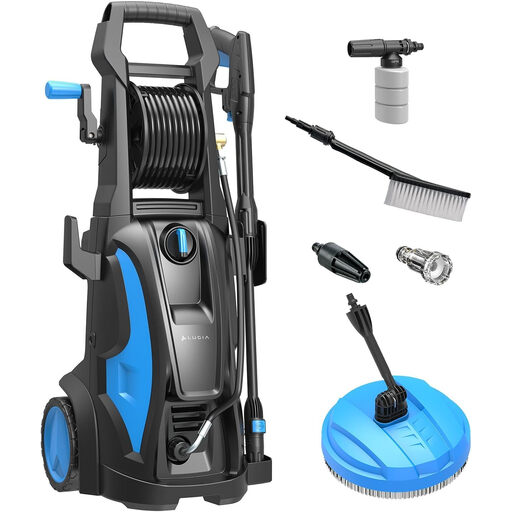
SUITABLE FOR: ALL-ROUNDERS FOR HOME & YARD
Lugia Pressure Plus Hochdruckreiniger 185 Bar

Lugia Pressure Plus Pressure Washer 185 Bar – 2200 W – 550 L/h

Why this model is a good fit: Ideal for homeowners looking for a powerful, corded machine for a wide range of tasks – from large-scale patio cleaning to intensive vehicle care.

How it avoids the pitfall

This model combines a high maximum pressure with a very high water flow rate (550 l/h), ensuring fast and effective surface cleaning. The comprehensive accessory package, including a patio cleaner and a rotary brush, is already included.

Key Advantage

The high power consumption of 2200 W and the high flow rate enable rapid cleaning even with heavy soiling. The complete set covers the most common applications right out of the box.
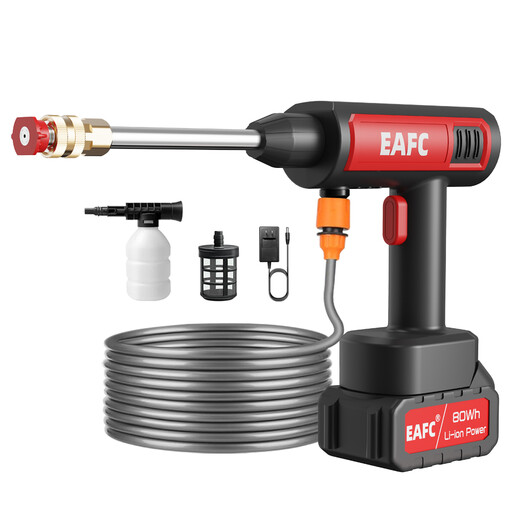
SUITABLE FOR: FLEXIBLE & MOBILE USE
EAFC Tragbarer Akku-Hochdruckreiniger

EAFC Portable Cordless Pressure Washer

Why this model is a good fit: Perfect for car and bike enthusiasts or for cleaning jobs in places without direct power and water connections. A classic portable pressure washer for quick jobs.

How it avoids the pitfall

This device doesn't promise extreme performance but focuses on its core strength: mobility. The self-priming function makes it independent of a fixed water connection, making it ideal for use on the go.

Key Advantage

Cordless, lightweight design and the ability to draw water from any source (e.g., a bucket) offer maximum flexibility. Includes an adjustable nozzle and a foam sprayer for car washing.
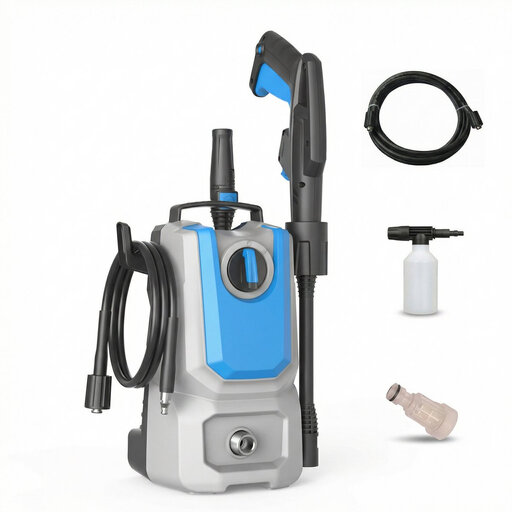
SUITABLE FOR: BUDGET-CONSCIOUS BEGINNERS
Lugia Jet+ Hochdruckreiniger 1300W – 90 Bar

Lugia Jet+ Pressure Washer 1300W – 90 Bar

Why this model is a good fit: A solid choice for anyone who needs a compact, straightforward machine for occasional cleaning tasks like spraying down garden furniture or bicycles.

How it avoids the pitfall

This model relies on realistic performance data (60 bar operating pressure) and a durable aluminium pump. This bypasses the typical pitfall of a fast-wearing plastic pump in the entry-level class.

Key Advantage

The auto-stop system protects the material and saves energy, which is not a given in this price range. The compact design makes storage easy.

Looking for more options?

We have compiled a complete, up-to-date list of products that fully meet these strict selection criteria and German safety regulations.

Frequently Asked Questions (FAQ)

How much pressure (bar) does a pressure washer really need?

The required pressure depends on the application. As a rule of thumb:

  • 80–110 bar: Sufficient for bicycles, garden furniture, and gentle car washing.
  • 110–140 bar: A good all-round range for patios, walkways, and heavier dirt on cars.
  • Over 140 bar: Suitable for very stubborn dirt, moss, or cleaning facades and large paved areas. Always maintain a sufficient distance from the surface to avoid damage.

Can I connect any pressure washer to a tap?

Most corded models are designed for direct connection to a standard garden tap. However, many cordless pressure washers are self-priming. This means they can draw water from alternative sources like a rain barrel, a bucket, or a lake via an included hose. Always check the manufacturer's specifications for water supply before purchasing.

How do I store a pressure washer in winter?

Proper storage is crucial to prevent frost damage to the pump and hoses. Completely drain the machine of water. To do this, with the water supply turned off, pull the trigger on the gun until no more water comes out. Then, store the pressure washer and its accessories in a dry and frost-free place, such as a basement or garage.