
Lieferung heute & morgen

Qualitätsgarantie

Willkommens-Angebote freischalten: KOSTENLOSE Lieferung | Bis zu 80 % RABATT | Kostenlose 30-Tage-JoyPlus-Testphase
App herunterladen
A pressure washer can remove dirt from vehicles, patios, garden furniture, fences and driveways much faster than a garden hose. However, a high number on the packaging does not automatically mean the machine is right for you. Before buying, consider its performance, water source, accessories and how often you plan to use it together.
Manufacturers often state the maximum pressure the machine can reach. This figure is usually measured under specific conditions and does not necessarily reflect the pressure maintained throughout use. That is why working pressure and water flow rate should be considered together when choosing a model.
An electric pressure washer with 180 bar and 480 l/h should be assessed differently from a cordless pressure washer with a lower pressure rating when cleaning heavily soiled driveways or larger patios. For delicate surfaces such as car paintwork, wood or plants, adjustable pressure is often more important than the highest possible peak value.
A machine may come with several nozzles, but that does not mean every nozzle is suitable for your intended use. For washing cars, for example, a foam sprayer and a wide-angle adjustable nozzle are practical. For patios, a patio cleaner with a splash guard may be more suitable than a concentrated jet.
Before buying, check the following:
A cordless pressure washer is flexible, but it requires a charged battery and a suitable water source. Many portable models draw water from a bucket or container. This makes you less dependent on a fixed tap, but it can limit the flow rate.
With corded models, you need to consider the available socket, hose routing and space for positioning the machine. A long hose can extend your working radius, while a cable that is too short or an awkward connection can make use in the garden more difficult.
Pressure in bar describes the force with which the water hits the surface. Water flow rate in l/h shows how much water is moved per hour. A higher flow rate can be useful when cleaning large areas, while adjustable pressure provides better control when working on vehicles and delicate materials.
When washing a car, do not continuously direct the jet at seals, paint edges or electrical components from close range. With patios, concrete and driveways, you can hold the nozzle closer depending on the material and level of dirt. Testing the jet on an inconspicuous area reduces the risk of damage.
An electric pressure washer is suitable for longer cleaning tasks, provided a socket is within reach. Models rated between 1,600 and 2,200 W cover typical household and outdoor jobs; however, the power rating alone says nothing about pressure adjustment or included accessories.
A cordless pressure washer or portable pressure washer is practical for vehicles, bicycles, balconies and small gardening jobs. Important factors include battery capacity, charging time, whether a spare battery is available and the stated runtime at each operating level. Actual usage time depends on factors including pressure, water supply and interruptions.
A water filter can remove impurities from water drawn from a bucket or cistern. With self-priming machines, the intake hose must lie without kinks and be attached correctly. Before starting, allow any air to escape from the system.
Only put cleaning detergent into the containers or foam sprayers designed for this purpose. The instruction manual specifies which products and water temperatures are permitted. After use, rinse the hose, nozzle and detergent line with clean water.
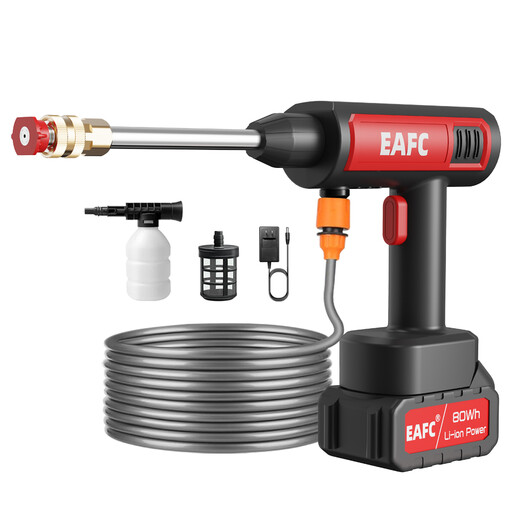
Why this product suits this profile: This battery-powered handheld machine is designed for smaller car-washing jobs, balconies, floors and gardening tasks. It can draw water from a bucket, so you can use it without a fixed water connection.
The portable design reduces reliance on a socket and tap. Before buying, however, check that the battery life and included accessories are sufficient for the area you plan to clean.
Cordless operation, water supplied from containers and a foam sprayer included.
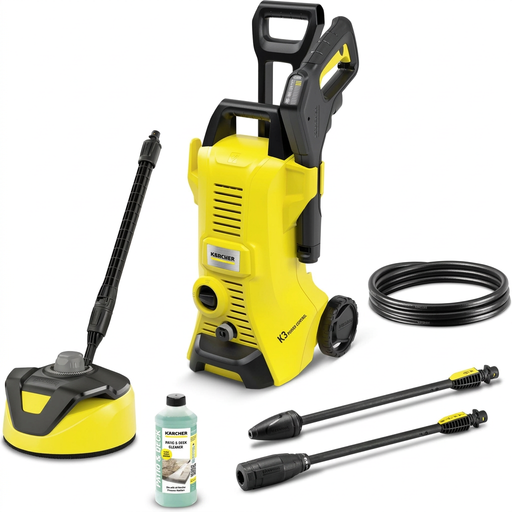
Why this product suits this profile: This set is designed for typical household and garden jobs, combining pressure adjustment with a T 5 surface cleaner, patio detergent, 7-m hose and telescopic handle.
The stated working pressure can be adjusted instead of relying solely on a peak figure. The surface cleaner helps contain splashing when used on suitable flooring.
Up to 120 bar, 380 l/h and a set with surface cleaner and adjustable spray gun.
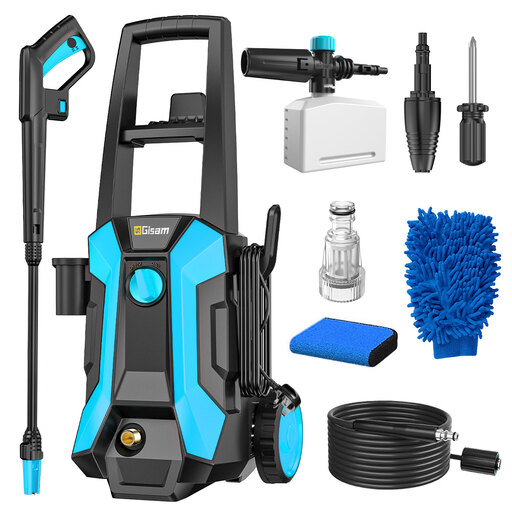
Why this product suits this profile: For larger outdoor areas, driveways, fences and regular car washing, this corded machine offers clear performance specifications and an 8-m high-pressure hose.
Pressure, flow rate and hose length are listed separately. This makes it easier to match the machine to the size of the area and the available power connection.
2,200 W, up to 180 bar, 480 l/h, plus foam nozzle, rotating nozzle and high-pressure gun.
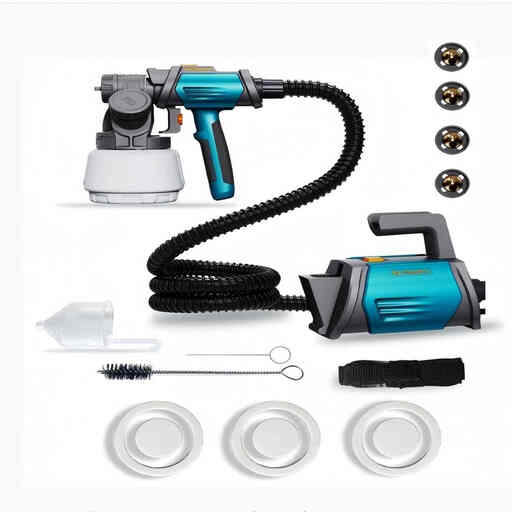
Why this product suits this profile: If you are planning smaller painting or renovation jobs alongside cleaning, this separate paint sprayer comes with a 1,300-ml container, four nozzles and three spray patterns.
A paint sprayer is not a replacement for a pressure washer. Choosing them separately prevents a cleaning machine from being used for unsuitable paint applications.
800 W HVLP system, four brass nozzles from 1 to 3 mm and three spray patterns.
We have compiled a complete, regularly updated list of products that fully meet these strict selection criteria and the safety regulations applicable in the EU.
For washing a car, a machine with adjustable pressure, a foam sprayer and a suitable wide-angle nozzle is a sensible choice. Keep the correct distance from the surface and do not direct the jet at seals or paint edges for extended periods. A cordless pressure washer is particularly useful where there is no socket or tap nearby.
Its lifespan depends on how often it is used, water quality, storage and maintenance. After use, remove any remaining water and detergent from the system. A clean filter, kink-free hose and frost-protected storage can reduce the strain on the pump and connections.
Running costs mainly comprise electricity, water and, where applicable, cleaning detergent. Exact consumption depends on motor power, operating time, water flow rate and breaks. A machine with an auto-stop function can save water and energy during short interruptions, provided this feature is available.