
Lieferung heute & morgen

Qualitätsgarantie

Willkommens-Angebote freischalten: KOSTENLOSE Lieferung | Bis zu 80 % RABATT | Kostenlose 30-Tage-JoyPlus-Testphase
App herunterladen
A pressure washer can clean vehicles, patios, fences and driveways far more quickly than a garden hose. However, the actual performance doesn't depend solely on a high bar rating. If you only focus on the marketing promises, you can easily overlook important details about water flow, hose storage and accessories.
Figures like "180 bar" usually describe the maximum achievable pressure under certain conditions. In practice, water flow rate, nozzle geometry and distance from the surface are also crucial. A 180 bar pressure washer is therefore not automatically more suitable for every task than a model with a lower pressure rating.
For cleaning delicate car paintwork or wooden surfaces, an overly concentrated water jet can actually cause problems. The pressure should always be matched to the surface and the nozzle you are using.
A short high-pressure hose means you have to move the machine around frequently. This is impractical for large patios or driveways. A pressure washer with an 8 m hose offers a larger working radius, provided the water supply hose and power cable are also long enough.
A hose reel makes storage easier, but it doesn't automatically prevent kinks. After use, the hose should be wound up without pressure, clean and free from tight bends.
A foam nozzle, rotating nozzle and spray gun can cover different tasks. What matters is whether the attachments can be securely fitted and whether they are suitable for the surface you plan to clean. A rotating nozzle is typically best for robust surfaces, whereas for a car, a wider, less concentrated spray is more appropriate.
An electric pressure washer with 2,200 W can be sufficiently powerful for many domestic cleaning jobs. The specific model in our selection is rated at 2,200 W motor power, up to 180 bar pressure and 480 l/h water flow.
These figures should be treated as manufacturer specifications. Before buying, it's worth checking the product data:
With a stated flow rate of 480 l/h, around 240 litres of water would theoretically pass through the machine in 30 minutes. Actual consumption depends on operating time, pressure release at the gun and water supply.
For cleaning gardens and driveways, a pressure washer with an 8 m hose is a sensible choice if you want to cover large areas without constantly moving the machine. An integrated hose reel saves space and makes storage easier.
Pay attention to:
Any water left in the machine or hose can cause damage in freezing conditions. After use, the system should be depressurised and drained according to the instructions.
For a pressure washer intended for car use, a foam nozzle or detergent attachment should be included. The foam distributes the cleaning agent more evenly; before the actual washing, coarse sand and dirt particles should be rinsed off.
For patios, fences and driveways, different attachments may be suitable depending on the material. With delicate wood, painted surfaces or joints, it's advisable to test on an inconspicuous area first. The distance from the surface should be reduced gradually, rather than starting at maximum power straight away.
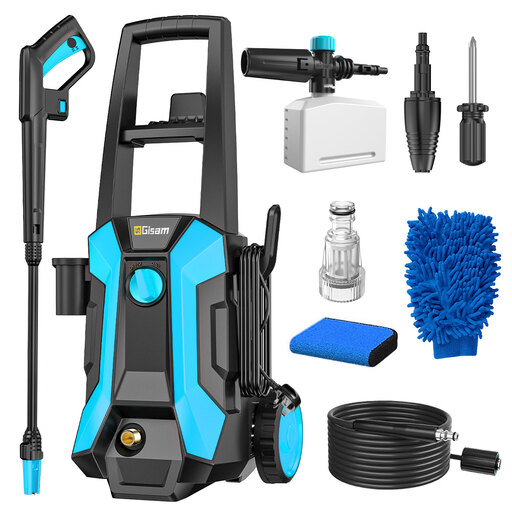
Why this product fits the profile: This machine combines a stated power of 2,200 W with 180 bar, 480 l/h, an 8 m high-pressure hose and several attachments suitable for typical households.
The stated hose length and the hose reel make the reach and storage clear. The accessories are specifically named rather than just being described as a general complete set.
8 m high-pressure hose; foam nozzle, rotating nozzle and high-pressure spray gun included according to the product description.
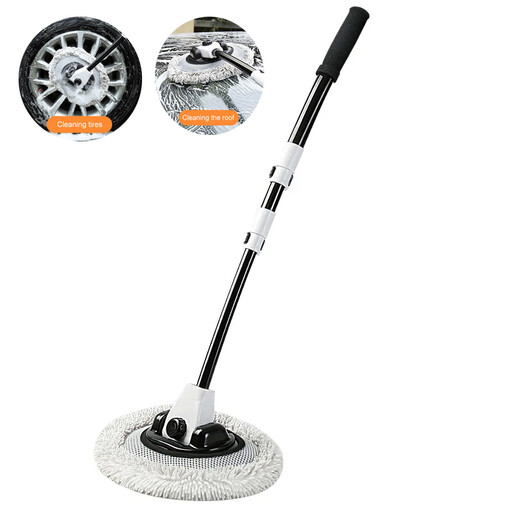
Why this product fits the profile: For car owners who want to supplement a pressure wash with controlled manual cleaning, this mop offers an adjustable handle and a removable brush head.
The usage instructions explicitly advise rinsing off sand and residue before washing. This reduces the risk of spreading dirt across the paintwork.
Chenille brush head, 15° angled handle, 90° adjustable head and three-part telescopic handle according to the product description.
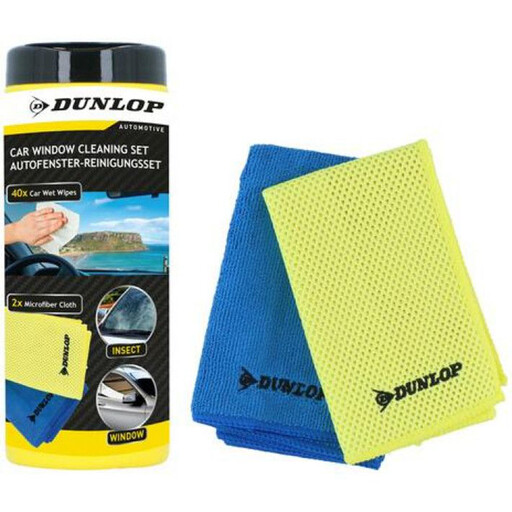
Why this product fits the profile: This three-piece set complements exterior washing with targeted cleaning of car windows and mirrors.
The set is clearly intended for glass surfaces and mirrors. This means the high-pressure jet doesn't have to be used on delicate or hard-to-reach areas.
Microfibre cloth, squeegee and sponge or cleaning pad; suitable for interior and exterior surfaces according to the product information.
We've put together a complete, regularly updated list of products that fully meet these strict selection criteria and the safety regulations in force in the EU.
Before cleaning, remove any loose objects, sand and coarse dirt. When washing a car, it's best to start with a thorough rinse. Keep the nozzle at a greater distance initially and only increase the intensity if the surface is suitable for it.
For domestic use in Germany, the following practical safety rules are also relevant:
Consumption depends on the water flow rate and operating time. At 480 l/h, around 8 litres per minute are theoretically possible. If you only pull the gun trigger when needed, actual consumption is usually lower. Running costs also depend on the electricity price, motor power and duration of use.
Yes, provided the pressure, nozzle and distance are adjusted appropriately. For car washing, a foam nozzle and a wide water spray are practical. Coarse dirt should be rinsed off first to prevent sand particles from being rubbed across the paintwork. Tyres, wheels and bodywork may require different distances and attachments.
It's not possible to give a reliable general lifespan. It depends on factors including intensity of use, water quality, frost protection, maintenance and storage. Regular draining, kink-free hose routing and cleaning the nozzles can help ensure safe use. The warranty and service conditions of the respective manufacturer are also crucial.