
Lieferung heute & morgen

Qualitätsgarantie

Willkommens-Angebote freischalten: KOSTENLOSE Lieferung | Bis zu 80 % RABATT | Kostenlose 30-Tage-JoyPlus-Testphase
App herunterladen
A pressure washer can clean your car, patio, garden furniture, fence and driveway much faster than a garden hose. But a high bar rating alone doesn’t guarantee that a machine is right for you. For households in Germany, several factors matter: operating pressure, water flow, power supply, hose length and the accessories included.
Packaging often displays the maximum pressure. This doesn’t always indicate the pressure at which the machine can operate continuously. A 150-bar pressure washer may be suitable for many outdoor surfaces, while other machines should also state their operating pressure.
When choosing a machine, it’s important to understand the difference between:
High pressure can damage delicate surfaces. Clean car paintwork, wood, grouting and plastic from a suitable distance, using an appropriate nozzle.
A foam nozzle is particularly useful for pre-washing a car. For a patio or driveway, a surface cleaner is often a better choice, as it distributes water more evenly and can reduce splashing. Check whether a patio cleaner is actually included or needs to be purchased separately.
Nozzles also vary:
A short high-pressure hose or power cable can make the job harder on a large property. Check the hose length, cable length, reels or holders, as well as the machine’s weight. A model with wheels and a telescopic handle is easier to move between the garage, cellar and garden.
For occasional jobs around the home, an electric pressure washer in the mid-pressure range is often enough. Models rated at 120 to 150 bar may be suitable for vehicles, garden furniture, fences and many patio surfaces. A higher figure from the manufacturer doesn’t automatically make a machine suitable for every surface.
The water flow rate affects how quickly loosened dirt is rinsed away. For example, the Kärcher K 3 Power Control Home T 5 is listed in the product details with a maximum pressure of 120 bar, a maximum flow rate of 380 l/h and a power consumption of 1,600 W. The product description gives its maximum cleaning rate as 25 m²/h.
When cleaning painted vehicles, keep a sufficient distance from the surface. On wooden decking, excessive pressure or holding the jet too close can damage the fibres. Stone, concrete and paving are generally more durable, but you should still check the grouting and any loose surfaces.
A specialist patio cleaner uses either rotating brushes or a shielded spray area, depending on the design. The Kärcher PCL 6, for example, isn’t a conventional pressure washer but an electrically powered, low-pressure patio cleaner for wood and WPC surfaces. According to the product details, it has a working width of 300 mm, four brush rollers and a maximum water supply of 180 l/h at 4 bar.
Electrical appliances should only be used with a properly installed, protected socket. Keep power cables away from standing water. Before changing nozzles, brushes or accessories, switch off the machine and disconnect it from the mains.
A cordless pressure washer is worth considering if there’s no socket nearby. In this case, battery life, charging time and water source are all important. According to the product information, the Gisam model comes with two 3,000 mAh batteries, a 5-metre hose, a water filter and a 6-in-1 nozzle. Its stated pressure range is 25 to 65 bar. The description says it isn’t designed to connect directly to a tap and doesn’t have a water-stop function.
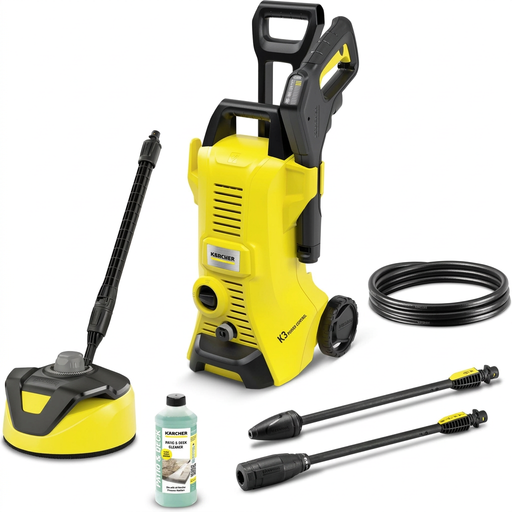
Why it suits this type of buyer: Designed for regular household jobs, this electric model comes with a T 5 surface cleaner, cleaning product, adjustable spray gun and telescopic handle.
The pressure setting on the spray gun helps you adjust the jet for different surfaces. The accessories included mean you won’t initially need to buy a separate surface cleaner for the stated use.
Maximum pressure of 120 bar, maximum flow rate of 380 l/h, 7-metre high-pressure hose and app support, according to the product details.
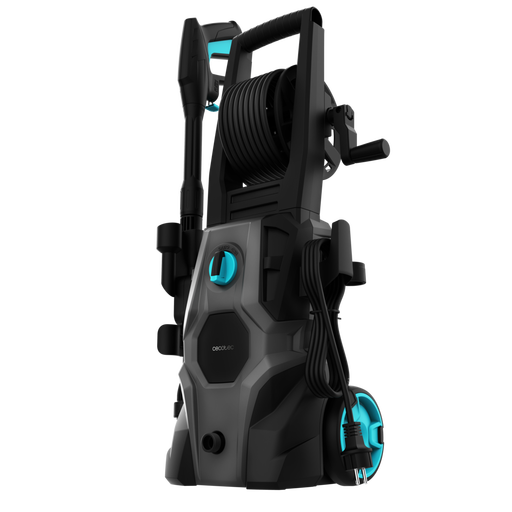
Why it suits this type of buyer: Combining 2,000 W, a rated pressure of 150 bar and a flow rate of 450 l/h, this model is a good option if you want to clean your car, garden and outdoor areas around the home with one machine.
The product details list both the pressure and the water flow rate. The stated package contents also include a high-pressure hose, foam bottle, nozzles, and floor and brush accessories.
Aluminium HardPump, 8-metre high-pressure hose, 9-metre working radius according to the product description, and car-cleaning accessories.
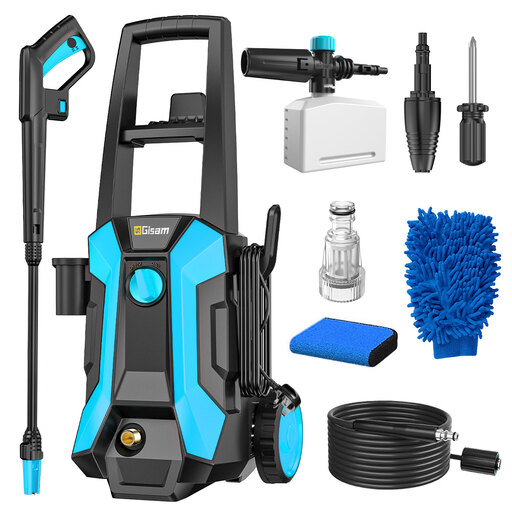
Why it suits this type of buyer: This model is aimed at households with several larger cleaning jobs, such as the driveway, fence, patio and vehicle care.
The 8-metre power cable and hose reel help with reach and storage. Even so, adjust the pressure and nozzle to suit each surface before use.
2,200 W motor, stated pressure of 180 bar, 480 l/h, foam nozzle, rotating nozzle and high-pressure spray gun.
We’ve put together a complete, regularly updated list of products that meet these strict selection criteria and the safety regulations in force across the EU.
A model in the mid-pressure range may be enough for vehicles and many household jobs. The right nozzle, distance from the surface and water flow rate are also important. Avoid using a concentrated jet on car paintwork from close range for extended periods.
A machine rated at 150 bar may be suitable for durable stone or concrete surfaces. Wood, WPC, grouting and delicate coatings need a gentler setting. A shielded surface cleaner can make larger patios easier to clean. Also check whether the attachment is approved for use on wood, WPC or stone.
Electricity costs depend on the machine’s power consumption and how long you use it. A 2,000 W machine would use around 2 kWh if it ran continuously at that power for one hour. In practice, the pump on many machines switches off during breaks. You’ll also use water, with the amount depending on the flow rate and actual running time.