
Lieferung heute & morgen

Qualitätsgarantie

Willkommens-Angebote freischalten: KOSTENLOSE Lieferung | Bis zu 80 % RABATT | Kostenlose 30-Tage-JoyPlus-Testphase
App herunterladen
A pressure washer can clean cars, patios, fences and driveways much faster than a garden hose. However, a high pressure rating alone doesn’t guarantee that a machine is right for the job. If you focus only on “150 Bar” or “180 Bar”, you could overlook the water flow rate, how long the machine can run, the accessories included and whether it’s suitable for delicate surfaces.
Figures such as 150 Bar pressure washer or 180 Bar pressure washer usually refer to the maximum pressure the machine can reach. In practice, the working pressure may be lower. Cleaning performance depends on several factors:
A machine with a high Bar rating but a low flow rate may take longer than expected to clean large areas.
A foam nozzle, rotary nozzle or patio cleaner can make a pressure washer suitable for more tasks. Even so, not every accessory is right for every surface. A powerful nozzle can damage paintwork, grouting, wood or seals. Before you buy, think about whether you need a pressure washer for your car, a machine for heavier-duty work around the drive or a separate patio cleaner.
A mains-powered electric pressure washer usually provides a constant power supply, but you’ll need a suitable socket and enough hose and cable length. A cordless pressure washer offers more flexibility, but has a limited run time and usually produces less pressure. For portable models, battery capacity, charging time, weight and water source are all important considerations.
For cars, garden furniture and light dirt, a lower pressure with the right nozzle is often enough. Stubborn dirt on stone, drives or fences may need more power. The water flow rate determines how much dirt the machine can wash away over time.
A rating of 180 Bar shouldn’t be taken as a green light to use the machine on every surface. When washing a car, keep the nozzle further away, use a wide spray setting and take extra care around tyres, seals, paintwork edges and electrical components. Ideally, you should be able to adjust the pressure.
An electric pressure washer rated at 2,000 or 2,200 watts is suitable for longer jobs around the home, provided the socket, cable and water supply are in the right place. A portable pressure washer with a battery or suction hose is more practical for camping, garden areas without a fixed connection or washing your car on the go.
Look for:
A pressure washer with accessories can be a versatile option if you have a range of jobs to tackle. For car care, a foam nozzle and a wide spray are useful. For patios and paths, a surface cleaner can help reduce splashing. Rotary and turbo nozzles should only be used on robust, hard-wearing materials.
For a pressure washer for the garden and driveway, a hose reel, automatic start-stop function and easily accessible power switch are also useful. Only use cleaning products if they’re suitable for both the machine and the surface.
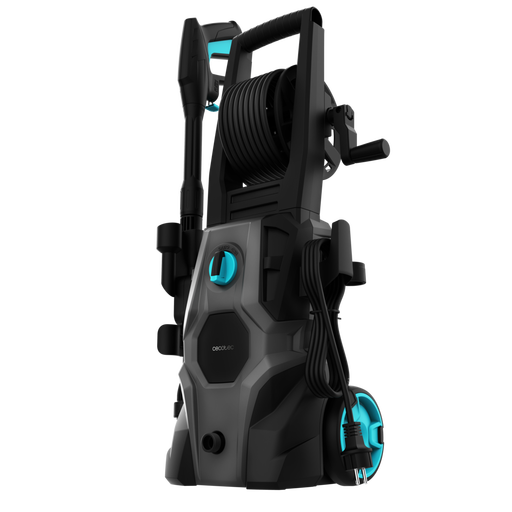
Why it’s a good fit: With 2,000 watts, 150 Bar and 450 l/h, this mains-powered machine is designed for regular jobs around the car, balcony, patio and poolside. Its 9-metre working radius makes it easier to use around the home.
The pressure and flow-rate figures are backed up by practical accessories, including a foam bottle, floor cleaner and several brushes.
2,000-watt motor, 450 l/h water flow rate, start-stop function and several cleaning attachments.
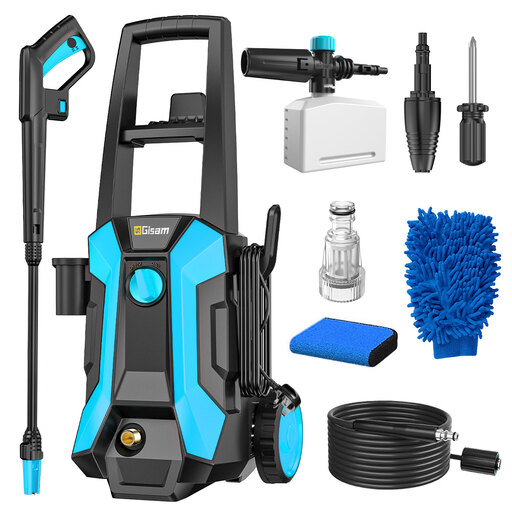
Why it’s a good fit: With 2,200 watts, a stated pressure of 180 Bar, a flow rate of 480 l/h and an 8-metre hose, this machine is aimed at anyone looking to clean larger areas such as a driveway, fence, patio or drive.
The 8-metre hose and hose reel help solve the problems of limited reach and awkward storage.
Foam nozzle, rotating nozzle, spray gun and a 480 l/h flow rate for tackling different outdoor surfaces.
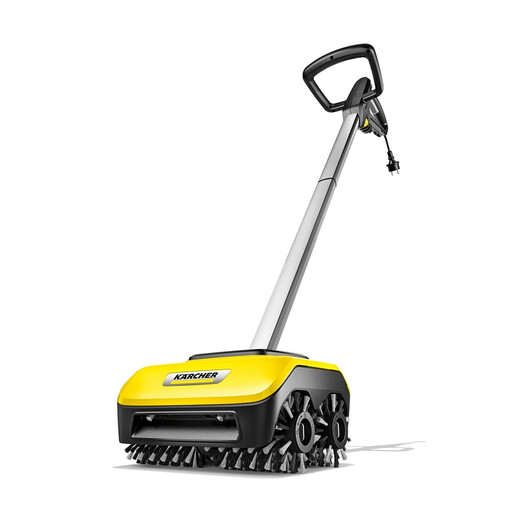
Why it’s a good fit: The PCL 6 isn’t a conventional pressure washer, but an electric low-pressure patio cleaner for wood and WPC surfaces. Four counter-rotating brushes and a 300 mm working width help deliver an even clean.
Its maximum pressure of 10 Bar makes it clear that this machine is intended for gentler patio cleaning, not heavy-duty work on stone surfaces.
300 mm working width, brush speed of 600–800 rpm and adjustable water flow.
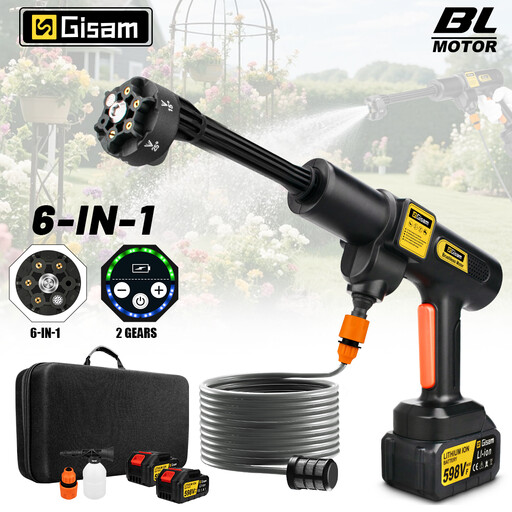
Why it’s a good fit: This cordless machine is designed for washing cars, camping, gardening and drawing water from a bucket, water tank or similar source. Two batteries and a 5-metre hose make it easier to tackle longer jobs away from home.
The adjustable range of 25 to 65 Bar shows that portable cleaning is about tailoring the power to the job, not just relying on a maximum figure.
Six-in-one nozzle, foam attachment, water filter, two batteries and the option to use it without a mains water connection.
We’ve put together a complete, regularly updated list of products that meet these strict selection criteria and the applicable EU safety regulations.
Never point the water jet at people, animals, power sockets or live equipment. When washing a car, avoid the engine bay, charging ports, sensors and seals. Safety glasses and sturdy footwear can help protect you from splashes and dislodged dirt.
After use, drain the hose and machine, clean the nozzles and keep battery connections dry. Frost can damage any water left in the pump system. Store the machine somewhere frost-free and follow the manufacturer’s instructions on cleaning products, charging times and spare parts.
For washing a car, high pressure isn’t the only thing that matters. An adjustable nozzle, a suitable distance and a foam nozzle are more important for a controlled clean. Avoid directing a concentrated jet at delicate paintwork, seals or electrical components.
A cordless pressure washer gives you more freedom to move around and is well suited to short jobs on the go. An electric pressure washer is a good choice if you regularly clean larger areas and have access to a power socket. For battery-powered models, also compare run time, charging time and the number of batteries included.
Running costs include electricity, water, cleaning products and, where necessary, replacement nozzles, filters or batteries. The cost depends on the water flow rate, how long you use the machine and local electricity and water prices. A start-stop system can reduce consumption during short breaks.