
Lieferung heute & morgen

Qualitätsgarantie

Willkommens-Angebote freischalten: KOSTENLOSE Lieferung | Bis zu 80 % RABATT | Kostenlose 30-Tage-JoyPlus-Testphase
App herunterladen
A pressure washer can clean vehicles, patio slabs, garden furniture, fences and driveways much faster than a garden hose. However, a high number on the packaging does not automatically mean the machine is right for you. What matters is how pressure, water flow rate, hose length and accessories work together.
For households in Germany, three common buying mistakes are:
A 180-bar pressure washer sounds powerful. However, check whether this refers to maximum pressure or the stated working pressure. For cleaning cars, bicycles and more delicate surfaces, an adjustable nozzle is advisable. On patios, walls or driveways, a concentrated or rotary nozzle can be helpful, but it should be used from a safe distance and with care.
The water flow rate is equally important and is usually given in litres per hour. A model delivering 480 l/h or 540 l/h can cover larger areas with a wider stream of water. However, this also increases water consumption. When choosing a machine, consider the following:
A 2200-watt pressure washer has a specific electrical power consumption. On its own, this does not indicate how effectively it removes dirt. The key factor is the combination of motor, pump, pressure and flow rate. You should also take the available socket and the length of the extension lead into account.
An electric pressure washer should only be operated with a suitable power supply protected against moisture. Do not use damaged cables or plug connections. A residual-current device can provide additional safety; the relevant factors are the local installation conditions and the instructions in the user manual.
A pressure washer with an 8 m hose gives you more freedom of movement around your property than a shorter model. An integrated hose reel can make winding up the hose easier and reduce the risk of kinks. Also look for:
When choosing a pressure washer with accessories, the number of attachments is not the only consideration. What matters more is whether the equipment covers your intended tasks. For example, a foam nozzle is suitable for pre-washing a car. A patio cleaner distributes the water jet more evenly across patio surfaces and can reduce splashing.
The following selection assigns models to different household profiles based on their stated technical specifications and features. The product details should be checked again on the relevant product page before purchase.
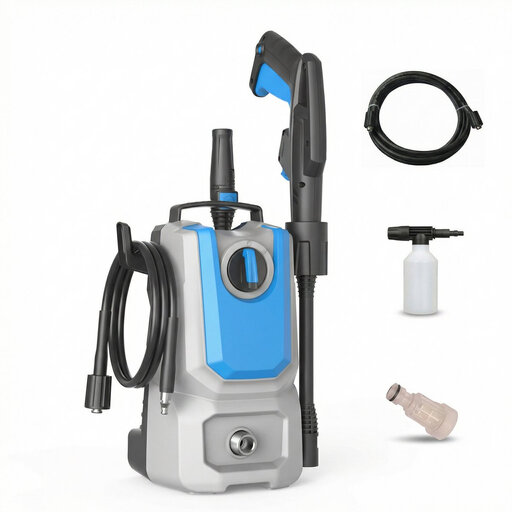
Why this product suits the profile: This compact model is designed for regular household tasks such as washing cars, cleaning garden furniture and bicycles, as well as smaller patios and driveways.
The specifications distinguish between a maximum of 90 Bar and a stable working pressure of 60 Bar. This gives you a more realistic view of the machine’s performance.
1300-watt motor, 5 m high-pressure hose, automatic switch-off and adjustable spray gun.
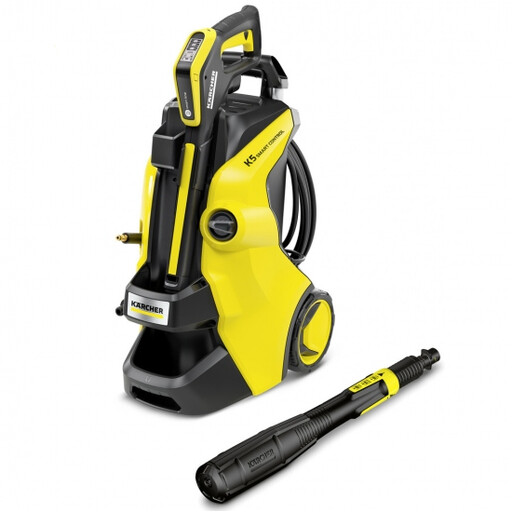
Why this product suits the profile: With 145 Bar maximum pressure, a flow rate of up to 500 l/h and app connectivity, this model is aimed at users who prioritise convenience and clearly documented technical specifications.
The product data states both a working pressure of 125 Bar and a maximum pressure of 145 Bar. This distinction prevents a one-sided assessment of performance.
3-in-1 Multi Jet lance, Boost mode, aluminium pump head, wheels and Bluetooth connection to the app.
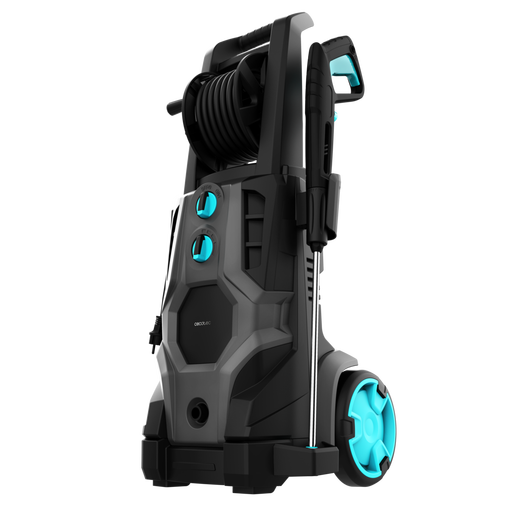
Why this product suits the profile: For large patios, driveways, pool surrounds or frequent cleaning jobs, this model offers a high stated flow rate and an extensive range of accessories.
The combination of 225 Bar maximum pressure and 540 l/h should not be used without a suitable nozzle. A controlled setting is required for delicate surfaces.
3200 watts, 540 l/h, aluminium pump, detergent bottle, wheels and start-stop function.
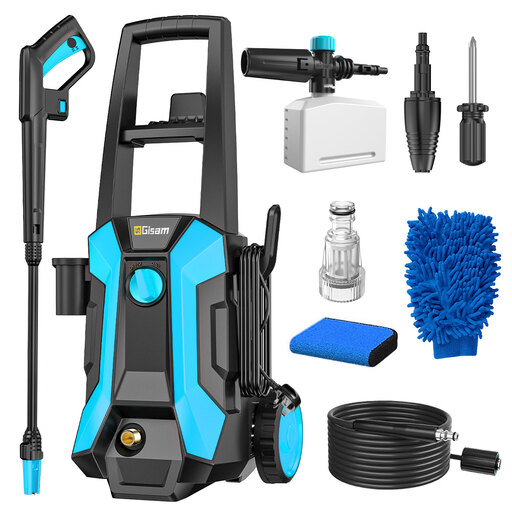
Why this product suits the profile: This machine combines 2200 watts with 180 Bar maximum pressure, 480 l/h and an 8 m hose for a range of tasks around the home.
The equipment is not promoted on pressure alone: the hose reel, foam nozzle, rotary nozzle and spray gun are designed for different tasks.
8 m high-pressure hose, 2200-watt motor, 480 l/h and accessories for cars, fences, patios, gardens and driveways.
We have put together a complete, regularly updated list of products that fully meet these strict selection criteria and the safety regulations applicable in the EU.
When using a pressure washer for cars, start with a wide, gentle water jet that is not too concentrated. Keep a safe distance from the paintwork, seals and electrical components. A foam nozzle can distribute detergent evenly; always follow the detergent manufacturer’s instructions.
When using a pressure washer for patios, the attachment should match the surface. Wood, jointing material and coated surfaces can be damaged by excessive pressure. Test the machine on an inconspicuous area first. For garden cleaning, wide nozzles are often suitable, while stubborn dirt on robust stone surfaces may require a rotary attachment.
In Germany, you should also check whether the machine may be operated with drinking water and whether a suitable backflow prevention device is required for the connection. The user manual, local regulations and connection requirements are the relevant sources of guidance.
For a car, the highest possible pressure is not the only important factor. An adjustable nozzle, sufficient distance and a wide water jet are more important for protecting the paintwork, seals and delicate components. Models with a maximum pressure of 90 to 145 Bar may be suitable for washing vehicles, depending on the setting.
Its lifespan depends on how long it is used, water quality, frost protection, cleaning after use and the level of wear. After use, empty the hose and pump, store the machine in a frost-free place and clean the water filter regularly. A metal or aluminium pump can offer design advantages in certain models, but it does not replace regular maintenance.
Running costs consist of electricity, water and, where applicable, detergent. A machine with a higher wattage uses more electrical energy over the same operating time. A start-stop automatic function can reduce unnecessary idling. For an accurate calculation, check the selected model’s electrical power, operating time and water flow rate.