
Lieferung heute & morgen

Qualitätsgarantie

Willkommens-Angebote freischalten: KOSTENLOSE Lieferung | Bis zu 80 % RABATT | Kostenlose 30-Tage-JoyPlus-Testphase
App herunterladen
A pressure washer can clean vehicles, patio slabs, garden furniture and driveways much faster than a garden hose. However, a high number on the packaging does not automatically mean the machine is right for you. For households in Germany, factors such as the water supply, hose length, accessories, storage and controlled use also matter.
Figures such as 150 bar or 180 bar often describe the maximum pressure the machine can reach. In everyday use, the actual working pressure is more important. A machine with a continuously usable, adjustable pressure can be more practical for delicate surfaces than a model with a high peak figure.
When cleaning car paintwork, bicycles or garden furniture, start by using the water jet from a generous distance and at a low setting. On wood, grouting and damaged surfaces, a jet that is too concentrated can strip away material.
A comprehensive accessory package is not automatically useful. What matters is whether the attachments suit your intended use:
Before buying, you should also check whether replacement nozzles, brushes and cleaning-product connections are available.
A short power cable or limited pressure hose can make cleaning a car, patio or driveway unnecessarily awkward. Mains-powered machines require a suitable, earthed socket and should not be used in the rain or in standing water. With a cordless pressure washer, battery capacity, charging time and a clean water source are crucial.
Many portable models draw water from a bucket, water butt or another container. This is flexible, but it is no substitute for a powerful water supply. Keep the filter and intake hose clean to prevent sand or dirt from entering the pump.
For light tasks such as cleaning bicycles, balconies or garden furniture, a compact electric pressure washer is often sufficient. For large patios, driveways and firmly ingrained dirt, water flow rate and working pressure are more important. A higher litres-per-hour rating can speed up rinsing, but it also increases water consumption.
Motor power in watts describes electricity consumption or drive power, not cleaning performance alone. Pay attention to the relationship between working pressure, maximum pressure and flow rate. A machine with 1,300 watts and 90 bar may be sufficient for regular household tasks, while models with 2,000 watts or more may be designed for larger areas.
A five-metre pressure hose is suitable for many standard tasks. For vehicles, façades or larger outdoor areas, eight metres provides greater freedom of movement. A hose reel makes storage easier and helps prevent kinks.
Wheels, a telescopic handle and low weight are important if you need to move the machine between the cellar, garage and garden. An automatic start-stop system switches the motor off when you release the trigger, helping to save water and avoid unnecessary running time.
Aluminium pump housings are listed as a design feature on several machines. Nevertheless, users should check the complete manufacturer’s specifications, instruction manual and available replacement parts. Always follow the safety instructions provided by the relevant manufacturer.
Never direct the water jet at people, animals, electrical equipment or the machine itself. Safety goggles and non-slip footwear are advisable for many cleaning jobs. After use, drain any remaining water and store the machine somewhere protected from frost.
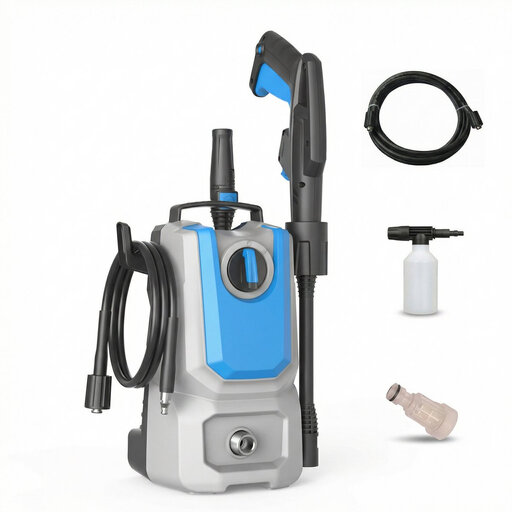
Why this product suits this profile: This compact corded model is designed for everyday tasks such as washing cars, cleaning bicycles and garden furniture, and tackling smaller patio areas.
Alongside a maximum of 90 bar, the specifications also state a working pressure of 60 bar. This gives you a more realistic idea of its performance.
1,300-watt motor, aluminium pump, five-metre pressure hose and automatic start-stop system.
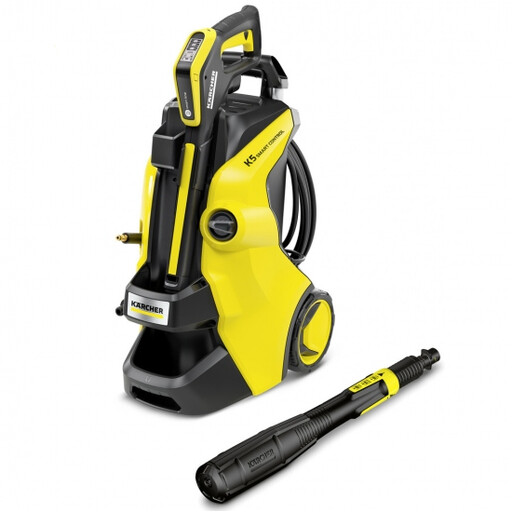
Why this product suits this profile: This model is designed for frequent cleaning of patios, vehicles, bicycles and outdoor furniture, and offers app support.
Working pressure and maximum pressure are listed separately: 125 and 145 bar respectively. This makes it easier to assess the technical specifications.
500 l/h maximum flow rate, 10-metre working radius, aluminium pump head and 3-in-1 Multi-Jet lance.
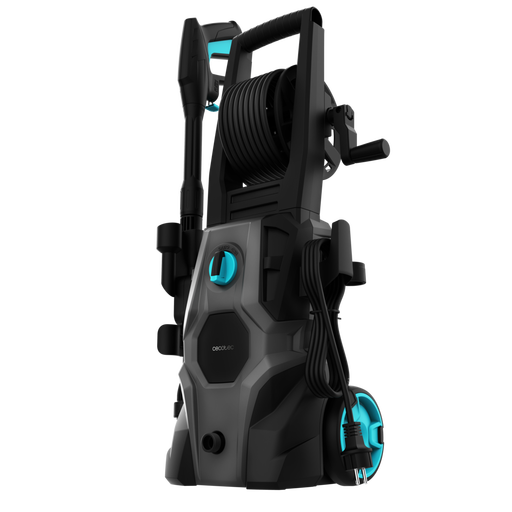
Why this product suits this profile: The combination of 150 bar, 450 l/h and several brushes is aimed at users with a range of outdoor cleaning tasks.
The contents are listed clearly, including a pressure hose, foam bottle, floor cleaner and wheel brush.
2,000-watt power, aluminium pump, 9-metre working radius and automatic start-stop system.
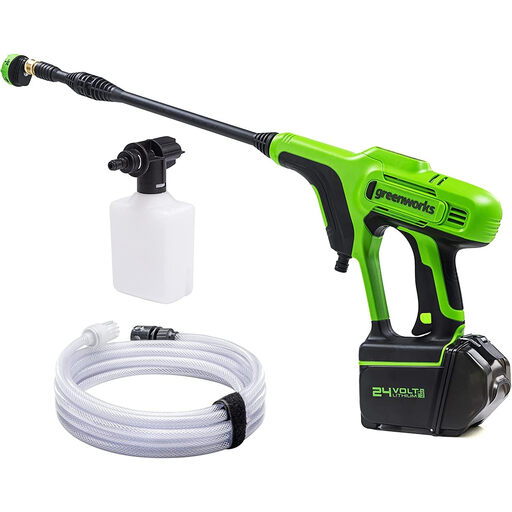
Why this product suits this profile: This cordless pressure washer can draw water from a clean container and is suitable for bicycles, garden furniture, balconies and lighter outdoor tasks.
At 24 bar, its performance is clearly lower than that of many corded machines. This suits lighter tasks and reduces the risk of choosing an overpowered model.
24 bar, 180 l/h, 5-in-1 nozzle and six-metre intake hose; the battery and charger are not included with this version.
We have put together a complete, regularly updated list of products that fully meet these strict selection criteria and the safety regulations applicable in the EU.
For a pressure washer for cars, the pressure should be adjustable. Start with a wide jet and keep a sufficient distance. A foam nozzle makes it easier to apply a suitable cleaning product. Do not direct the water jet straight at seals, damaged areas of paintwork or electrical components.
This depends on the material and the level of dirt. For delicate wood or WPC, a low-pressure patio cleaner with brushes may be more suitable. Machines with a higher working pressure may be appropriate for robust stone surfaces. Always test each surface in an inconspicuous area first and, where possible, use a suitable surface cleaner for larger areas.
Costs mainly depend on electricity consumption, water usage, operating time and cleaning product. An automatic start-stop function can limit how long the motor runs. With cordless models, charging cycles and, where necessary, an additional battery also add to the cost. A higher-powered model is therefore not always the most economical choice for every short cleaning task.