
Lieferung heute & morgen

Qualitätsgarantie

Willkommens-Angebote freischalten: KOSTENLOSE Lieferung | Bis zu 80 % RABATT | Kostenlose 30-Tage-JoyPlus-Testphase
App herunterladen
A pressure washer for your car can make washing your vehicle at home easier. However, not every model is equally suitable for delicate paintwork, tight parking spaces or extra jobs around the garden. Terms such as “cordless”, “high pressure” or “foam function” don’t, on their own, tell you how practical a machine will be day to day.
Before you buy, check how the water is supplied, what reach you’ll actually get, and whether the accessories and post-use cleaning are practical.
A high bar rating sounds impressive at first. But when washing a car, maximum pressure isn’t the only thing that matters. A harsh, concentrated jet used at close range can move dirt across the paintwork or put delicate seals under strain. Look for:
A different spray mode may be suitable for wheels, patios or fences than for paintwork, glass and plastic parts.
A portable pressure washer or battery-powered pressure washer will usually need a bucket, a suction hose or a water connection. Runtime depends on the battery, water output and selected operating mode. Before buying, check:
A cordless pressure washer is especially handy if there’s no power socket near your parking space. For longer cleaning sessions, a mains-powered model may be a better fit.
A foam bottle alone doesn’t guarantee an even layer of foam. Similarly, a small nozzle won’t replace a long hose when you need to clean all the way around your vehicle. Check the specifications for:
For light watering, a garden hose with a spray gun may be enough. For washing your car with detergent, a pressure washer with a foam lance or a separate foam sprayer is a more appealing option.
A mains water tap usually provides a steady supply. Models with self-priming can draw water from a bucket, giving you more flexibility. Check that the connector is suitable and make sure the suction hose isn’t kinked.
A longer hose gives you more reach, but can take up more room when stored or transported. For example, the Baseus GF3 is listed with a 15-metre telescopic pole. This can be useful for larger vehicles, roof areas or hard-to-reach wheel arches.
Pressure and water flow need to be considered together. A machine rated at 50 bar and 4 l/min works differently from a mains-powered model rated at 180 bar and 480 l/h. Manufacturer figures like these aren’t directly comparable, as test conditions and nozzle configurations can vary.
For washing your car:
A battery-powered sprayer or electric water gun is often suitable for plants, light dirt and short jobs. For larger areas, also consider tank capacity, charging time, handle design and the weight of the machine when its tank is full.
A car washer with a safety lock helps prevent the spray from starting accidentally. An automatic continuous-spray function can take the strain off your hand during longer jobs. After use, remove any remaining water from the machine, hose and nozzle to prevent deposits and frost damage.
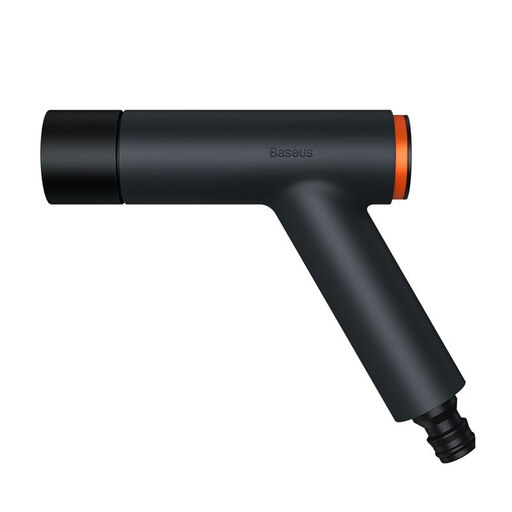
Why this product suits this user type: The spray nozzle connects to a standard garden hose, so there’s no need for a separate battery or electric motor. Its 15-metre telescopic pole makes it easier to clean all the way around your vehicle.
The reach is clearly specified as 15 metres. Water performance still depends on your existing garden hose, rather than relying on battery figures that aren’t explained in detail.
15-metre telescopic pole and universal joint; suitable for cars, gardens and outdoor areas.
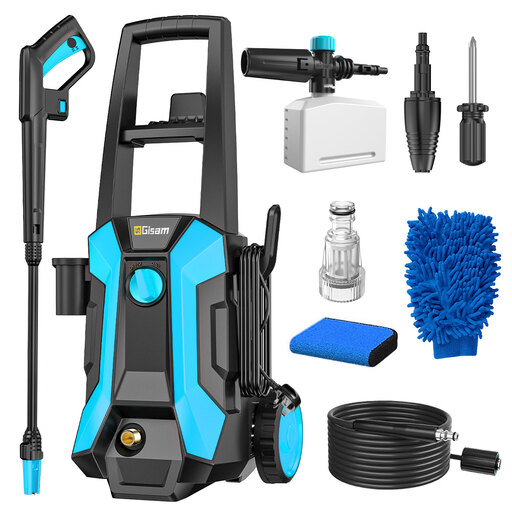
Why this product suits this user type: If you regularly clean vehicles, patios, fences and driveways, this mains-powered model comes with an 8-metre high-pressure hose and several attachments.
The product specifications list motor power, pressure, flow rate, hose length and accessories separately. This makes it easier to check the relevant operating details before you buy.
2200 W motor, rated at 180 bar and 480 l/h; supplied with a foam nozzle, rotating nozzle and 8-metre hose.
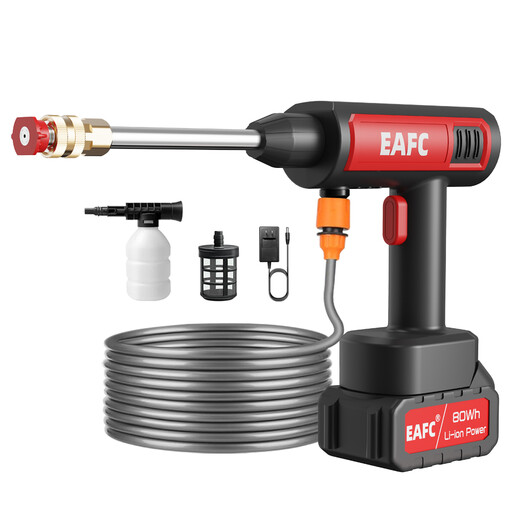
Why this product suits this user type: This cordless model is designed to draw water from a bucket or by self-priming, making it suitable for parking spaces without a nearby tap.
The product description specifically covers the battery, water source and common causes of air in the system. Before use, make sure the suction line is fully primed with water.
Cordless operation and use with a bucket or self-priming; designed for cars, bicycles, motorbikes, balconies and garden jobs.
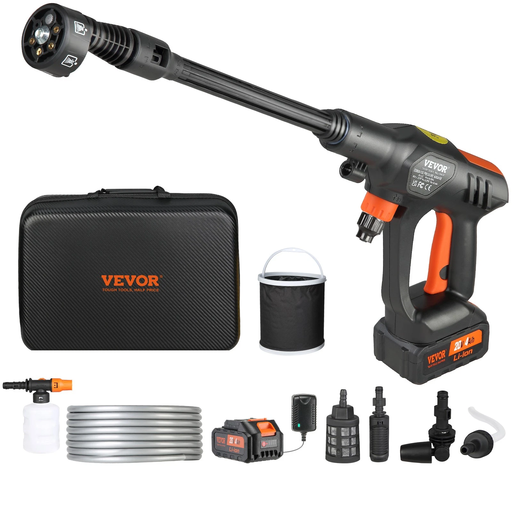
Why this product suits this user type: This model combines battery operation with rated specifications of 250 W, 21 V, 50 bar and 4 l/min. Extension rods and various attachments give you more ways to use it.
The specifications cover more than just pressure, listing power, voltage and flow rate too. A safety lock is designed to prevent accidental activation.
Battery-powered operation with a stated flow rate of 4 l/min; accessories and extension rods for hard-to-reach or elevated areas.
We’ve put together a complete, regularly updated list of products that meet these strict selection criteria and fully comply with the safety regulations in force in the EU.
Start by using clean water to remove loose dirt. Don’t point the nozzle directly at damaged paintwork, seals or electrical components. Use the recommended amount of cleaner as specified by the manufacturer. After use, empty and dry the hose, nozzle and tank. If you have a battery-powered model, don’t store the battery while it’s wet, and only charge it with the supplied charging accessories.
Choose a model with an adjustable spray pattern, enough reach from the hose or battery, and a foam function. For occasional washes, a hose spray nozzle may be enough. If you’ll use it regularly or also clean your patio, an electric model with a separate foam nozzle gives you more options.
That depends on the model. The product specifications must explicitly state that it has a bucket or self-priming function. The suction hose should also be straight and the filter clear. Air in the system can temporarily reduce water flow.
Mains-powered models use electricity and water, so you’ll pay for both. The actual cost depends on power, runtime, water flow and local tariffs. Battery-powered models also need charging; battery capacity and how often you charge it will affect running costs.