
Lieferung heute & morgen

Qualitätsgarantie

Willkommens-Angebote freischalten: KOSTENLOSE Lieferung | Bis zu 80 % RABATT | Kostenlose 30-Tage-JoyPlus-Testphase
App herunterladen
A pressure washer can clean cars, bicycles, patios, garden furniture and fences much faster than an ordinary garden hose. However, a high advertised figure on the packaging does not automatically mean the machine is right for you. What matters is whether the pressure, water flow, power supply and accessories match the intended use.
Figures such as 180 bar pressure washer often refer to the maximum pressure achievable. When choosing a model, it is also important to check whether the manufacturer specifies the working pressure, water flow rate and motor power. A model with a working pressure of 135 bar and a flow rate of 430 litres per hour may be sufficient for many household tasks, while a machine with a higher maximum pressure will not necessarily be more convenient to use.
A foam lance, for example, is suitable for pre-washing a vehicle. A patio cleaner, on the other hand, is more practical for larger, flat areas such as patios or balconies. A turbo nozzle can remove stubborn dirt, but it should not be used unchecked on delicate paintwork, wood or grouting.
A cordless pressure washer or mobile pressure washer offers flexible use, but requires a suitable water source and has a limited runtime depending on the battery. An electric pressure washer with a mains connection usually delivers consistent performance, but requires an accessible socket and safe handling of electricity outdoors.
For light jobs involving bicycles, garden furniture or balconies, compact machines with lower pressure are often sufficient. A model with around 24 bar, for example, is generally designed for more delicate surfaces, mobile use and drawing water from buckets or water butts.
For car washing and general outdoor cleaning, figures between approximately 100 and 140 bar working pressure are often a useful comparison range. For heavily soiled patios, driveways or fences, a more powerful machine with a maximum pressure of 180 bar and a high water flow rate may be worth considering. The nozzle and the distance from the surface remain crucial.
A mains-powered machine rated at 1,600 or 2,200 watts requires a suitable outdoor socket. The length of the cable and hose affects your working radius. With cordless machines, you should check:
A pressure sprayer or electric foam sprayer should not be confused with a pressure washer. These machines are suitable for applying cleaning products, water, fertiliser or, where approved, disinfectants evenly, but they do not produce the same cleaning effect as a high-pressure jet.
Look for an adjustable nozzle, a sufficiently long high-pressure hose and easy-to-clean connections. With a pressure washer with foam lance, it should be clearly stated how the detergent is filled and whether the foam unit is attached externally.
Cleaning and spraying products may only be used if the product instructions state that they are suitable for the pump, container, seals and hose. Paints and coatings require the correct viscosity when used with an electric paint sprayer. Safety goggles, suitable respiratory protection, gloves and good ventilation are essential preparation for renovation work.
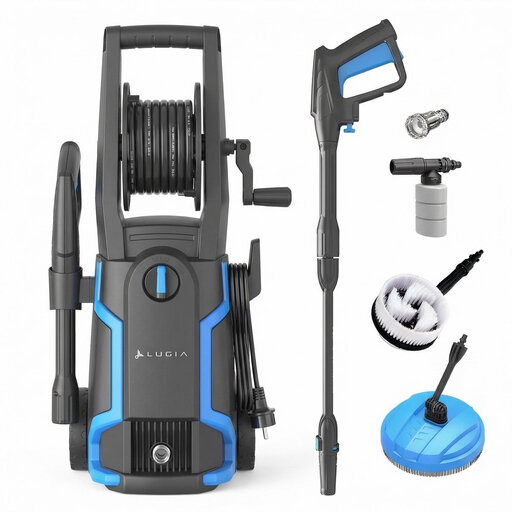
Why this product suits this profile: This mains-powered machine handles typical jobs around the car, bicycle, patio and garden furniture, and comes with several attachments.
The working pressure, water flow rate and motor power are all specified clearly. The package includes a patio cleaner, rotary brush, turbo nozzle and external foam cannon, among other accessories.
1,600 watts, 430 litres per hour, a 5-metre hose and start-stop system; the wheels and carry handle make transport easier.
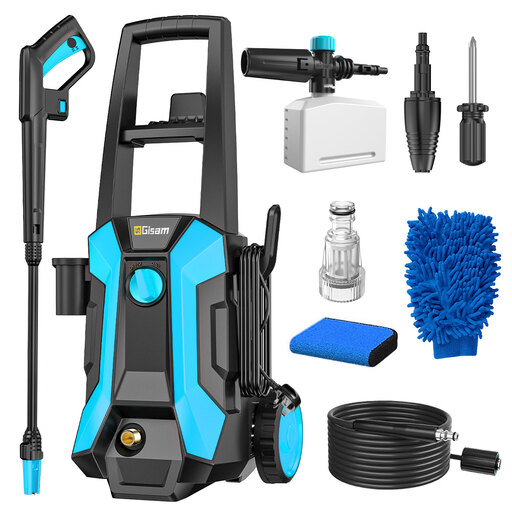
Why this product suits this profile: If you regularly clean larger outdoor areas, this machine offers a high stated motor power, an 8-metre hose and accessories for different cleaning methods.
Maximum pressure and water flow rate are listed separately: 180 bar and 480 litres per hour. This makes it easier to compare the machine with other models.
2,200-watt motor, 8-metre high-pressure hose, foam lance, rotary nozzle and high-pressure spray gun.
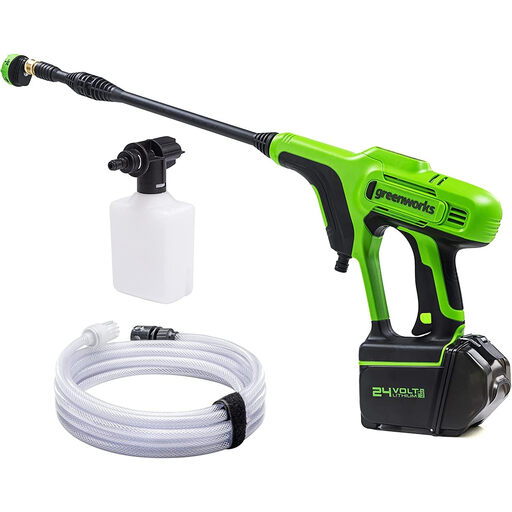
Why this product suits this profile: This cordless machine is ideal for camping, balconies, bicycles, barbecues and garden furniture when no fixed water or power supply is available.
The significantly lower pressure of 24 bar makes it clear that this is a mobile machine for lighter cleaning jobs, not a patio cleaner for heavy soiling.
5-in-1 nozzle, 6-metre suction hose and water intake from clean sources such as buckets or water butts.
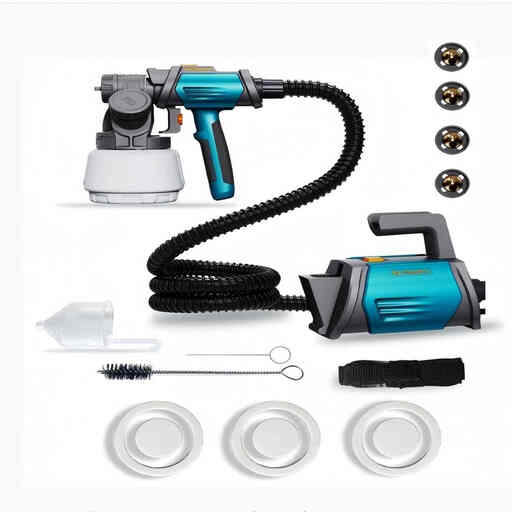
Why this product suits this profile: For fences, furniture, walls and ceilings, an electric paint sprayer with adjustable spray patterns offers a separate alternative to a pressure washer.
The material limit of up to 120 DIN-S, four brass nozzles and three spray patterns make it easier to match the sprayer to the paint and surface. Testing on a spare piece of material is still advisable.
800-watt HVLP system, 1,300 ml container, 2.5-metre hose and cleaning tools included.
We have put together a complete, regularly updated list of products that fully meet these strict selection criteria and the safety regulations applicable in the EU.
The bar rating is not the only factor that matters when washing a car. An adjustable nozzle, sufficient distance and a suitable foam attachment are important for protecting the paintwork and seals. Mobile cordless machines with around 24 to 65 bar may be sufficient for light dirt. Mains-powered machines with a higher working pressure offer more power in reserve, but require careful adjustment.
Electricity costs depend on the motor power, runtime and local electricity tariff. A machine rated at 1,600 watts uses 1.6 kilowatt hours during one hour of continuous operation in theory. In practice, the pump often does not run continuously because of the start-stop system. You should also take water consumption and, where applicable, cleaning products into account.
Service life depends on how often the machine is used, water quality, frost protection and maintenance. After use, remove any remaining water, clean the filters and nozzles, and store cordless machines dry with the battery at the appropriate charge level. An aluminium or metal pump may have different design characteristics from a plastic pump; however, this alone does not allow any definitive conclusions about actual service life.