
Lieferung heute & morgen

Qualitätsgarantie

Willkommens-Angebote freischalten: KOSTENLOSE Lieferung | Bis zu 80 % RABATT | Kostenlose 30-Tage-JoyPlus-Testphase
App herunterladen
A pressure washer can clean cars, patios, balconies, fences, garden furniture and driveways considerably faster than a garden hose. However, a high advertising figure on the packaging does not automatically mean the appliance is right for you. What matters is whether the pressure, water flow rate, power supply and accessories suit the job you have in mind.
Figures such as 150 bar, 180 bar or 225 bar often refer to the maximum possible pressure. For practical cleaning, however, the working pressure and water flow rate are also important. A machine with high pressure but a low flow rate may clean larger areas more slowly than expected.
For delicate surfaces such as car paintwork, wood or painted garden furniture, adjustable pressure is more important than the highest possible peak value. On paving slabs or heavily soiled driveways, on the other hand, higher performance may be useful.
A 2000-watt pressure washer may be suitable for typical jobs around the home. However, the motor’s power consumption alone does not show how efficiently water is converted into cleaning performance. You should also check:
A standard nozzle is sufficient for many tasks, but it is not ideal for every surface. A pressure washer with a foam nozzle makes pre-washing a vehicle easier. A pressure washer with a surface cleaner distributes the water jet more evenly and can reduce splashback on patios.
Also check whether brushes, hoses, extensions and cleaning products are included or need to be purchased separately.
For most domestic applications, maximum figures alone are not the deciding factor. As a guide:
A 150-bar machine can be sufficient for the home, car and garden. Models rated at 200 bar or more are generally intended for stubborn dirt and larger areas. The correct distance from the surface remains crucial.
The flow rate is stated in litres per hour. Higher figures can speed up cleaning large areas, but they also increase water consumption. A model rated at 450 l/h or 540 l/h requires a suitable water connection and a sufficiently free-flowing inlet hose.
With a cordless or portable pressure washer, water is often drawn from a bucket, water tank or another container. A filter protects the pump from dirt particles. Seawater should not be used, as salt can damage the internal components.
An electric pressure washer is suitable for regular jobs near a mains socket. Pay attention to the cable length, hose length and weight. Wheels and a telescopic handle make it easier to transport.
A cordless pressure washer or portable pressure washer is practical for camping, motorhomes, gardens and vehicle care without a fixed power connection. In this case, runtime, charging time, battery capacity and the water source are particularly important. Machines without an automatic water-stop function should not be connected directly to a tap without first checking that this is suitable.
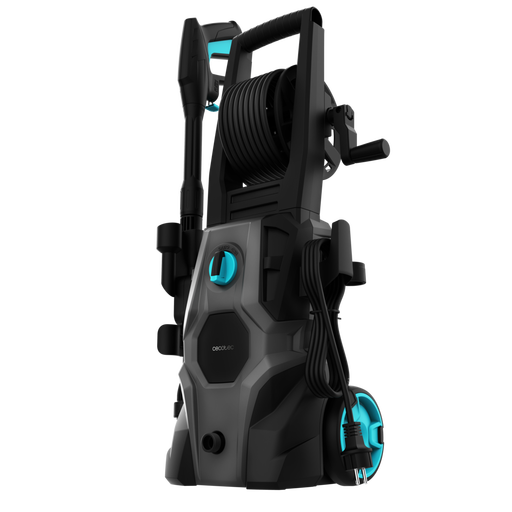
Why this product suits this profile: With 2000 W, 150 bar and 450 l/h, it covers typical cleaning tasks for cars, homes and gardens. The package includes a foam bottle, surface cleaner and brushes, among other accessories.
The included equipment clearly shows which attachments come with the machine. This means you do not automatically need to budget separately for essential accessories.
2000 W motor, 150 bar, 450 l/h, Aluminium HardPump and auto start-stop function according to the product details.
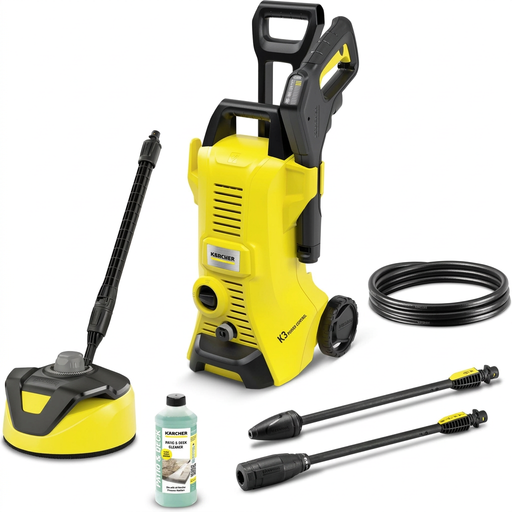
Why this product suits this profile: For regular jobs on patios, fences and garden areas, this set offers pressure control, a T 5 surface cleaner and a telescopic handle.
The pressure setting helps you avoid treating every surface at the maximum level. On suitable flooring, the surface cleaner helps to limit splashback.
Up to 120 bar, 380 l/h, 7 m high-pressure hose, water filter and Home & Garden app according to the product description.
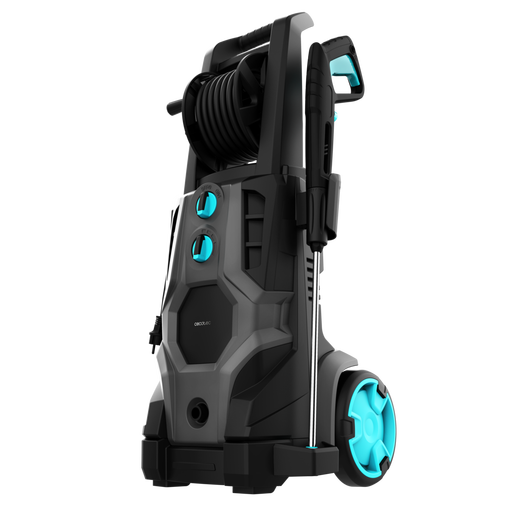
Why this product suits this profile: With 3200 W, 225 bar and 540 l/h, it is designed for larger outdoor areas and heavier dirt. A 14 m operating radius makes working around the home easier.
The high pressure rating is complemented by the stated flow rate. Before buying, check the water connection, electrical circuit and suitable nozzles for delicate surfaces.
3200 W, 225 bar, 540 l/h, aluminium pump, foam bottle, wheels and quick coupling according to the product details.
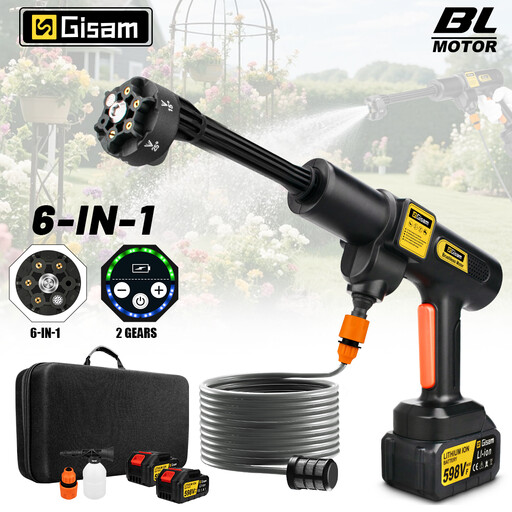
Why this product suits this profile: The cordless design, with two batteries, a 5 m hose, water filter and carry bag, is suitable for vehicle care, camping and locations without a mains socket.
The product details explicitly state that there is no water-stop function. Direct connection to a tap is therefore not recommended.
Two batteries, 6-in-1 nozzle, foam attachment, suction filter and a stated pressure range of 25 to 65 bar according to the product description.
We have put together a complete, regularly updated list of products that fully meet these strict selection criteria and the safety regulations applicable in the EU.
Always use a nozzle suitable for the surface and keep a sufficient distance. Car paintwork, joints, wood and plastic can be damaged by a water jet that is too concentrated. Electrical appliances must not be operated in the rain. Position the socket, cable and water connection so that there is no risk of tripping or short circuits.
For running costs, the main factors are electricity consumption, water flow rate, cleaning products and replacement parts. A car does not need to be cleaned at maximum pressure. On patios, a surface cleaner or specialist patio cleaner can work more evenly than a concentrated rotary nozzle. For wood and WPC, a suitable brush attachment used at low pressure is often the more controlled solution.
Low to medium pressure is usually sufficient for washing a car. An adjustable nozzle, sufficient distance and a foam attachment are the key factors. The water jet should not be directed continuously at seals, tyre sidewalls or damaged paintwork.
Its service life depends on how often it is used, water quality, frost protection, care and workload. After each use, any remaining water and cleaning product should be removed. Filters and connections should be checked regularly. The machine should be stored somewhere frost-free and dry.
Electricity costs are based on the power consumption and the actual operating time. With a 2000-watt machine, one hour of operation theoretically equates to 2 kWh; in practice, the motor does not necessarily run continuously because of the start-stop function. Water and, where applicable, cleaning product costs must also be taken into account.