What to look for when buying
First, check whether you need to avoid a specific allergen. Then compare the carbohydrates in your portion. If you’re choosing wholegrain or salty snacks, also consider the relevant ingredients and salt content.
| Criteria |
What to check |
Who it matters to |
| Carbohydrate portion |
Compare the carbohydrate content per 100 g with the weight of the amount you eat. |
If I’m planning to include a pretzel in my meal, I want to know how many carbohydrates are in my portion. This is the main consideration for around 40% of consumers. |
| Gluten and allergens |
Identify the specific allergen you need to avoid and check the information for the variety you’ve chosen; ask for allergen information if buying loose pretzels. |
If I have a confirmed requirement to avoid gluten or another allergen, I need a variety that meets that specific requirement. This is the main concern for around 30% of consumers. |
| Wholegrain and salt |
Compare the stated wholegrain content and salt per 100 g, and take your planned portion size into account. |
When choosing a pretzel snack with a longer shelf life, I want to understand its wholegrain content and salt level rather than relying on a single claim. This is the first thing around 30% of consumers look for. |
Brands to consider
These examples cover a range of pretzels and salty snacks. The information for the specific product remains the most important thing to check.
Ditsch
Fresh lye pretzels that offer a point of comparison for a traditional wheat pretzel.
- For its shop lye pretzel, Ditsch lists wheat, 53 g of carbohydrates and 2.05 g of salt per 100 g.
- Topped varieties have their own information; according to Ditsch, the chive butter pretzel also contains milk.
Alnatura
Wholegrain pretzels with a longer shelf life, for people who want to compare stated wholegrain content.
- Alnatura states that its wholegrain pretzels contain 81% wholemeal wheat flour.
- Wholemeal wheat flour doesn’t make these pretzels gluten-free; you’ll still need to check the carbohydrate and salt content separately.
Mayka
Packaged lye-baked snacks, as an example of a salty snack with a longer shelf life.
- EDEKA24 lists 69 g of carbohydrates and 5 g of salt per 100 g for Mayka Sticks & Brezeln.
- The product listed there contains wheat, barley malt flour and soya flour; if you need to avoid any of these, check the specific pack.
Schär
Salty snacks for anyone looking for a gluten-free alternative to a traditional wheat pretzel.
- EDEKA24 lists Schär Salinis in its gluten-free foods category.
- A salty snack isn’t automatically comparable to a lye pretzel. Check the ingredients, carbohydrates and salt for the specific pack.
MEINE BACKWELT (ALDI SÜD)
Fresh lye pretzels from ALDI SÜD’s bakery range.
- ALDI SÜD sells a lye pretzel under the MEINE BACKWELT brand.
- If you need to check specific ingredients or carbohydrate content, ask for the information on the particular pretzel before choosing it.
Pretzel products on Joybuy
This product is one of the wholegrain snack pretzels with a longer shelf life. Its stated wholemeal wheat content can help you compare products, but it doesn’t replace checking the carbohydrates in your portion or confirming whether it meets your gluten requirements.
 No image available
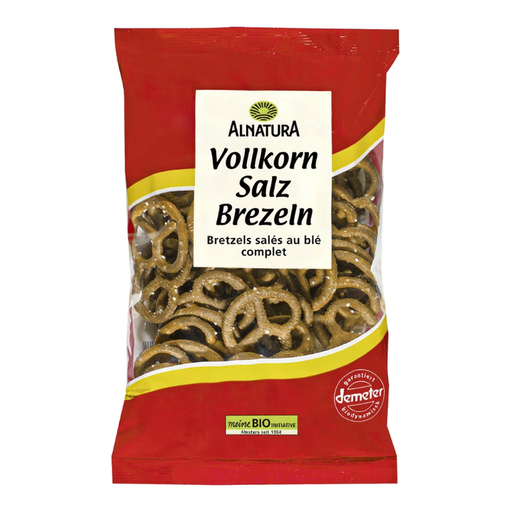
Alnatura Organic Wholegrain Salt Pretzels, 125 g
A pretzel snack with a longer shelf life, ideal if you want to compare wholegrain content. Alnatura states that its wholegrain pretzels contain 81% wholemeal wheat flour; this wheat-based variety isn’t suitable if you need to avoid gluten.
The pack contains 125 g. The carbohydrates in your portion depend on how much you actually eat.
View on Joybuy
Frequently asked questions
Are gluten-free pretzels automatically a better choice for a diabetes-conscious snack?
No. Gluten-free tells you whether a product meets your gluten requirements, not how many carbohydrates it contains. Check the carbohydrates in the portion you eat and the other ingredients too. According to the Verbraucherzentrale, the effect of a whole meal can only be judged to a limited extent from the glycaemic index of a single food.
Do I need to avoid gluten in a traditional lye pretzel?
Yes, if you need to avoid gluten because of coeliac disease or another confirmed requirement. Ditsch’s lye pretzel, for example, contains wheat. To find a suitable alternative, check the information for the specific product.
How do I work out the carbohydrates in my pretzel portion?
Multiply the carbohydrate content per 100 g by the weight of the amount you eat, then divide the result by 100. The weight of the individual pretzel or portion needs to match the pretzel you actually choose; the pack size isn’t always the same as the weight of your portion.
Which details should I compare on packaged pretzels?
Compare the ingredients and highlighted allergens with the nutritional information, especially carbohydrates, sugars and salt per 100 g. You’ll also need to know how much you’re eating to work out your portion. For wholegrain pretzels, the stated wholegrain content can be another useful point of comparison.
What should I ask about if I have an allergen requirement and want to buy a loose pretzel?
Ask for the allergen information for the specific pretzel you want to buy, including any topping or filling. Be clear about which substance you need to avoid rather than relying on a general ‘free from’ label.


