When choosing a pretzel for a protein-focused working-from-home lunch, don’t rely on the search term “High Protein” alone. Compare protein and salt per 100 g, and consider how much you’ll actually eat. The product information from Ditsch, REWE and EDEKA lists 7.9 to 10.3 g of protein per 100 g for the salted pretzels considered here. If the protein content of your whole meal matters to you, plan to add a separately chosen topping or side. Frozen pretzels are only suitable for a lunch break if you have the right appliance and enough time to defrost and bake them.
Who these selection criteria matter to
People focused on protein intake
If you want to include a pretzel in a protein-focused lunch, compare protein per 100 g and in the portion you plan to eat. The nutritional value of any topping or side should also be included when considering the whole meal.
People with a short lunch break
If you want a warm pretzel that needs baking, allow time for defrosting and baking, and make sure you have the right appliance.
People focused on salt or allergens
For you, the salt content, current ingredients list and any precautionary allergen statements for the specific product all matter. Wheat is a relevant allergen in the salted pretzels considered here.
What to look for when buying
First decide whether the protein content of the whole meal, quick preparation, or specific information about salt and allergens is most important to you. Compare nutritional values using the same basis, then check the portion you plan to eat.
| Criterion |
What to check when buying |
Who it matters to |
| Protein in the meal |
Protein per 100 g, the amount of pretzel you plan to eat, and the nutritional values of any topping or side. |
If I’m keeping an eye on the protein in my lunch, the pretzel’s value alone isn’t enough. For around 36% of consumers, the protein content of the whole meal comes first. |
| Preparation during your break |
Defrosting and baking instructions, and the appliance required. |
I want a warm pretzel to fit into my lunch break without overlooking the baking time. Preparation is the main consideration for around 29% of consumers. |
| Salt and allergens |
Salt per 100 g, plus the ingredients, declared allergens and precautionary allergen statements on the current packaging. |
If I need to compare salt levels or avoid an allergen, the information for the specific product is what matters. Around 21% of consumers put salt and allergens first. |
| Storage and product type |
Whether the pretzel is frozen or ready to eat, and whether it’s available where you plan to shop. |
If I’m planning several lunches, I want to know which type of product I can store and prepare at home. This is a priority for around 14% of consumers. |
Common selection mistakes
-
Assuming a search term means “High Protein”
A search term doesn’t tell you whether a specific product carries a corresponding nutrition claim. The Federal Ministry of Agriculture, Food and Home Affairs explains that such claims must meet the requirements of the EU Health Claims Regulation.
Read the claim on the packaging and compare protein per 100 g with the amount you actually plan to eat.
-
Looking only at protein
For the salted pretzels considered here, product information from REWE and EDEKA lists between 1.63 g and 3.3 g of salt per 100 g. A higher protein value doesn’t automatically mean a lower salt content.
Compare protein and salt using the same basis, and take into account how many pretzels you’ll eat.
-
Planning to eat a frozen pretzel straight away
According to the product information, EDEKA’s frozen GUT&GÜNSTIG salted pretzels need time to defrost and bake. This can affect a short lunch break.
Check the preparation instructions before buying, and make sure you have a suitable appliance and enough time.
-
Using allergen information from a different pretzel
Ingredients and possible traces vary by recipe. Information for another variety or a pack you bought previously isn’t a substitute for checking the current product.
Check the current ingredients list, highlighted allergens and precautionary allergen statements every time you buy.
Brands and product ranges to consider
Ditsch
You can compare the classic salted pretzel with the sunflower seed and salt variety using the product information on protein, fat, salt and ingredients.
- Ditsch lists 9.5 g of protein per 100 g for its classic salted pretzel and 10.3 g per 100 g for the sunflower seed and salt variety.
- According to Ditsch, the sunflower seed variety contains 11.92 g of fat per 100 g, compared with 5.3 g for the classic variety. Both products list wheat in their product information.
REWE
The Schwäbische salted pretzel is one ready-to-eat option whose product information you can check before buying.
- REWE lists 10 g of protein and 1.63 g of salt per 100 g for its Schwäbische salted pretzel.
- The product information lists wheat and possible traces of milk, egg, soya, lupin, nuts and sesame.
EDEKA GUT&GÜNSTIG
These frozen salted pretzels are a bake-at-home option for lunch breaks when you have a suitable appliance and enough time to prepare them.
- EDEKA lists 7.9 g of protein and 3.3 g of salt per 100 g, with instructions for both an oven and an air fryer.
- The pretzels need time to defrost and bake. According to the product information, they contain wheat and soya and may contain traces of other allergens.
Pretzel products at Joybuy
This product is a packaged pretzel snack for a working-from-home break, not a salted pretzel that needs baking. If you want to make it part of your lunch, check the nutritional values for the amount you eat and the rest of the meal separately.
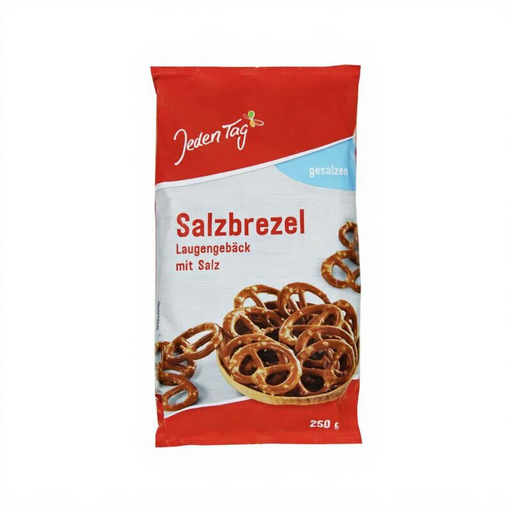 No image available
Jeden Tag Salted Pretzels, 250 g
A packaged pretzel snack that’s handy for a break. To assess it as part of a lunch, also consider the amount you actually eat and any sides.
Pack size: 250 g. Check the current packaging, particularly the nutritional information and allergen statements for the portion you plan to eat.
View at Joybuy
Frequently asked questions
Is every pretzel automatically a “High Protein” product?
No. A search term or protein value alone doesn’t confirm this claim. According to the Federal Ministry of Agriculture, Food and Home Affairs, nutrition claims must meet the requirements of the EU Health Claims Regulation. So check the specific claim on the packaging and the nutritional information.
How should I account for protein in a pretzel lunch?
Consider the portion of pretzel you plan to eat alongside a separately chosen topping or side. Compare the nutritional information for the amount you’ll actually eat, rather than treating the pretzel’s value per 100 g as the value for the whole meal.
What information should I check if I have allergies?
Check the current ingredients list, highlighted allergens and any precautionary allergen statements for the specific product. The product information from Ditsch, REWE and EDEKA lists wheat for the salted pretzels considered here; other details vary by recipe.
Do I need an oven for frozen pretzels?
An oven isn’t the only option for every frozen pretzel. EDEKA also gives instructions for preparing its GUT&GÜNSTIG salted pretzels in an air fryer. Follow the instructions on the packaging of the product you buy.


