People who train and keep an eye on protein
You’re looking for a savoury option for your lunch break or after a workout, and want to know how much protein the pretzel actually adds to your meal.


For a protein-focused lunch, a pretzel is better suited as a side than as your only source of protein. The nutritional information for the Ditsch and Huober pretzels compared here ranges from 9.3 to 11.2 g of protein per 100 g. Check the salt content, the amount you eat and the ingredients too. If protein is your priority, choose another component based on its own nutritional information.
You’re looking for a savoury option for your lunch break or after a workout, and want to know how much protein the pretzel actually adds to your meal.
You want to enjoy a pretzel while taking account of the salt per 100 g, your portion size and the other parts of your lunch. Seeds or a crunchy texture don’t tell you anything about the salt content by themselves.
You need a convenient option for when you’re out and about, and check the ingredients and allergens for the specific pretzel before buying. For loose bakery items, ask at the point of sale.
First decide what role you want the pretzel to play in your lunch. Then compare protein and salt on the same basis, and check the ingredients and portion size for the product you’re actually buying.
| Criteria | What to check when buying | Who it matters most to |
|---|---|---|
| Protein contribution | Compare protein per 100 g and work out how much that means for your planned portion. Don’t judge a protein claim by the number of grams alone. | If I want my post-workout meal to provide a clear amount of protein, I want to know what the pretzel and the other components contribute together. This is the top priority for around 36% of consumers. |
| Salt content | Check salt per 100 g, the amount you eat and any salty sides. According to Ditsch and EDEKA24, the pretzels compared here contain between 1.74 and 5.5 g of salt per 100 g. | If my lunch includes other salty ingredients, I don’t want to assess the pretzel in isolation. That’s why salt content is the priority for around 29% of consumers. |
| Ingredients and allergens | For packaged products, read the ingredients and allergen information. For bakery-counter items, ask for details about the specific product. | If I need to avoid certain ingredients, I need reliable information about the pretzel and its toppings before choosing it. This is the most important criterion for around 21% of consumers. |
| Practical portion size | Decide whether the pretzel is a side or the main part of your meal, and base the nutritional values on the amount you plan to eat. | For a quick lunch break, I want to be able to put together a portion without automatically treating a snack as a complete lunch. This practical consideration comes first for around 14% of consumers. |
A higher number of grams of protein per 100 g doesn’t, by itself, justify a “high protein” claim. Lebensmittelklarheit explains that the proportion of energy coming from protein also matters.
Compare the nutritional information for the specific pretzel. If protein is your main priority, check the label of another lunch component too.
According to EDEKA24, Huober Bio Schwäbische Knusper-Brezel contains 5.5 g of salt per 100 g. The German Nutrition Society recommends a maximum of 6 g of table salt per day as a guideline; the salt in other ingredients matters for your meal too.
Compare the figures per 100 g and take your portion, toppings and dips into account.
Information about a packaged pretzel or one from another shop doesn’t replace the allergen information for the product on offer. The Ditsch pretzels compared here contain wheat.
If you need to avoid certain ingredients or allergens, ask for information about the pretzel and its toppings before buying.
A protein claim doesn’t tell you about salt content, ingredients or the right portion size for your lunch.
Read the nutritional information and ingredients list together, rather than judging the product by the front of the pack alone.
Ditsch offers soft pretzels, among other products. The published information for individual varieties makes it easier to compare them on a per-100 g basis.
Bio Schwäbische Knusper-Brezel is a crunchy option, not a soft pretzel from a bakery counter.
The products mentioned could work as other lunch staples if the pretzel shape isn’t important to you.
This selection features salted pretzels that you could consider as a side for lunch. Whether they suit your planned meal also depends on portion size and the other ingredients.
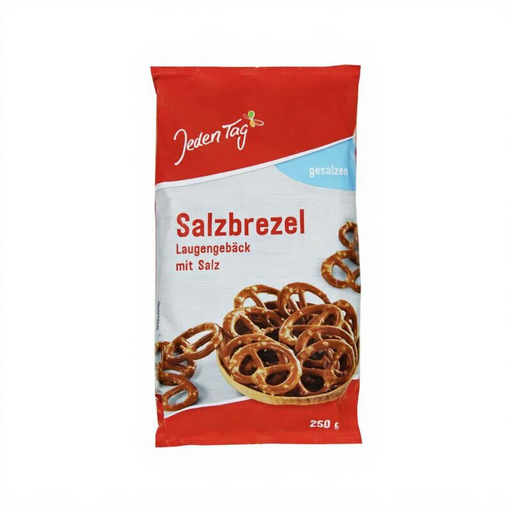 No image available
A pretzel side for a lunch where you want to assess the protein contribution of the whole meal.
Pack size: 250 g. Compare the nutritional information with your planned portion, and check the salt and allergen information on the current pack.
No. The number of grams of protein per 100 g alone doesn’t justify this claim. Lebensmittelklarheit explains that the proportion of energy from protein is also decisive. So don’t plan a pretzel as your only source of protein in a protein-focused lunch without checking first.
Compare both, as they help you make different decisions. Protein shows the stated contribution from the pretzel, while salt matters in relation to your portion and sides too. According to Ditsch and EDEKA24, the pretzels mentioned here contain between 1.74 and 5.5 g of salt per 100 g.
If you need to avoid certain ingredients, ask for allergen information about the specific pretzel and its toppings. The Ditsch products compared here contain wheat; information about another variety doesn’t replace asking at the point of sale.
Not necessarily. The Verbraucherzentrale explains that you can meet your protein needs with everyday foods that contain protein. When choosing lunch, the contribution from the whole meal is therefore more useful than a protein label on a single product.