On the go, with no preparation
If you want to eat a pretzel straight from the pack, look for one that’s labelled ‘ready-baked’ and individually wrapped. Ditsch lists both of these features for its butter pretzel, which weighs 70 g each.


A ready-baked, individually wrapped pretzel is a good choice for a break on the go if you want a clearly defined portion with no preparation. Ditsch, for example, offers a butter pretzel weighing 70 g each. Dry mini pretzels or larger packs are better options if you’d rather portion out the amount yourself over several breaks. Whichever you choose, check the ingredients, allergens, salt content and storage instructions on the specific pack.
How practical a pretzel is on the go depends mainly on whether you want to eat it straight away or divide it up for several breaks.
If you want to eat a pretzel straight from the pack, look for one that’s labelled ‘ready-baked’ and individually wrapped. Ditsch lists both of these features for its butter pretzel, which weighs 70 g each.
If you’d rather take smaller amounts with you, dry mini pretzels in multipacks may be a good option. REWE, for example, lists a pack of mini pretzels containing 3 × 40 g portions. With larger bags, you can portion out the amount you want yourself.
If specific ingredients are important to your choice, read the current ingredients list and allergen information. To compare salt content, check the nutritional information per 100 g as well as the amount you’ll actually eat.
First decide whether you want a pretzel that’s ready to eat and already portioned individually. Then compare the pack formats and product information for the options that suit your break.
| What to consider | What to check | Who it matters to |
|---|---|---|
| Ready-to-eat single portion | Check that it’s labelled ‘ready-baked’, individually wrapped and that the weight per pretzel is stated. A pretzel that needs baking won’t meet your needs if you want a snack with no preparation. | If I can’t prepare food while I’m out, I want to be able to eat a pre-portioned pretzel straight away. This is a priority for around 42% of consumers. |
| Flexible portioning | Compare the number of individual packs and the total pack weight. For a larger bag, check the storage instructions too. | For several mornings, I want to take just a small amount from the pack each time. Around 33% of consumers prioritise this flexibility. |
| Ingredients and salt | Check the current ingredients and allergen information, along with the salt per 100 g, then relate this to the portion you eat. | If wheat, milk, possible traces of allergens or the salt content affect my choice, I read the information on the specific pack particularly carefully. This check takes priority for around 25% of consumers. |
A 250 g pack of salted pretzels isn’t the same as an individually wrapped portion for eating on the go. Unless you portion it out in advance, you won’t know how much to take with you.
If you want a set amount for your break, choose a product that’s sold as a single portion or in multipacks. You can also fill a container with a portion from a larger bag before you leave.
Pretzels with similar names can still contain different ingredients and carry different trace warnings. So you can’t assume that butter pretzels and dry salted pretzels meet the same dietary requirements based on their names alone.
If you have an allergy, check the ingredients and allergen information on the current pack. The Federal Institute for Risk Assessment notes that there are no binding rules on labelling the unintentional presence of traces of allergens. So the absence of a trace warning doesn’t guarantee that a product is allergen-free.
EDEKA24 lists 4.5 g of salt per 100 g for Gut & Günstig salted pretzels, while ALDI SÜD gives a figure of 4.51 g per 100 g for SUNSNACKS salted pretzels. These figures don’t automatically tell you how much salt you’ll have during your break.
Compare the nutritional information per 100 g, then work out how it relates to the portion you’ll actually eat. The German Nutrition Society gives up to 6 g of salt a day as a guideline for total daily intake, not for a single snack.
Whether a particular pretzel is available may depend on the selected shop or delivery area. So a product listing doesn’t replace checking availability where you shop.
Select your location or store before shopping, then check the specific product listing again. If you need the pretzel for a particular date, keep an alternative in the same product format in mind.
The examples below show a range of pretzel formats. What matters is the information on each specific product, not the brand name alone.
An example of an individually wrapped, ready-baked butter pretzel.
A supermarket range that includes dry pretzels in different pack sizes, as well as individual soft pretzels.
Examples include dry salted pretzels in a larger pack and a soft pretzel that needs baking.
Dry salted pretzels in a 250 g pack that you can portion out yourself.
Dry pretzels and mini pretzels for snacking.
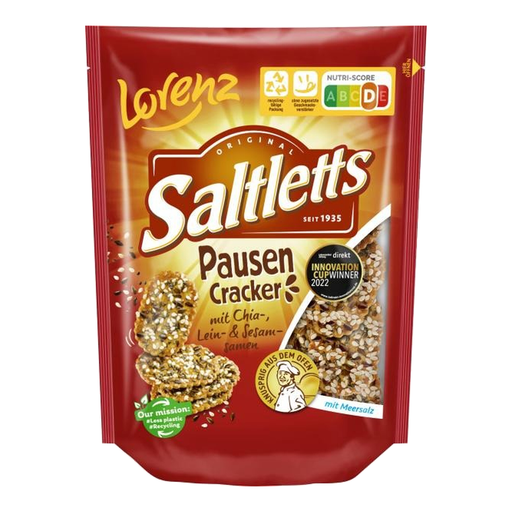
This pretzel product could work for a morning break if you’re happy to portion out the amount you want from a 100 g pack. If you want a portion that’s already individually wrapped, check the pack format separately before you buy.
 No image available
Suitable for a morning break if you want to portion out the amount you need from the 100 g pack. For taking them with you, check whether the portions are wrapped separately. If ingredients or salt content are important to your choice, read the information on the current pack.
The absence of a trace warning doesn’t confirm that a product is allergen-free. The Federal Institute for Risk Assessment says there are no binding rules on labelling the unintentional presence of traces of allergens. If you have an allergy, always check the current pack for the specific product.
Follow the storage instructions on the specific pack. For Gut & Günstig salted pretzels, EDEKA24 recommends storing them somewhere dry and away from heat. After opening, sealing the pack carefully will help protect the pretzels from moisture.
First compare the salt content per 100 g, then take the size of your actual portion into account. The German Nutrition Society’s guideline of up to 6 g of salt a day refers to your total daily intake, not to a single pretzel.
Not if you want to eat it straight away without preparing it. The soft pretzel described by EDEKA is intended for baking and needs time in the oven. For an impromptu break, look specifically for a ready-baked option instead.