
Lieferung heute & morgen

Qualitätsgarantie

Willkommens-Angebote freischalten: KOSTENLOSE Lieferung | Bis zu 80 % RABATT | Kostenlose 30-Tage-JoyPlus-Testphase
App herunterladen
Messages on the train, passwords in a café or work emails in the office: it’s easy for someone nearby to read your smartphone screen. A privacy screen protector limits the viewing angle from the sides while protecting the glass surface from everyday scratches. It’s essential, though, to choose a protector that fits your smartphone model exactly and to interpret the technical specifications realistically.
The term “360°” often refers to a very restricted viewing angle. It doesn’t mean that the screen is completely invisible from every direction. Depending on the brightness, your seating position and the viewing angle, the content may still be visible from the side. Look for a clear description of the privacy filter and bear in mind that the screen will look darker when viewed from the side.
9H tempered glass indicates a stated hardness rating for the material. It can help protect against everyday scratches from keys, dust and other objects. However, a screen protector won’t automatically prevent cracks if you drop your phone onto a hard edge. Even with a product described as scratch-resistant tempered glass, a case to protect the body of your device is still a good idea.
A screen protector for the iPhone 16 Pro won’t necessarily fit the iPhone 16 Pro Max or iPhone 16 Plus. Dimensions, camera cut-outs and screen edges also vary between the iPhone 17 Pro, iPhone 17 Pro Max, iPhone 17 Air and Samsung Galaxy S25 Edge. Before buying, check the full model name, not just the screen size.
The glass should be specifically listed as compatible with your device. Check the following:
A screen protector for iPhone 16 Pro won’t automatically fit the iPhone 16 Pro Max. The same applies to the iPhone 17 Pro and iPhone 17 Pro Max.
When choosing a privacy screen protector made from tempered glass, check the stated hardness and design. Products with 9H hardness are designed to protect against everyday surface scratches. Reinforced or rounded edges can help soften knocks to the edge of the screen. This doesn’t guarantee protection against breakage or every kind of impact.
Dust trapped under the glass can cause visible specks, air bubbles or uneven adhesion. Fitting aids, cleaning cloths and precise alignment can make installation easier. With some products, the adhesive spreads outwards from the centre once the glass is in place. Even so, clean the screen thoroughly and gently push any remaining bubbles towards the edge.
A privacy screen protector can make the screen appear less bright. When choosing one, check the touchscreen functionality, light transmission and whether an anti-reflective coating is listed. Claims such as fingerprint resistance or oil resistance relate to the surface coating and require regular, gentle cleaning to maintain.
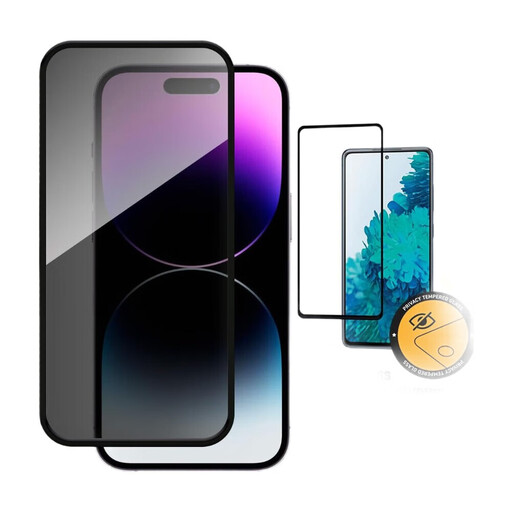
Why this product suits your needs: For iPhone 16 Plus users looking for an anti-spy screen protector with clear model compatibility and straightforward installation.
The product details specifically list the iPhone 16 Plus as a compatible model, along with 9H hardness and an integrated privacy filter.
Tempered glass with a 9H rating, reinforced frame and tool-free installation, according to the product description.
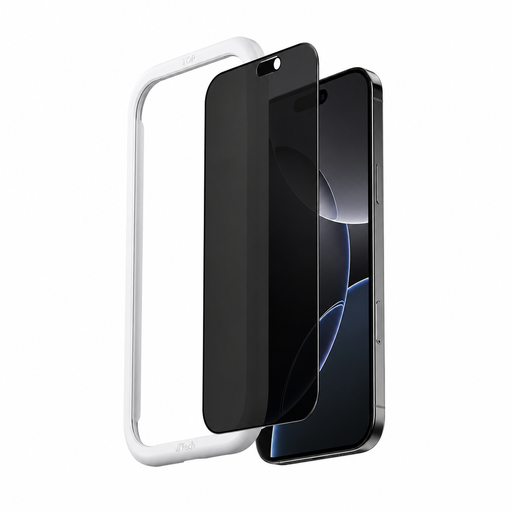
Why this product suits your needs: For iPhone 16 Pro users who want privacy protection as well as coatings that resist fingerprints and a clear-looking display.
The product details specify the iPhone 16 Pro model, 9H hardness and a described darkening effect when viewed from the side.
OCA adhesive process, oleophobic and hydrophobic coating, and a fitting aid included, according to the product information.
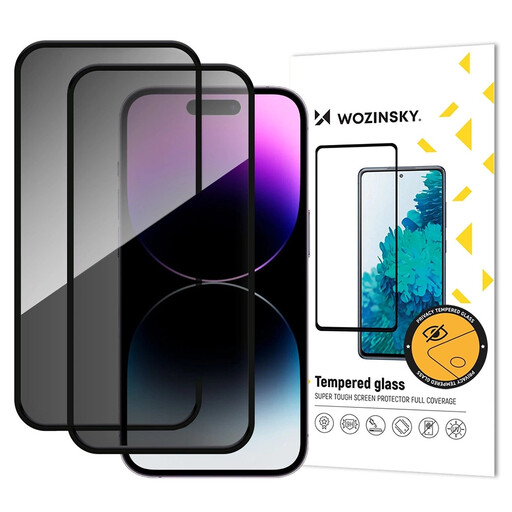
Why this product suits your needs: For commuters and frequent iPhone 17 Air users who want to keep a spare screen protector handy.
The product description specifically names the iPhone 17 Air and states that it has 9H hardness and an anti-spy filter.
Two screen protectors per pack, a reinforced frame, and stated touchscreen and clarity support.
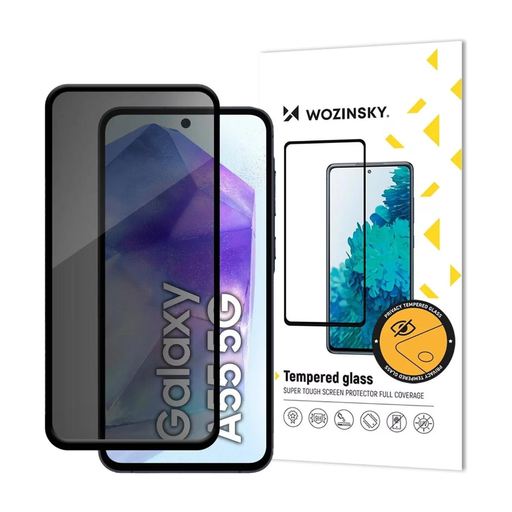
Why this product suits your needs: For Samsung Galaxy S25 Edge users looking specifically for a Samsung Galaxy privacy screen protector rather than a universal film.
Compatibility with the Samsung Galaxy S25 Edge is stated explicitly, helping you avoid choosing a protector based on screen size alone.
9H tempered glass, a restricted viewing angle from the sides and stated touchscreen compatibility.
We’ve put together a complete, regularly updated list of products that meet these strict selection criteria and fully comply with the safety regulations in force in the EU.
Damaged, cracked or heavily scratched glass should be removed carefully and replaced. Peeling it off and reapplying it repeatedly can affect the adhesive surface and the oleophobic coating on the screen.
No. The filter reduces visibility from the side beyond a certain angle. Brightness, seating position, ambient light and the filter design all affect the result. The display should remain usable when viewed from the front; from the side, it may look darker or be much harder to read.
Its lifespan depends on how you use your phone, impacts, scratches and the quality of the adhesion. Replace the glass if it develops cracks, chips or sharp edges. Even if your smartphone still works, a damaged protector may offer only limited protection.
A privacy screen film for a smartphone is usually thinner and more flexible. Tempered glass, on the other hand, provides a firm surface and is often sold with a 9H hardness rating. The right choice depends on your model, the edge coverage you want, installation and how you use your phone. The key thing is to make sure the product is specifically designed for your smartphone.