Production planners dealing with changing tasks
You want to trial machine loading, picking or assembly using real workpieces, and decide between a humanoid system and targeted arm automation.


Choose your automation based on the workflow: an AMR is suited to transport alone, a stationary arm to a fixed pick-up or handover point, and a mobile manipulator to transport followed by picking. Consider a humanoid robot as a candidate for a limited pilot if changing tasks in work areas designed for people are a priority. Test the workpiece, gripper, cycle time and fault scenarios in your own process. Before using it alongside employees, assess the safety of the specific integrated application.
You want to trial machine loading, picking or assembly using real workpieces, and decide between a humanoid system and targeted arm automation.
You need to move parts to production stations and establish whether transport is enough or whether parts also need to be picked and handed over at the destination.
You are defining a use case for a trial and need to identify workplace hazards and establish responsibility for the integrated system before it is used alongside employees.
First, establish whether the workflow involves transport, picking or both. Then assess the task using your own workpiece and consider the safety of the integrated application.
A good fit for a pilot if: you want to assess changing handling tasks at several points designed for people.
Consider: mobility alone does not demonstrate reliable picking in your specific workflow or safety in the workplace.
A good fit if: parts need to be transported between stations and picked or placed at their destination.
Consider: navigation, docking, manipulation and safety all need to work together for the specific combination. KUKA describes the KMR iiwa as an arm on a mobile platform.
A good fit if: machine loading or pick-and-place tasks follow a repeatable process at a fixed point.
Consider: the arm does not transport parts between stations. The gripper, feed system and safety concept for the complete system need to be considered separately.
A good fit if: materials only need to be delivered to a designated handover point.
Consider: an AMR on its own cannot pick parts or load a machine. The route and handover need to suit the place of use.
A good fit if: picking, integration or financial viability still need to be established before integrating the system into production.
Consider: a lab test gives you a basis for making a decision, but does not prove the eventual production cycle time or safety at the place of use. Fraunhofer IEM describes testing specific production use cases in a laboratory.
| Priority | What to check before buying | Who cares most about this? |
|---|---|---|
| Picking and machine loading | Test the workpiece, including the gripper load, reachable handover points and cycle time in your own workflow. | If I want to pick different workpieces or have a machine loaded, I need to test it with the actual parts. Around 21% of consumers prioritise picking and loading. |
| Material transport | Map the route and handover point; establish whether parts also need to be picked at the destination. | If parts only need to be delivered to a production station, I don’t want to plan for more manipulation than necessary. Around 21% of consumers prioritise material transport. |
| Workplace safety | Assess hazards and protective measures at the intended workplace. For an integrated system, also establish conformity and who is responsible for integration. | If employees work in the area, I want to know how the specific system and its moving parts have been assessed before it is used. Around 26% of consumers put safe integration first. The DGUV also includes the end effector and moving objects in its assessment of collaborative robots. |
| Changing tasks | Identify the grippers and interfaces needed, as well as the effort involved in changing over between tasks. | If workpieces or tasks change, I want to know whether the platform can actually handle these workflows. Around 16% of consumers prioritise adaptability to changing tasks. |
| Pilot before integration | Define a specific workpiece use case and criteria for technical feasibility and financial viability. | If suitability for day-to-day production is still unclear, I want to assess a well-defined use case before planning an integration. Around 16% of consumers prioritise a pilot and clarifying the investment. |
A development status or reservation does not prove that a ready-to-use configuration is available for your production use case. NEURA Robotics describes 4NE1 as being in development.
Document the scope of supply, development status and acceptance criteria for your specific use case.
An AMR’s payload capacity does not describe its ability to pick parts. A robot arm’s payload capacity does not prove that a complete loading cell, including a gripper and feed system, is in place.
Check transport, picking and machine handover as separate steps in the intended workflow.
A robot’s features alone do not assess the hazards of a specific application. These may also include the tool and the moving workpiece.
Before using the system alongside employees, assess the complete application and the protective measures required at the intended workplace.
A combination of an arm and a mobile platform may require integration work. OMRON states that it does not offer a fully integrated mobile manipulator as a standard product.
Agree in the contract who will supply the components, interfaces, integration and documentation for the complete system.
Agility Robotics positions Digit 5 as a bipedal platform for industrial material-handling workflows.
G1 and G1 EDU are different humanoid platform variants for trialling manipulation tasks.
NEURA Robotics describes 4NE1 as a humanoid platform for industrial workflows.
KUKA describes the KMR iiwa as a combination of an LBR iiwa arm and a mobile platform for handling tasks in different locations.
The UR10e is a stationary arm alternative for accessible, repeatable tasks at a fixed point.
Mobile Industrial Robots positions the MiR250 as an AMR for internal material transport.
OMRON describes mobile manipulators as a combination of a TM arm and an LD or MD AMR.
This selection includes humanoid platforms for well-defined manipulation, development or testing pilots. Product details alone do not prove suitability for a specific production system.
 No image available
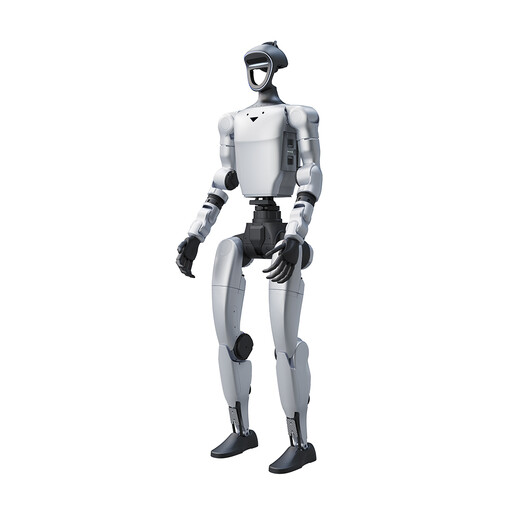
The product title mentions force-controlled hands and object manipulation; this does not prove suitability for a specific production workflow.
The title lists 29 degrees of freedom in total and 16 joint degrees of freedom. According to the title, the SDK/API is not yet available for this version.
A risk assessment of the intended workplace is required before using the robot alongside employees.
 No image available
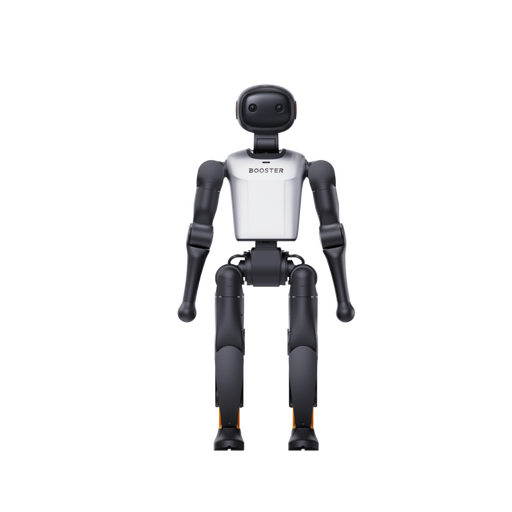
The product description positions the K1 Geek as a development platform for embodied AI; check whether it suits your defined test project.
The product description lists 48 TOPS AI and 22 degrees of freedom.
A risk assessment of the intended workplace is required before using the robot alongside employees.
No image available
The product description positions the K1 Edu as an education and research development platform; it does not demonstrate approval for production use.
The product description lists 117 TOPS AI and 22 degrees of freedom.
A risk assessment of the intended workplace is required before using the robot alongside employees.
 No image available
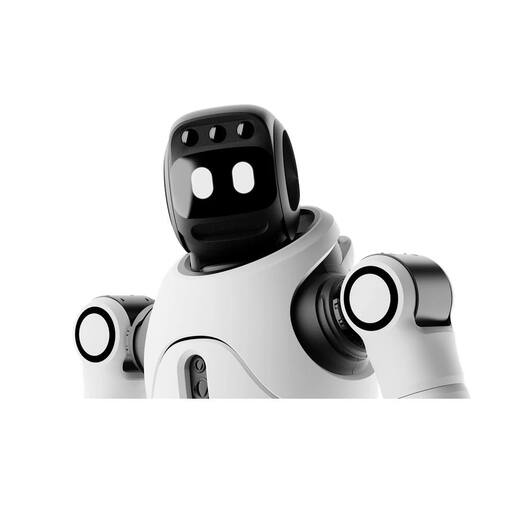
The product description lists autonomous navigation and obstacle avoidance; test these features in your intended pilot workflow.
The variant specifications list 31 degrees of freedom and an arm reach of 558 mm. Payload is up to 3 kg in certain postures and up to 1 kg across the full range of motion, in both cases without the end effector.
A risk assessment of the intended workplace is required before using the robot alongside employees.
 No image available
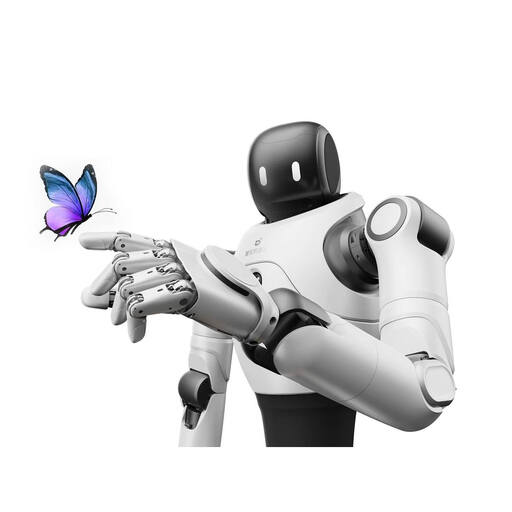
The product description lists intelligent interaction and motion control; check that these features match the tasks in your pilot.
The variant specifications list 27 degrees of freedom and an arm reach of 437 mm without the end effector. Payload is up to 3 kg in certain postures and up to 1 kg across the full range of motion, without the end effector.
A risk assessment of the intended workplace is required before using the robot alongside employees.
Start with a specific workpiece and machine, and set measurable requirements for picking, reach, cycle time and fault scenarios. Fraunhofer IEM explains that companies first identify suitable tasks, then assess technical feasibility and financial viability in a laboratory.
No. It does not automatically establish the conformity of a complete system that may have been newly assembled. According to the Federal Institute for Occupational Safety and Health, machinery working together can, under certain conditions, form an assembly of machinery. Clarify how the components are connected and who is responsible for the assessment; workplace hazards must also be assessed.
In October 2026, the Machinery Directive 2006/42/EC generally applies to machinery within its scope, as implemented in Germany by the 9. ProdSV. The EU Machinery Regulation (EU) 2023/1230 is generally due to replace the Directive from 20 January 2027. If the machinery is to be put into service later, check which version applies at that time; whether a specific machine or integrated system falls within scope cannot be determined by the term “humanoid” alone.
The assessment must take account of the specific application in the workplace. For collaborative robots, the DGUV also considers the end effector and moving objects; under section 5 of the ArbSchG, the employer must assess work-related hazards. The protective measures required will depend on the workplace and workflow.
Compare what is included for the gripper, machine and control-system integration, pilot support, maintenance and help with faults. For an OMRON MoMa configuration, clarify in particular which services the system integrator will provide, as OMRON does not offer it as a fully integrated standard product.