
Lieferung heute & morgen

Qualitätsgarantie

Willkommens-Angebote freischalten: KOSTENLOSE Lieferung | Bis zu 80 % RABATT | Kostenlose 30-Tage-JoyPlus-Testphase
App herunterladen
The complexity of modern vehicle systems is constantly increasing. For professional car workshops and advanced home mechanics, a reliable diagnostic tool is no longer a luxury but an indispensable tool. A simple fault code reader is often not enough to precisely identify and fix the root cause of a problem. What's needed are devices that enable in-depth system analysis, active tests, and maintenance functions.
This article serves as a guide. We will present objective criteria for selecting a professional car diagnostic tool and showcase a selection of models that stand out for their feature set and pricing structure.
The decision for a suitable diagnostic tool depends on specific requirements. However, three criteria are of central importance for most professional users and demanding enthusiasts.
A professional OBD2 scanner differs from basic devices in its ability to actively interact with the vehicle's control units. Look for the following key features:
A diagnostic tool for all brands offers the necessary flexibility for workshops or users working on different vehicles. Check the manufacturer's brand and model coverage. Equally important is support for modern communication protocols like CAN-FD and DoIP. These are standard in newer vehicles (e.g., from GM, Ford, Land Rover from around 2019/2020). A CAN-FD diagnostic tool ensures that your investment remains relevant in the years to come.
Many professional diagnostic tools require annual license fees to receive software updates and maintain full functionality. A car diagnostic tool with no subscription and lifetime free updates represents a predictable and often more economical alternative. While the initial purchase cost may be higher, it pays for itself over time as there are no recurring fees.
Based on the criteria mentioned above, we have compiled a selection of devices suitable for professional use and for demanding DIY projects.
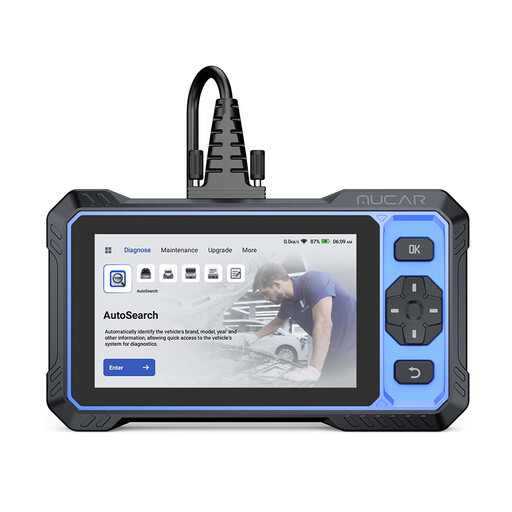
Why It Stands Out: The MUCAR 682 offers a balanced combination of in-depth OE-level system diagnostics and a robust, portable design. It is a powerful tool that comes without ongoing subscription costs and simplifies troubleshooting with its AI-powered diagnostic function.
Advantages:
Who Is It For? For workshops and advanced home mechanics looking for an all-in-one handheld device with comprehensive diagnostic capabilities and no recurring fees.
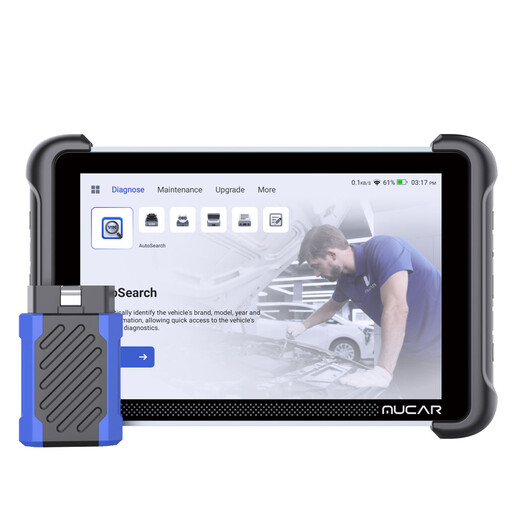
Why It Stands Out: The MUCAR 892BT is a tablet-based diagnostic system that boasts advanced features like ECU coding and support for DoIP protocols. Its modular expandability makes it a flexible platform for professional workshops.
Advantages:
Who Is It For? For professional workshops that need a versatile, expandable diagnostic system with maximum functionality and a modern tablet interface.
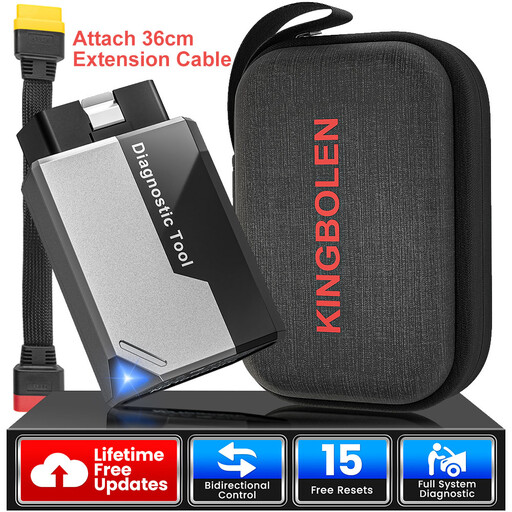
Why It Stands Out: The KINGBOLEN Ediag Elite is a compact Bluetooth adapter that transforms a smartphone (iOS or Android) into a powerful diagnostic tool. It combines portability with professional features like bi-directional control and lifetime updates, making it a flexible solution for mobile use.
Advantages:
Who Is It For? For mobile technicians, DIY enthusiasts who want professional features in a portable format, and workshops looking for a cost-effective and flexible secondary device.
The selection presented here already covers a wide range of use cases. If you haven't found the right model for your specific needs, you can find a larger selection of devices in our main category.
? Discover more OBD Diagnostic Tools at Joybuy
A simple fault code reader can typically only read and clear generic fault codes (P-codes) from the engine control unit. In contrast, a professional all-systems OBD2 diagnostic tool accesses all control units in the vehicle (e.g., ABS, Airbag, Transmission, Body Electronics), displays manufacturer-specific codes, presents live data, and offers advanced functions like bi-directional control and service resets.
Bi-directional control, also known as an active test, refers to the diagnostic tool's ability to send commands to the vehicle's control units to activate specific components or systems. For example, a mechanic can command the cooling fan to turn on, activate the headlights, or test an injector. This helps verify the functionality of components without having to remove them, significantly speeding up the diagnostic process.
CAN-FD (Controller Area Network with Flexible Data-Rate) and DoIP (Diagnostics over Internet Protocol) are modern communication protocols used in newer vehicles. CAN-FD allows for faster data transmission than the conventional CAN protocol. DoIP is used for complex diagnostic tasks and programming control units via Ethernet. A diagnostic tool that supports these protocols is future-proof and ensures compatibility with the latest vehicle generations from manufacturers like General Motors, Ford, BMW, and Jaguar Land Rover.