
Lieferung heute & morgen

Qualitätsgarantie

Willkommens-Angebote freischalten: KOSTENLOSE Lieferung | Bis zu 80 % RABATT | Kostenlose 30-Tage-JoyPlus-Testphase
App herunterladen
As a Joybuy Product Recommendation Officer, I see every day how complex modern vehicles have become. For professional auto mechanics and ambitious DIY enthusiasts, a reliable diagnostic tool is therefore not a luxury, but a necessity. Troubleshooting without the right device can quickly lead to time-consuming guesswork and costly mistakes.
This article is designed to give you clear guidance. We will highlight the crucial features you should look for when choosing a professional OBD2 diagnostic tool and present a selection of devices designed for demanding tasks in the workshop and garage.
The market offers a wide variety of devices, but not all are suitable for professional use. The following three criteria are essential to distinguish a high-performance tool from a simple code reader.
Modern vehicles, especially models produced after 2020, increasingly use new communication protocols. CAN FD (Flexible Data-Rate) enables faster data transmission and is common among manufacturers like General Motors, Ford, and Jaguar Land Rover. DoIP (Diagnostics over Internet Protocol) uses Ethernet for diagnostics, which is essential for complex tasks and software updates on brands like BMW (F/G chassis), Volvo, and newer Land Rover models. A future-proof all-makes diagnostic tool should support both of these protocols to ensure broad vehicle coverage.
A simple fault code reader only displays error codes. A professional tool goes far beyond that.
Integrated maintenance functions are indispensable for daily workshop operations. A good Service Reset Tool should cover a variety of routines, including resetting the oil service, engaging the electronic parking brake (EPB), calibrating the steering angle sensor (SAS), and regenerating the diesel particulate filter (DPF). Also, pay attention to the update model: devices with lifetime free updates offer a significant long-term cost advantage over models with annual subscription fees.
Based on the criteria mentioned, we have compiled a selection of devices suitable for different requirement profiles.
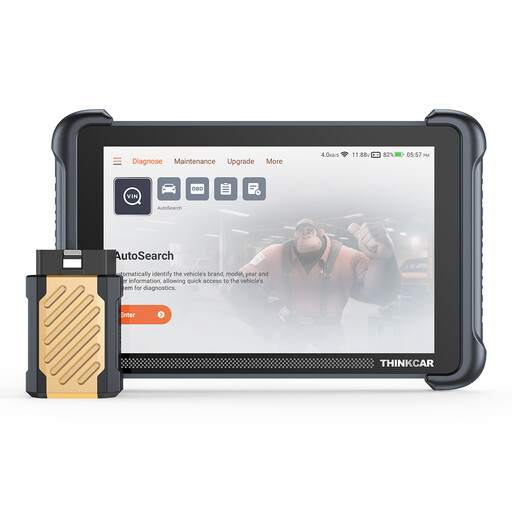
What Sets It Apart The THINKSCAN 689BT is a powerful all-in-one diagnostic tablet running on an Android 10 operating system. It combines comprehensive system diagnostics with a remarkable number of service functions and supports modern vehicle protocols. The wireless Bluetooth connection to the VCI dongle ensures maximum flexibility when working on the vehicle.
Advantages
Who Is It For? For workshops and highly experienced car enthusiasts looking for a versatile and powerful automotive diagnostic tool with an attractive price-performance ratio and no running costs.
View Details for the THINKCAR ThinkScan 689BT
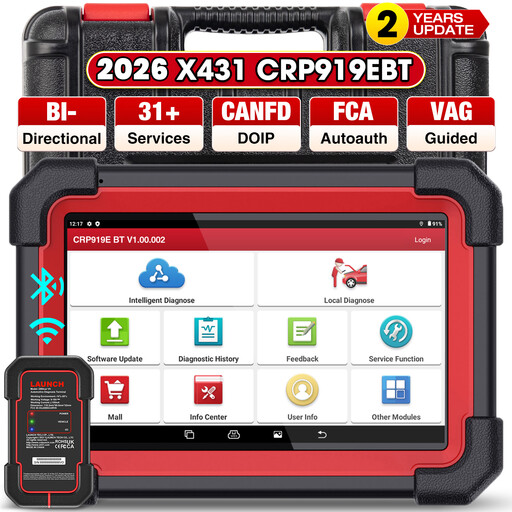
What Sets It Apart The LAUNCH CRP919E BT positions itself as an OE-level (Original Equipment) tool aimed at professional users. It uses the DBScar VII VCI for a stable Bluetooth connection and offers in-depth diagnostic functions, including advanced ECU coding and active tests. The hardware, featuring Android 10, 4GB RAM, and 64GB ROM, is designed for demanding tasks.
Advantages
Who Is It For? For professional auto workshops that need a robust and extremely capable professional OBD2 diagnostic tool for daily work on a wide variety of makes and models, and who value in-depth coding and testing functions.
View Details for the LAUNCH X431 CRP919E BT
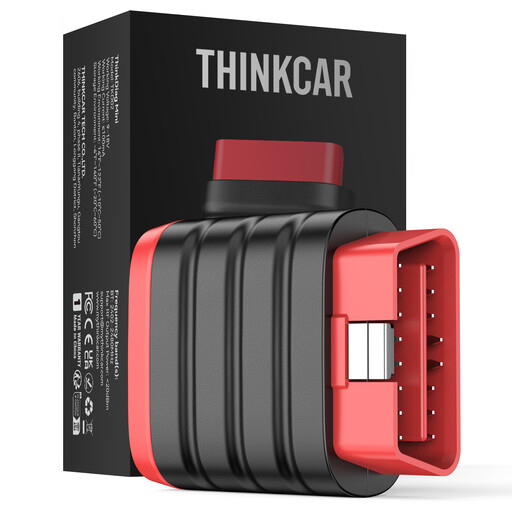
What Sets It Apart The ThinkDiag Mini is a fundamentally different solution. Instead of a tablet, it is a compact Bluetooth adapter that works with a smartphone app (iOS & Android). It focuses on the core competency of full system diagnostics—that is, reading and clearing faults in all control units.
Advantages
Who Is It For? For car enthusiasts and beginners who are looking for a reliable and straightforward device for reading fault codes from all vehicle systems but do not need advanced functions like coding, active tests, or service resets.
View Details for the THINKCAR ThinkDiag Mini
Comprehensive vehicle diagnostics go beyond electronics. The battery is the heart of the electrical system and a common cause of hard-to-diagnose problems. To ensure you are well-equipped in this area, supplementing your equipment can be a smart move.
Discover our selection of battery testers to accurately check the health and performance of the vehicle's battery.
1. What is the difference between a basic OBD2 scanner and a professional diagnostic tool? A basic OBD2 scanner is primarily a fault code reader for the engine control unit. It can read and clear generic fault codes (P-codes). A professional diagnostic tool, on the other hand, can access all control units installed in the vehicle (e.g., ABS, Airbag, Transmission, A/C). Furthermore, it offers advanced functions such as bidirectional control, ECU coding, and numerous service resets.
2. Can I really scan every car with an "all-makes" diagnostic tool? The term "all-makes diagnostic tool" means that the device offers broad compatibility with the most common European, Asian, and American vehicle manufacturers. However, the depth of diagnostics, especially for very specific functions like online coding, can vary depending on the vehicle model, year of manufacture, and the tool's software. It is advisable to check the vehicle coverage list provided by the manufacturer before purchasing.
3. Do I need an internet connection for ECU coding? That depends on the type of coding and the diagnostic tool. For basic coding, such as adjusting vehicle settings, an internet connection is often not required. For more complex tasks, such as flashing new software to a control unit (online coding), a stable internet connection is usually mandatory to download the necessary data from the vehicle manufacturer's server.