
Lieferung heute & morgen

Qualitätsgarantie

Willkommens-Angebote freischalten: KOSTENLOSE Lieferung | Bis zu 80 % RABATT | Kostenlose 30-Tage-JoyPlus-Testphase
App herunterladen
A professional OBD2 diagnostic tool can read fault codes, display live data and, depending on the vehicle, even activate actuators. However, not every device described as “professional” actually offers full-system diagnostics, ECU coding or bidirectional control. Car owners, DIY mechanics and smaller workshops should therefore take a close look at protocols, vehicle coverage and ongoing software costs.
Many basic OBD2 scanners mainly access the engine control unit. This is enough for standardised emissions-related fault codes, but not for a complete check of the ABS, airbag, transmission, air conditioning, body control module or tyre-pressure monitoring system.
Look specifically for the term full-system diagnostics or “All System Diagnostics”. This description indicates that the device can communicate with multiple electronic control units. The actual functionality always depends on the vehicle make, model, engine and year of manufacture.
Terms such as Active Test, bidirectional control, ECU coding, DPF regeneration and ABS bleeding may sound comprehensive. In practice, the available functions are enabled on a vehicle-specific basis. For example, a device may support battery registration on one vehicle but only read fault codes on another.
Before buying, you should compare the make, model, engine, production period and, ideally, the VIN with the compatibility list. This check is particularly important for safety-related systems and coding functions.
Some products include updates permanently without an additional software fee. Other devices include updates for a limited period only; after that, the basic functions remain available while advanced vehicle software becomes chargeable. Check whether “free” applies to all functions, specific makes or only app updates.
A suitable vehicle diagnostic tool should at least be able to read and clear fault codes, display control-unit information and show live data and freeze-frame data. Graphical displays with multiple data channels make it easier to compare values such as engine speed, coolant temperature and fuel trim.
A fault code alone is not a repair instruction. It points to a detected problem or deviation, but does not replace electrical, mechanical or safety-related checks.
With bidirectional control, the diagnostic tool sends commands to a control unit. If supported by the vehicle, this allows you to activate components such as fans, fuel pumps, electric windows, relays, solenoid valves and wipers. This can speed up troubleshooting because components can be checked individually.
This function should only be used with sufficient technical knowledge and a stable vehicle voltage. Incorrect commands can damage components or affect safety functions.
Additional protocols are relevant for modern vehicles:
The presence of a protocol does not automatically mean complete access to all control units. Specific vehicle authorisation remains crucial.
Depending on the model, supported functions may include oil reset, battery registration, electronic parking-brake reset, SAS calibration, DPF regeneration, injector coding, transmission adaptation values and ABS bleeding. Depending on the vehicle, ABS bleeding may also require manual bleeding of the brake lines.
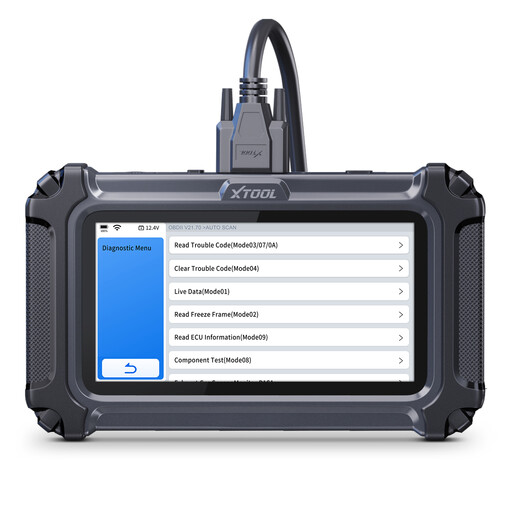
Why this product suits this profile: This tablet is designed for private vehicle owners and DIY users, combining full-system diagnostics with popular maintenance functions.
The product description specifies full-system access rather than engine-only OBD2. The availability of individual functions remains model-dependent.
15+ service functions, live data, diagnostic reports and, according to the product description, lifetime free updates.
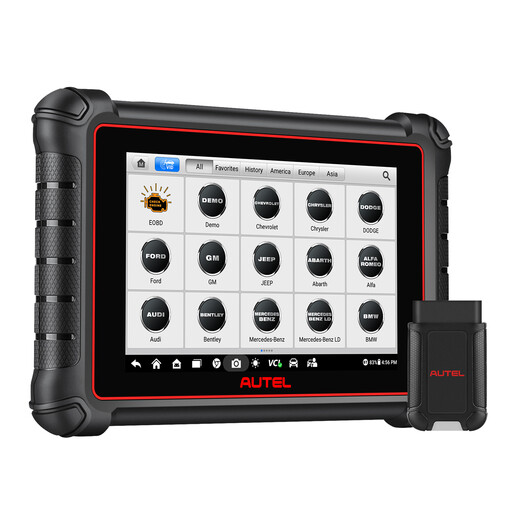
Why this product suits this profile: Suitable for users who need wireless diagnostics, extensive control-unit coverage and structured reports.
CAN-FD, DoIP and FCA AutoAuth are explicitly listed. However, FCA vehicles may still require a separate account.
According to the product description, 3000+ Active Tests, 40+ service functions and a wireless Bluetooth connection.
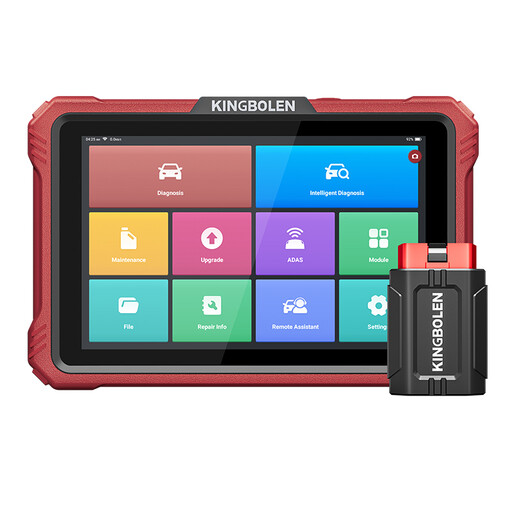
Why this product suits this profile: This large tablet is aimed at workshops and frequent users who need a wide range of service areas and a clear display.
The specifications distinguish between integrated functions and optional accessories, such as those for ADAS or an endoscope.
10-inch display, topology map, ECU coding, DoIP, CAN-FD and more than 40 listed reset functions.
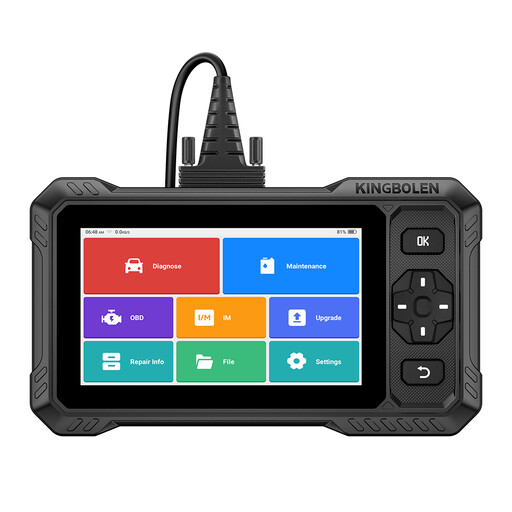
Why this product suits this profile: A standalone diagnostic tablet with Bluetooth is ideal for changing locations and smaller workshop jobs.
The product description lists vehicle coverage, CAN-FD and FCA AutoAuth, but also points out that separate authentication is required.
More than 3000 listed actuator tests, 15 service functions and a 6.2-inch display with touch and button controls.
We have put together a complete, regularly updated list of products that fully meet these strict selection criteria and the safety regulations applicable in the EU.
No. A device can often clear stored fault codes, provided the vehicle allows this function. If the underlying fault remains, the code will usually reappear. With airbags, ABS and other safety-related systems, the cause should be rectified before clearing the code.
That depends on the type of work involved. For simply reading and clearing codes, a more basic vehicle diagnostic tool is often sufficient. If control units need to be adapted after replacement, components paired or specific vehicle functions configured, ECU coding can be useful. Compatibility must be checked for each specific vehicle.
According to the relevant product descriptions, certain models may include lifetime free updates. However, separate costs may still apply for manufacturer accounts, FCA AutoAuth, optional software packages or additional accessories. Before buying, check the update terms and the functionality included with your chosen model.