Film fans with a bright living room
You want a film image you can make out during the day despite tall windows, and may be able to adjust the curtains or the position of the screen.


First, check how much light from the windows falls on the intended screen area and whether you can control it. A high brightness figure from the manufacturer alone does not guarantee high-contrast film scenes in daylight. Next, consider the projection distance and image size: a bright standard-throw projector needs enough room, while an ultra-short-throw model sits close to the screen and may need a suitable ALR screen. For dark scenes, controlling the light and the actual image quality matter more than the 4K label alone.
You want a film image you can make out during the day despite tall windows, and may be able to adjust the curtains or the position of the screen.
You want a large image but don’t have a suitable place further back in the room for a projector. That makes ultra-short-throw models and a suitable screen important factors when choosing.
Details in the shadows matter more to you than projecting the largest possible image with the windows open. You can weigh up light control against image size.
| Criteria | What to check before buying | Who is it important to? |
|---|---|---|
| Visibility in daylight | Check the amount of light at the time you watch films, whether you can block it, and the unit and operating mode used for the brightness figure. | If I want to be able to make out the film image during the day despite tall windows, visibility on the intended screen area matters most to me. Around 36% of consumers put visibility in daylight first. |
| Positioning and image size | Measure the image width, projection distance and available space. For ultra-short-throw models, check that the screen is suitable for projection from below. | If I have little space behind the seating area, the image width I want still needs to work with the projector’s position. Around 29% of consumers prioritise positioning and image size. |
| Details in dark film scenes | Assess the image in your own lighting conditions, and consider resolution separately from supported input signals. | If dark landscapes and night scenes matter to me, I want to be able to control the light falling on the screen. Around 21% of consumers put shadow detail first. |
| Sound, connectivity and ongoing costs | Check the connections and sound options, as well as the light source and whether you’ll need a screen for the specific model. | If I want to plan the whole set-up, I consider the screen, sound and any replacement parts I might need later, as well as the projector. Around 14% of consumers prioritise features and ongoing costs. |
Manufacturers state brightness in different ways, and light falling directly on the screen is a separate factor. A number alone therefore can’t tell you how much contrast the film will have in your room.
Compare the units and operating modes used for the figures, and assess your intended image size in the daylight conditions you actually have.
An unsuitable projector may mean you need extra shading or a different screen area.
Screen Innovations’ documented short-throw material is designed for light from a projector below the screen and rejects light coming from other directions. The projection direction therefore needs to match the screen.
Before buying, check that the specific screen material is suitable for the projection direction and projector.
A screen that isn’t a suitable match may mean you have to buy another one.
Optoma describes the HZ40HDR as a Full HD projector that supports 4K UHD signals. Signal processing and native image resolution are different features.
Check the native or output resolution separately from the supported input signals.
Worth comparing if you’re weighing up a bright standard-throw lamp model against an ultra-short-throw laser model.
The TK860i is an example of a 4K standard-throw lamp projector.
The H6815BD is a documented 4K DLP model for comparing bright standard-throw projectors.
The HZ40HDR is a laser alternative if Full HD is enough for you and the light source is a factor in your decision.
The Joybuy products listed here are projector options related to this topic; some product details mention portable use or flexible positioning. For watching films in daylight, check the brightness, image size and conditions at the screen separately.
 No image available
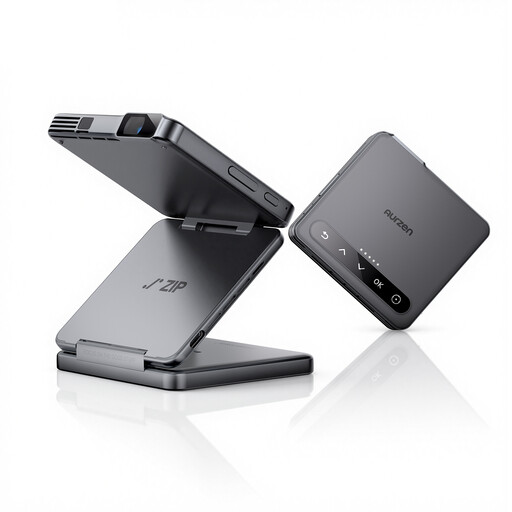
For film nights on the go, the product description features a foldable projector with an adjustable stand built in.
Battery-powered video playback is listed as up to 1.5 hours. A 24 W USB-C PD power adapter is required to use the projector while charging.
 No image available
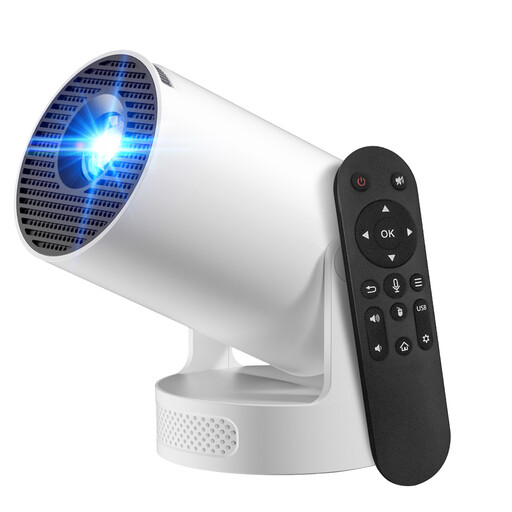
The product title lists 180° rotation for flexible image positioning.
The title lists an image size of 50–200 inches and digital zoom from 50% to 100%.
No image available
This product is described as a video projector. For use in a room with window light, check the specific details about brightness and screen area.
 No image available
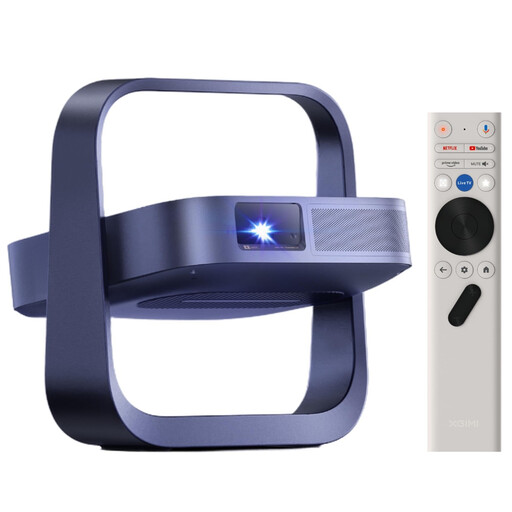
For film nights on the go, this model is described as a compact, foldable projector.
The product title lists 1600 ISO lumens and 4K support; the product description lists native 1080p resolution. Support for a signal is not the same as native 4K resolution.
 No image available
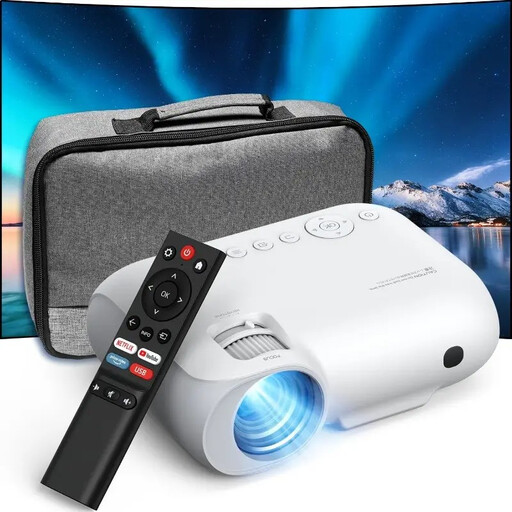
If your planned projection distance is around 2–3 m, check whether this positioning works in your room; the product description lists this as the optimal range.
The product title lists native 1080p, Wi-Fi, Bluetooth and 9,000 lumens. Only compare the lumen figure with values that also clearly state their measurement standard and operating mode.
No. A high lumen figure alone doesn’t prove that films will look high-contrast. Check whether light falls directly on the screen, what image size you’re planning and which operating mode the brightness figure applies to. An ALR screen suited to the projection direction can reduce light from certain angles, but it doesn’t prove that direct sunlight will have no effect.
Measure the available screen width, the distance between the projector and the screen, and the space near the wall. Compare these measurements with the throw ratio of the specific model. With an ultra-short-throw projector, you should also check that the screen is suitable for projection from below.
Allow for a screen and sound system if needed, and for a replacement lamp later if you buy a lamp model. A manufacturer’s lamp-life figure doesn’t give you a fixed replacement date. According to the Verbraucherzentrale, consumers in Germany generally have two years of statutory rights against the seller if a new device is faulty. A manufacturer’s guarantee is separate from these rights.
According to the European Commission, products covered by relevant harmonised EU rules must carry the CE marking before they are sold; this includes the electrical and electronic devices mentioned here. CE is the manufacturer’s declaration that the product meets the applicable requirements, not a government-awarded quality mark guaranteeing a particularly good film image. This general rule doesn’t prove that a specific product listing complies.