Watching by the window during the day
If you want to watch travel programmes with the curtains open, first check how daylight falls on the area where you plan to project and whether you can darken the room.


First, check how much daylight reaches the area where you plan to project and whether you can control it with curtains. Then make sure the image size, screen and projector position all work together. If you have limited space in front of the wall, an ultra-short-throw projector could be a suitable option, but it needs a compatible screen. BenQ points out that different types of lumens cannot be compared directly, while ProjectorCentral explains that the direction of the light and your seating position also matter with an ALR screen.
If you want to watch travel programmes with the curtains open, first check how daylight falls on the area where you plan to project and whether you can darken the room.
If you can’t position the projector far from the screen, consider the projection angle, the space directly in front of the wall and whether the screen is suitable.
If you want to stream directly from the projector, check the supported services, connections and audio output for the specific model.
Start by assessing the window light on the screen, then consider the image size and possible projector position. Finally, check how you’ll watch your preferred programmes and play the sound.
| What matters | What to check before buying | Who is this important to? |
|---|---|---|
| Visibility in daylight from windows | Check the position of the windows and how light falls on the screen. Only compare brightness figures when the measurement method is clear. | If I want to watch with the curtains open during the day, what matters to me is whether the image will remain visible on the screen I’ve planned to use. Around 40% of consumers put visibility in daylight from windows first. |
| Screen and light direction | Consider the position of the window, projector and seating together. For an ultra-short-throw projector, check that the screen is suitable for this type of projection. | If the window and seating position aren’t ideally placed in relation to the screen, I want to know whether the screen and projector angle will work. Around 30% of consumers prioritise the screen and light direction. |
| Positioning and image size | Measure the wall area and possible projector positions. Check the image-size and throw-distance specifications for the specific model. | If I don’t have a position far from the screen available in my living room, the image size I want needs to be achievable from the spot I can use. Around 20% of consumers focus on positioning and image size. |
| Programmes and sound | Check whether the service you want is available for the exact model version, as well as its connections and audio output. | If I want to start watching travel programmes without any hassle, I want to know that my viewing method will work and that the sound will suit my setup. Around 10% of consumers look at playback and sound first. |
ANSI lumens, LED lumens and light source lumens refer to different measurement methods. A similar figure alone doesn’t prove that the brightness is equivalent.
First check the measurement method stated, then factor in the image size, picture mode and the light in the room when making your choice.
An ALR screen’s performance depends on the direction of the light and the viewing angle. For an ultra-short-throw projector, the screen also needs to suit its steep projection angle.
Plan the window, seating position and projector together, and check that the screen material is designed for the type of projection you’ve chosen.
An integrated operating system doesn’t prove that the streaming service you want is available on the specific model version.
Check that your preferred service and viewing method are supported by the exact model. If you’re using an external device, check the HDMI connection and audio output too.
The EH-QS100W is an example of an ultra-short-throw projector for a permanently set up living room.
The TK860i is an example of a brightness-focused home projector for rooms where a suitable position with a longer throw distance is available.
The PT1 is an ultra-short-throw option with an integrated interface for a permanent living room setup.
The CineBeam S PU615U is an example for buyers who may value a compact design more than use in a bright room.
These models are intended for watching travel programmes at home. If you’ll be using the projector in daylight, pay particular attention to positioning, the screen and playback for your preferred services.
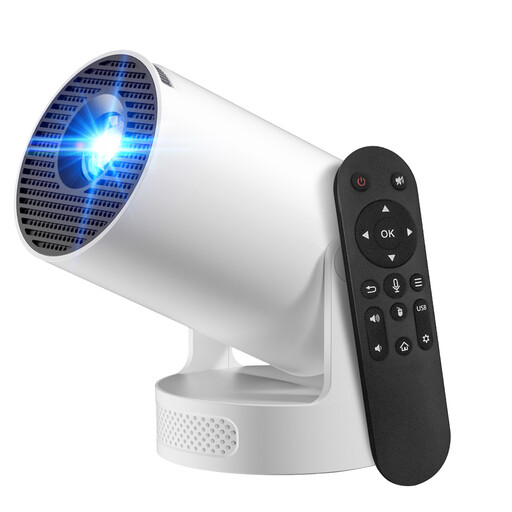 No image available
For anyone who wants to watch travel programmes using integrated apps; check that the service you want is available for the exact model.
The product title lists WiFi 6, Bluetooth, automatic screen correction and a screen size of 50 to 200 inches.
The title also lists 50% to 100% digital zoom, 180° rotation and compatibility with HDMI, TV sticks, USB drives, iOS, Android and laptops.
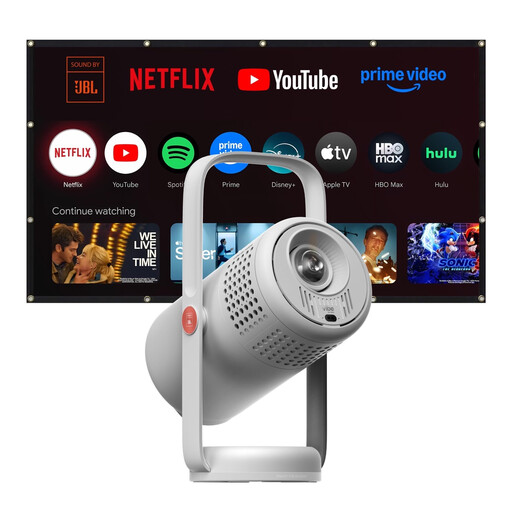 No image available
For anyone looking for a portable projector with a built-in stand; the stated brightness alone doesn’t show how the image will look in daylight.
The product title lists 1080p, Netflix, a built-in 160° stand, autofocus and keystone correction.
The brightness is listed as 250 ISO lumens. ISO lumens cannot be compared directly with ANSI lumens.
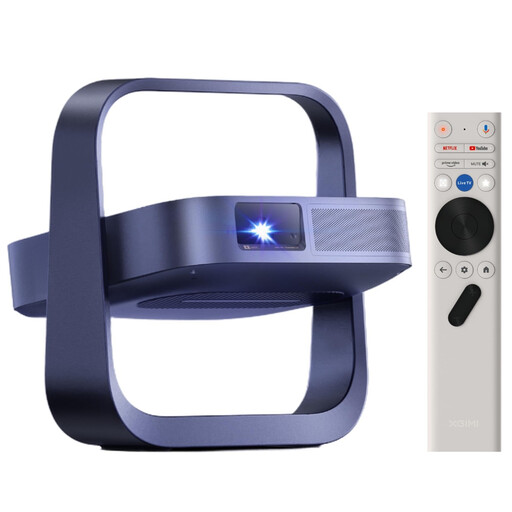 No image available
For anyone looking for a portable projector with a foldable design; check how the image will look in the lighting conditions in your own room.
The product title lists 1080p, an RGB triple-laser light source and 1,600 ISO lumens. This figure cannot be compared directly with ANSI lumens.
Autofocus is also listed in the product title.
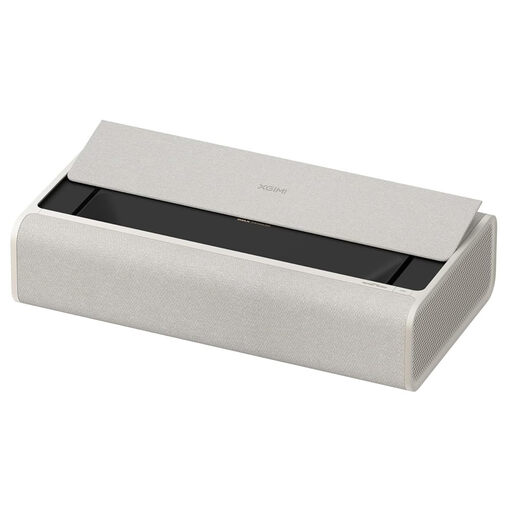 No image available
For anyone with limited space between the projector and screen; check that the screen suits the steep projection angle and consider the direction of the windows and your seating position.
The product title lists 4K, 2,300 ISO lumens, Dolby Vision and IMAX Enhanced. ISO lumens cannot be compared directly with ANSI lumens.
Integrated Harman-Kardon speakers are also listed in the product title.
 No image available
For anyone looking for a portable projector with Netflix listed as an integrated feature; check that your preferred programme is available through the intended viewing method.
The product title lists 1,200 ISO lumens and 1080p HD. ISO lumens cannot be compared directly with ANSI lumens.
The title also lists 4K HDR input, 3D Ready, Wi-Fi and Bluetooth.
There’s no simple answer. BenQ suggests around 3,000 ANSI lumens as a guide when there’s additional ambient light. The image size, how light falls on the screen and the picture mode you actually use also need to suit the room.
No. The screen needs to suit the steep angle at which the projector’s light hits it. Also check which direction the window light comes from and where you’ll be sitting; ProjectorCentral describes these angles as relevant to how the image looks.
Measure the available wall space and possible projector position, then compare both with the setup specifications for the specific model. For example, Epson lists a throw ratio of 0.16 for the EH-QS100W; this figure doesn’t apply to other devices.
If a product has a defect, your statutory rights under the legal guarantee are generally a claim against the seller. A voluntary manufacturer’s or retailer’s warranty is separate; check its terms and conditions.
Electrical and electronic equipment must carry the CE marking under the relevant EU rules. This is a manufacturer’s declaration, not an independent quality mark. The German Environment Agency states that waste electrical and electronic equipment must be collected separately from household waste.