Limited space for positioning
You want a large picture for films, but there’s only a limited distance between the projector and the wall. The key factors are picture width, throw ratio and the space you actually have available for positioning.


First, measure the available picture width and the possible distance between the lens and the projection surface. Then you can work out whether a short-throw or ultra-short-throw projector will suit your living room. For music films, you should also consider your planned audio setup and any ambient light. Built-in speakers won’t necessarily replace a separate system, and brightness figures only make sense when considered alongside picture size and lighting conditions.
You want a large picture for films, but there’s only a limited distance between the projector and the wall. The key factors are picture width, throw ratio and the space you actually have available for positioning.
Vocals and film soundtracks matter to you. Compare the built-in speakers with your existing or planned external audio setup, rather than basing your decision on picture specifications alone.
You can’t always make the small living room completely dark, so you need to assess brightness figures alongside picture size and lighting conditions.
For anyone who wants to watch music films in a small living room, positioning, sound, ambient light and flexible use each come with different considerations.
| What matters | What to look for when buying | Who should pay particular attention? |
|---|---|---|
| A big picture with limited space | Measure the available picture width and the distance between the lens and the wall, then check the throw ratio of the specific model. | If I want a big picture despite the short distance, the model needs to suit the space I have available. Around 31% of consumers say positioning distance is their main concern when buying. |
| Vocals and film soundtracks | Check the speakers on the exact model and the connections needed for an external system. | If voices and music are central to my film-watching experience, I’ll plan the audio setup before buying. Sound is the top priority for around 25% of consumers. |
| Picture quality with ambient light | Consider how much you can darken the room, your planned picture size and the brightness figure together. Don’t compare ISO and ANSI lumens as if they were measured on the same basis. | If I can’t make the room completely dark while watching a film, the projection needs to suit the lighting conditions. Around 25% of consumers put ambient light at the top of their list. |
| Flexible set-up and storage | Check the power supply, weight and set-up aids on the specific model. A battery doesn’t remove the need for sufficient projection distance. | If I want to put the projector away after a film night or use it in different locations, a set-up that works for me matters. Around 19% of consumers prioritise flexible use. |
A picture size advertised by the manufacturer isn’t automatically achievable in a small living room if the distance and available picture width don’t suit your set-up.
First, measure the possible distance between the lens and the projection surface, as well as the available picture width. Then check the throw ratio of the exact model.
Depending on the room, you may need a suitable mount, a different position or another projection surface.
For the Optoma GT2000HDR, the 4K specification refers to compatible input signals; Optoma says the projector outputs Full HD.
Check separately which resolution a device accepts and which resolution it actually projects.
A wattage figure doesn’t tell you whether the vocals and film soundtrack will sound good enough for you.
Before buying, decide whether you want to use the built-in speakers or an external audio setup, and check that you have the connections you need.
The XGIMI AURA 2 is available in Android TV and Google TV versions. A similar model name alone doesn’t confirm that the features and version are the same.
Compare the full version name and features before choosing a model.
The X500i is a short-throw model that can produce a large picture where space is limited.
The GT2000HDR is a short-throw option with a laser light source.
The AURA 2 is designed to sit close to the wall, while the Halo+ (New) is a compact, portable alternative.
The EH-LS800B is an ultra-short-throw model with an integrated Yamaha sound system.
The Joybuy models below offer different ways to enjoy film nights in a small living room, from short-throw projection to portable devices. Check the picture distance and audio setup for each specific model.
 No image available
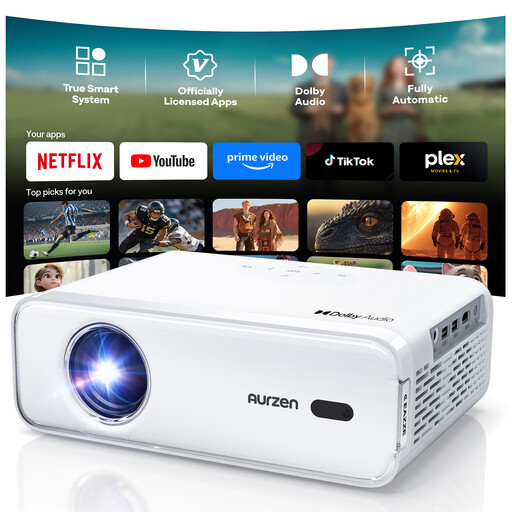
An option if you’re looking for built-in audio and features to help you align the picture.
The product name mentions Dolby Audio, autofocus and keystone correction. It lists Full HD 1080P and 4K support; check which resolution is actually output before buying. According to the description, you can’t install additional streaming apps on this version.
 No image available
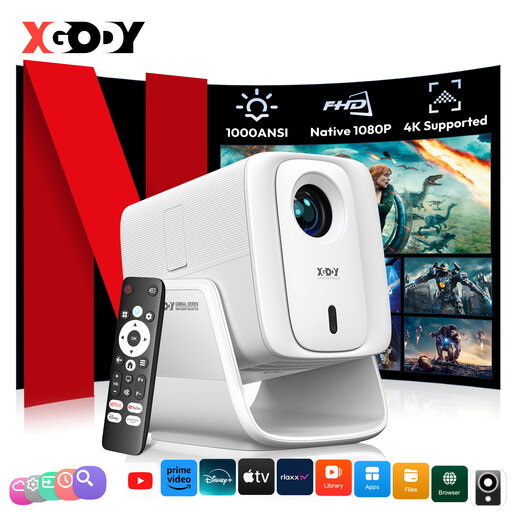
This short-throw model is worth considering if you need to plan the projection distance particularly carefully in a small living room.
The product name lists native 1080P resolution, 1,000 ANSI lumens and 4K support. The 4K specification shouldn’t be confused with native 4K resolution.
 No image available
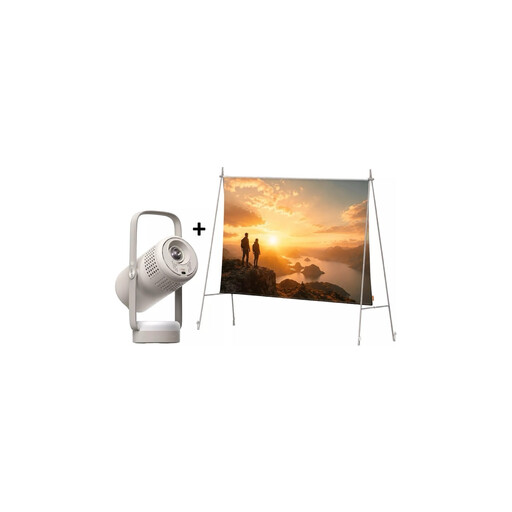
This set is an option if you’d like to position the projector and screen together and move them around as needed.
The product name lists FHD 1080P, 250 ISO lumens, Google TV, JBL Audio and a built-in battery. According to the product name, the set includes a projection screen and a stand.
 No image available
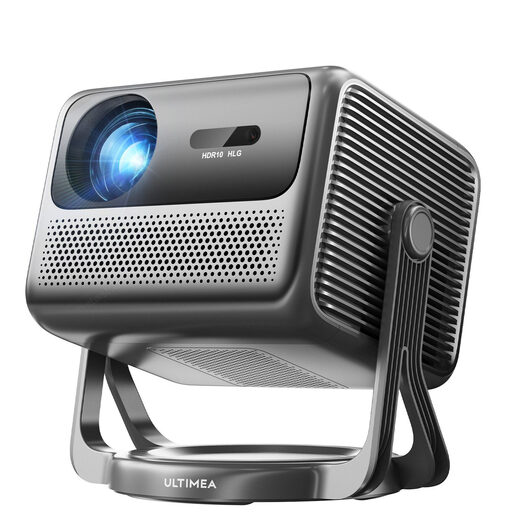
The gimbal design is an option if you want to adjust the direction of the projection flexibly.
The product name lists 600 ANSI lumens, 1080P Full HD, Dolby Audio and a 90° gimbal mount. It also mentions 4K; check the exact resolution specification for picture output.
 No image available
This projector is described as an ultra-short-throw model, making it an option if you’re planning to project from close range in a limited space.
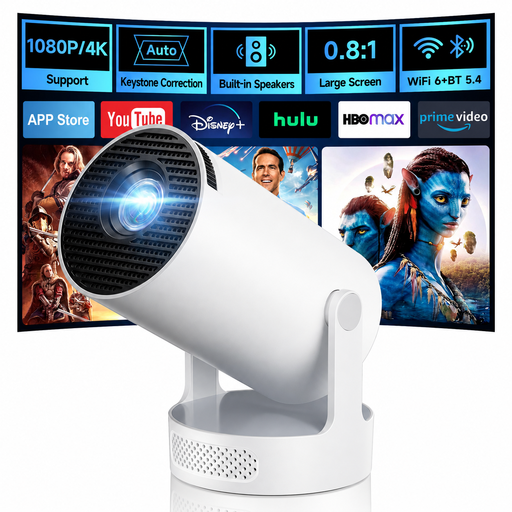
The product name lists 4K/1080P support, Wi-Fi 6, Bluetooth 5.4 and automatic keystone correction. Check the picture size and positioning distance for your space.
Measure the available picture width and the possible distance between the lens and the projection surface. The throw ratio is the distance divided by the picture width. Then check the permitted range and positioning guidance for the specific model.
It depends on your expectations for sound and can’t be judged by wattage alone. The models covered here have different built-in audio setups. If you want to use an external system, check that both devices have the right connections before buying.
If a product is faulty, you may have statutory rights against the seller in Germany. The Verbraucherzentrale distinguishes these from a voluntary guarantee. Remedies may include repair or replacement. For online purchases, you may also have a right to cancel under certain legal conditions.
Relevant EU rules require certain product groups to carry a CE marking. It is the manufacturer’s declaration of conformity, not an independent quality assessment. The German Federal Office for Radiation Protection recommends, among other things, not looking into a direct or reflected laser beam and following the instructions for use.
In Germany, electrical waste must not go in household rubbish. The Federal Environment Agency lists local collection points and suitable take-back options at retailers. Removable batteries should be disposed of separately.