Film fans who watch in daylight
If you can’t completely darken your living room, make sure picture details and intertitles remain visible at your chosen picture size.


For silent films in a bright living room, start by matching the ambient light, your intended picture size and the projection distance. If you have enough space, a standard-throw projector may suit you; if the room is shallow, consider a short-throw or ultra-short-throw model. A brightness rating alone won’t tell you how dark areas of the picture will look in your room. Also check whether your version of the film can be shown without distortion, for example in 4:3 format.
If you can’t completely darken your living room, make sure picture details and intertitles remain visible at your chosen picture size.
Seeing the picture clearly and preserving the original aspect ratio of your particular film version matter more to you than getting the widest possible projection. The British Film Institute describes 4:3 as the historical standard format for early 35mm cinema.
You need to position the projector close to the screen and want to match the picture width, distance and projection surface before you buy.
A good fit if: You can leave enough distance between the projector and screen, and want to place the device in the room.
Bear in mind: You’ll need enough space for the projector and the throw distance. If you choose a lamp model, you may eventually need to replace the lamp.
A good fit if: You prefer a laser light source and the adjustment options listed for the specific model.
Bear in mind: Vertical lens shift doesn’t necessarily mean you can shift the picture horizontally too.
A good fit if: There’s limited space between the projector and screen.
Bear in mind: The throw ratio and projector position need to suit your chosen picture width. Check that the screen is suitable for the lighting conditions and projection type.
| What matters to you | What to check before buying | Who should pay particular attention |
|---|---|---|
| Visibility in ambient light | Compare brightness ratings only when you know they use the same measurement standard. Also consider your planned picture size and how much light falls on the screen. BenQ Germany suggests around 3,000 ANSI lumens as a guide for projection in ambient light. This recommendation applies to the conditions described there and isn’t a guarantee for every room. | If you can’t darken the room, you’ll want to see picture details and intertitles at the size you plan to use. Around 36% of consumers put visibility in ambient light first. |
| Picture format and detail | Check the format of your particular film version and whether the projector can show it without stretching. The British Film Institute describes 4:3 as a historical film format. | If the look of a historical film version matters to you, you won’t want to change the picture by forcing it into widescreen. Around 29% of consumers prioritise an authentic presentation. |
| Setup and screen | Measure the throw distance and the picture width you want, then check both against the throw ratio of the specific model. If you’re choosing a screen for a brighter room, check that it’s suitable for the type of projection. | If there’s limited space between your seating and the screen, you’ll want a picture width that works without having to compromise on where the projector goes. Around 21% of consumers prioritise space-saving projection. |
| Connections and operation | Check that the connections match your film source, and compare noise ratings in the mode you’ll actually use. Also consider the light source and the warranty terms for the specific product. | If you want to connect your film source easily and keep maintenance in mind, connections and light source are important factors. Around 14% of consumers prioritise source connectivity and straightforward operation. |
ANSI lumens, LED lumens and light-source lumens don’t necessarily refer to the same measurement. Comparing the numbers without knowing how they were measured can therefore be misleading.
Compare ratings that are clearly labelled and assess the picture at your intended size and in your lighting conditions too.
The screen and the light falling on it both affect how the picture looks. BenQ Germany distinguishes between matt white surfaces for darkened rooms and ALR screens, which the manufacturer describes as more suitable for brighter settings.
Plan for the projector, screen and ambient light together, and check that the screen suits the specific device.
Early film versions may be in 4:3 format. Stretching one to fit changes its aspect ratio.
Check the format of the specific release and, if necessary, choose an option that shows it without distortion.
A lamp projector such as the Epson EH-TW840 uses a different light source from a laser model such as the ViewSonic LX700-4K. That alone doesn’t guarantee a particular overall lifespan or picture quality.
Compare the light-source type, possible replacement parts and warranty terms for the specific product separately.
The Epson EH-TW840 and EH-LS800W offer different types of projection: the EH-TW840 is a Full HD lamp projector, while the EH-LS800W is an ultra-short-throw laser model.
The TK710STi is a documented short-throw option for setups with limited room depth.
The LX700-4K is an example of a standard-throw laser home projector with adjustment options.
This selection includes projectors for flexible, short-throw and ultra-short-throw setups. Brightness and resolution ratings don’t replace checking how the picture will look in your room’s lighting.
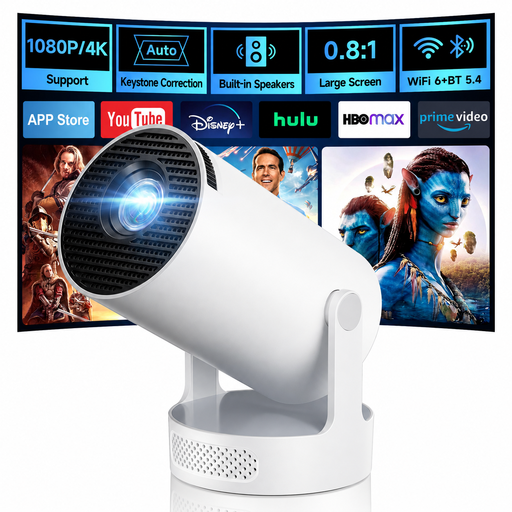 No image available
The product name describes the device as an ultra-short-throw projector for small rooms, with autofocus and automatic keystone correction.
The product name also lists Wi-Fi 6 and Bluetooth 5.4. Before setting it up, check that the throw distance and picture width suit your room.
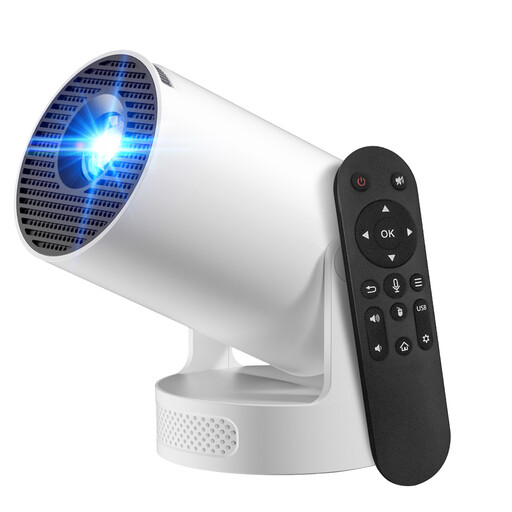 No image available
The product name lists HDMI compatibility and 180-degree rotation; digital zoom is specified as 50–100%.
Check that you can achieve the picture position you want with the intended setup.
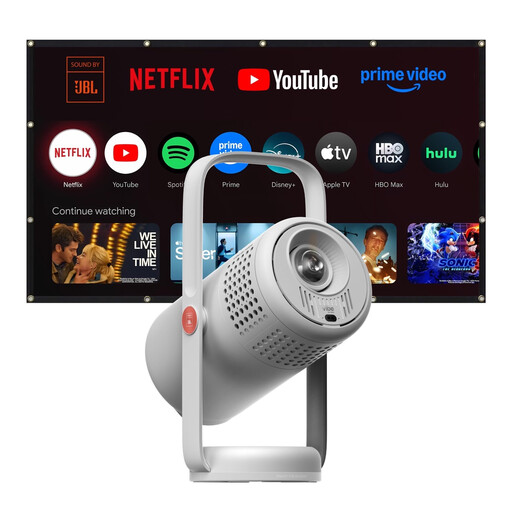 No image available
The product name lists native 1080p resolution and 250 ISO lumens. Check that the picture size and lighting conditions suit your planned film night.
The device is described as a portable mini projector with an integrated stand.
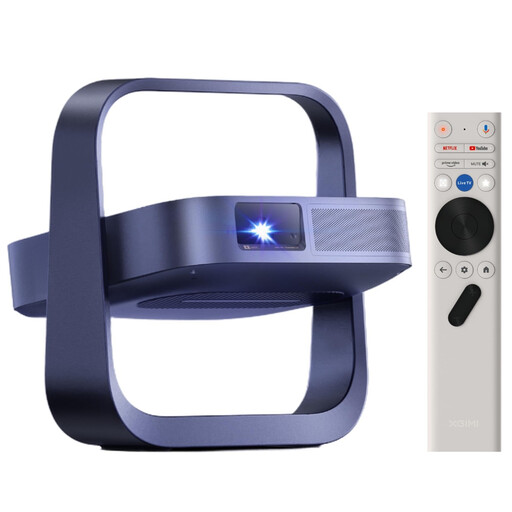 No image available
The product name lists an RGB triple-laser light source, 1080p and 1,600 ISO lumens. The brightness rating alone doesn’t tell you how clearly the picture will show up in a bright living room.
According to the product name, the model includes an integrated folding stand and autofocus.
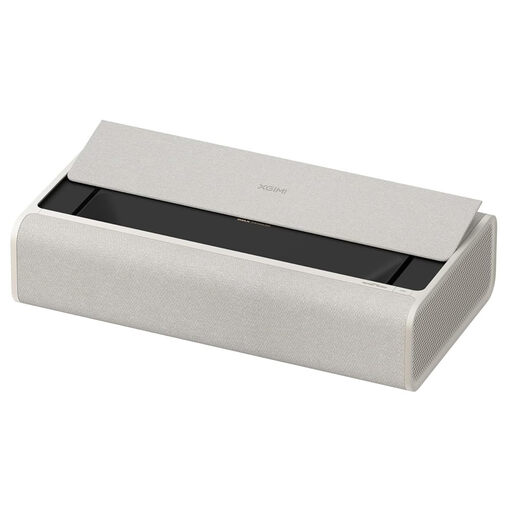 No image available
The product name describes this model as an ultra-short-throw laser projector and lists 4K and 2,300 ISO lumens. Check that your planned picture width works with the space available.
The brightness rating alone doesn’t confirm how the picture will look in ambient light.
No. Also consider the picture size and the light falling on the screen. BenQ Germany suggests around 3,000 ANSI lumens as a guide for the type of ambient-light projection described there. This isn’t a guarantee for direct sunlight or every room.
No. Check the format of your film version and, if needed, set it to 4:3 without stretching. The British Film Institute describes 4:3 as a historical film format; with a wider screen, this means you won’t use the full width.
Measure the distance from the planned projector position to the screen, as well as your preferred picture width. The throw ratio is the distance divided by the picture width; compare your measurements with the specifications for the specific model.
Your statutory rights regarding faulty goods are generally against the seller and are separate from any voluntary manufacturer’s guarantee. The Verbraucherzentrale states that the statutory guarantee period is generally two years. Check the details of your specific purchase and any additional guarantee separately.
For products covered by the relevant EU CE marking rules, the manufacturer uses the mark to declare that the product complies with those requirements. According to the Bundesnetzagentur, CE marking is neither proof that a product was made in Europe nor an independent endorsement of picture quality. Check the marking and product documentation for the specific item.