
Lieferung heute & morgen

Qualitätsgarantie

Willkommens-Angebote freischalten: KOSTENLOSE Lieferung | Bis zu 80 % RABATT | Kostenlose 30-Tage-JoyPlus-Testphase
App herunterladen
A high-quality projector is only half the battle for a perfect home cinema experience or a professional presentation. Without a stable and correctly positioned mount, the image can be shaky, distorted, or not at the optimal height. The right projector stand is therefore a crucial component to unlock your device's full potential.
This guide will help you navigate the options. It explains the key features to look for when making your selection and introduces various models designed for different applications. The goal is to provide you with an objective basis for your purchasing decision.
Choosing the right stand depends on your projector and its intended location. The following criteria will help you objectively compare the features of different models.
A stand's most important function is to provide a secure base for your projector. Stability is largely determined by the stand's material and construction. Models made from aluminium alloys offer a great balance of stability and low weight, while carbon steel tripods provide greater robustness and a higher load capacity for heavy home cinema projectors.
Pay close attention to the maximum load capacity specified by the manufacturer. This should safely exceed the weight of your projector to ensure a sufficient safety margin. A solid floor-standing projector mount is also characterised by a wide base and non-slip rubber feet that prevent it from slipping or tipping over.
A height-adjustable projector stand offers the flexibility needed to align the image perfectly on your screen or a clear wall. Check the minimum and maximum height range to ensure it suits your seating position and room layout.
Many stands feature a ball head or a swivel joint that allows for 360-degree rotation and tilting of the projector. This feature is especially useful for manually correcting trapezoidal distortion (keystone effect) if the projector cannot be placed perfectly centred in front of the projection surface.
While some stands are designed specifically for projectors, many models are universally compatible. A portable tripod with a standard 1/4-inch screw can often also be used as a camera tripod or a light stand for ring lights and other accessories.
For projectors without their own tripod thread, a mount with a tray is a practical solution. These platforms are usually large enough to securely hold various projector models. Before buying, check that the mounting type is compatible with your device.
Here is a selection of stands that are well-suited for different user groups due to their specific features.
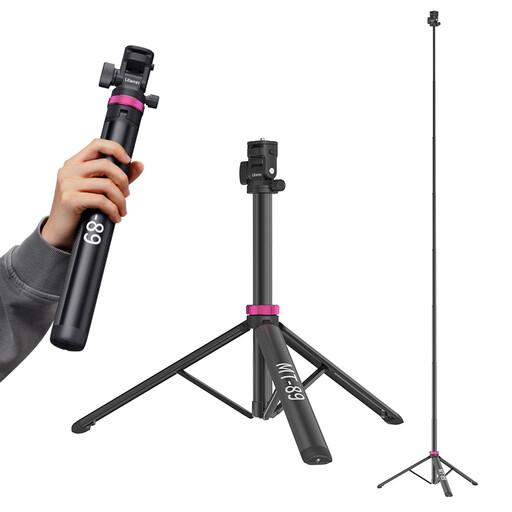
Why It Stands Out: With an exceptional maximum height of 208 cm and a lightweight aluminium construction, this tripod offers tremendous flexibility for mobile applications and creative setups.
Advantages:
Who It's For? Content creators and mobile users looking for an extremely tall and versatile portable tripod for various devices like cameras, video lights, or compact projectors.
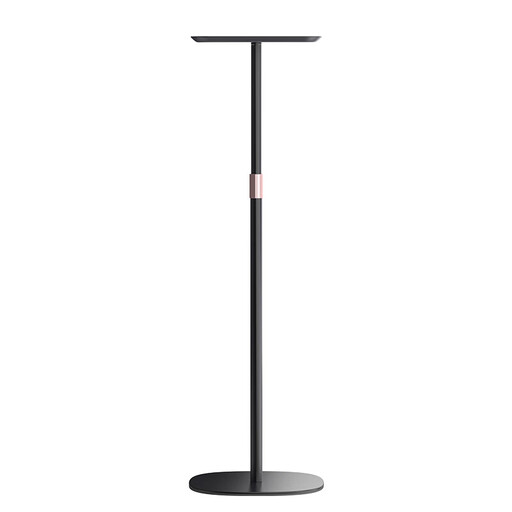
Why It Stands Out: This mount is designed for maximum stability and a high load capacity. Its carbon steel construction and large tray make it a solid base for heavy home cinema projectors.
Advantages:
Who It's For? Home cinema enthusiasts who need a dedicated and exceptionally stable projector stand for high-end, heavy projectors and prioritise a shake-free picture.
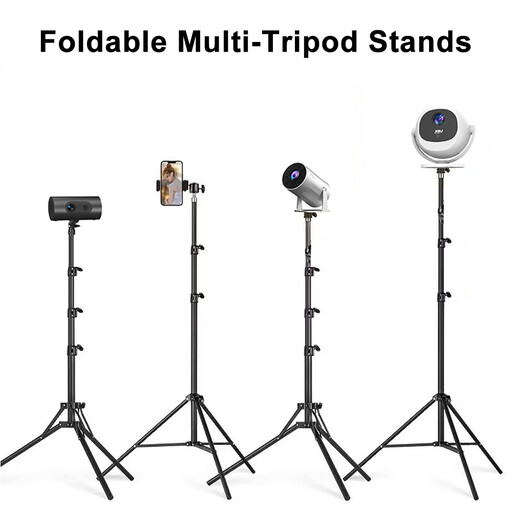
Why It Stands Out: This model combines portability with versatility. Its reverse-folding design allows it to collapse to a very compact size of just 40 cm, making it ideal for on-the-go use.
Advantages:
Who It's For? Users looking for an all-in-one solution for various scenarios like home cinema, live streaming, photography, or camping, who need an especially compact and easy-to-transport tripod.
If the models presented here don't exactly meet your needs or if you're looking for more specialised solutions, you can find a wider selection in our Tripod Mount category. There, you can filter various models by height, material, and price.
1. Can I use a camera tripod for a projector? Yes, a camera tripod can be used for a projector as long as two conditions are met: the tripod's load capacity must be able to safely support the projector's weight, and the projector must have a corresponding 1/4-inch thread on its underside. For projectors without a thread, a tripod with a tray platform is required.
2. How much weight should a projector stand be able to support? Ideally, the stand's load capacity should be at least 20–30% higher than the actual weight of your projector. This creates a safety margin and ensures the stand remains stable even at maximum height or when slightly tilted. You can find your projector's weight in its manual or on the manufacturer's website.
3. What should I consider when setting up a projector stand? Always place the stand on a level and solid surface. Fully extend the legs to achieve maximum stability. Make sure all locks and clamps are securely tightened before mounting the projector. Also, ensure secure cable management to avoid tripping hazards that could knock over the stand.