What should you look for when buying?
Start by checking the seating and screen, then consider where the projector can go. Ambient light, recording resolution and the audio setup will help you decide which specifications matter for your screenings.
| Priority |
What to check before buying |
Who it matters most to |
| Viewing from the sides |
Compare the seats at either end with the viewing angle of the specific screen material. Stewart Filmscreen defines the half-gain angle as the angle at which brightness falls to half its peak value. |
If several people are sitting well to the left or right of the centre of the image, I want to be able to see the recording clearly from my seat. Around 33% of consumers say side viewing is their top priority. |
| Image position in the room |
Measure the throw distance and the image width you want. Check the throw ratio and the direction and range of lens shift for the exact model. For example, BenQ specifies +10% vertical lens shift for the W2710i. |
If the projector can’t sit directly in front of the screen, I want to know whether I can position the image from where it needs to go. Around 27% of consumers prioritise placement. |
| Visibility in ambient light |
Decide on the ambient light conditions and image size, and compare brightness figures only after checking the unit and operating mode. Manufacturer figures aren’t a test in your particular rehearsal room. |
If there’s still some ambient light during a screening, I want to be able to make out the stage and movement at the chosen image size. Around 20% of consumers put visibility in ambient light first. |
| Setup, connections and sound |
Check that the connection is compatible with your playback device, and test the audio setup with the intended speaker or external sound system. Built-in speaker specifications don’t guarantee that dialogue will be clear throughout the room. |
If the projector often moves between rehearsal rooms, I want to set it up easily and play the recording with sound. Around 13% of consumers prioritise portability and the audio setup. |
| Recording resolution |
Distinguish between native resolution and supported input signals, and take the resolution of your existing recording into account too. |
If I watch older theatre recordings or recordings with different resolutions, I want to know what the projector can actually display natively. Around 7% of consumers make recording resolution their top buying priority. |
Projectors at Joybuy
This selection includes projectors for different rooms and playing recordings. If people are sitting to the sides, also consider the screen material and viewing angle, as choosing a projector alone won’t solve this issue.
 No image available
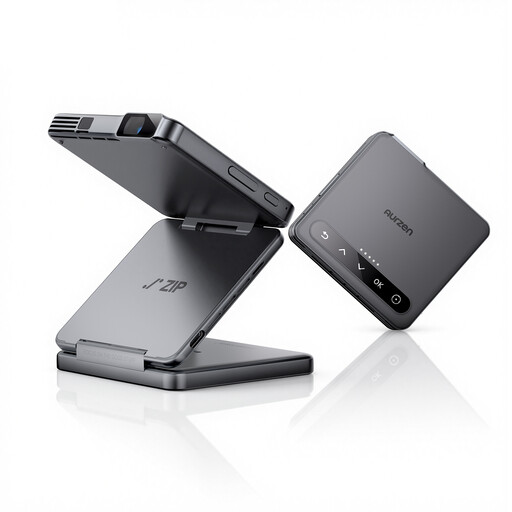
Aurzen Tri-Fold DLP Mini Projector
Its portable design and integrated adjustable stand make it a good fit for frequently changing locations.
The title lists ToF autofocus, 4K support, Bluetooth, Wi-Fi and USB-C. The battery is specified as 5000 mAh, with a runtime of up to 1.5 hours. For longer sessions, the description says USB-C PD power is required to use the projector while charging.
View at Joybuy
 No image available
XGODY N7 Cine Smart Projector
The listed automatic image adjustments may help with setup; check the correction range for the exact position where you plan to place the projector.
The title lists 1,000 ANSI lumens and native 1080p resolution. HDMI and USB, autofocus, keystone correction and 90° rotation are also specified.
View at Joybuy
 No image available
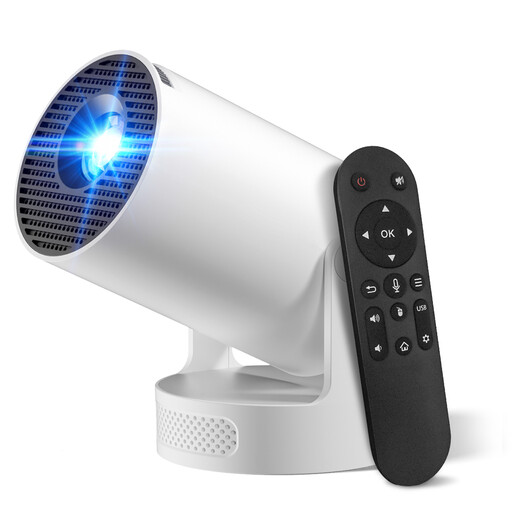
Projector with automatic image correction and 180° rotation
The listed connection options are suitable for playback through compatible external devices; check that they match your source.
The title lists compatibility with HDMI devices, USB drives and laptops, as well as automatic image correction, 180° rotation and 50–100% digital zoom. The specified image size is 50–200 inches.
View at Joybuy
 No image available
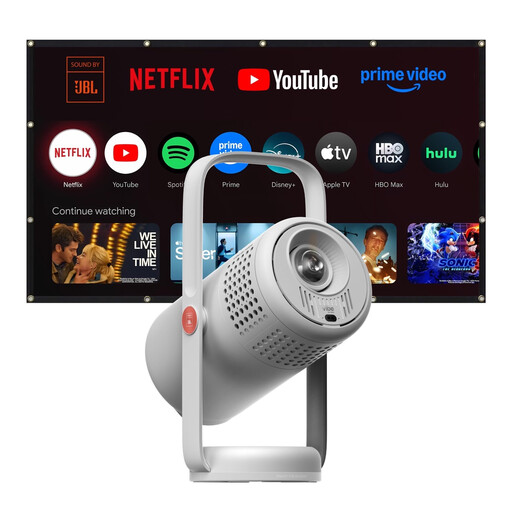
XGIMI Vibe One
Its portable design and integrated stand suit different locations, provided the image size and lighting conditions are right.
The title lists 1080p, 250 ISO lumens, autofocus and keystone correction, as well as an integrated 160° stand. The description says the specified brightness is intended for use in low-light conditions.
View at Joybuy
 No image available
XGIMI Elfin Flip Laser 1080P Smart Mini Projector
Its portable, foldable design is made for changing locations. Also check the image size and throw distance for each room.
The title lists 1,600 ISO lumens and autofocus. The description specifies 1080p resolution and an integrated Harman Kardon speaker.
View at Joybuy
Frequently asked questions
Does horizontal keystone correction help viewers sitting to the side?
Not with the key viewing-angle issue: keystone correction changes the shape of the projected image, while the screen’s perceived brightness from the side depends on the screen material and viewing angle. It can help if the projector itself is positioned to the side instead; BenQ notes that stronger digital correction can affect image quality.
How can I check before buying whether the projector will fit in the room?
Measure the throw distance, the image width you want and the possible lens position, then compare these measurements with the throw ratio and lens shift of the exact model. For the BenQ W2710i, BenQ specifies a throw ratio of 1.13–1.47 and +10% vertical lens shift. Don’t rely on keystone correction as a substitute for checking that the room dimensions are suitable.
What should I consider when it comes to operation and potential ongoing costs?
For a lamp-based model, check the light source specifications and the availability of compatible replacement parts for that exact device. BenQ lists different lamp life figures for Normal, Eco and SmartEco modes on the W2710i. A voluntary warranty is not the same as your statutory rights against the seller.
Can the theatre group show its recording to an audience?
There’s no general yes or no answer without information about the work, the recording and screening rights, and who will be attending. Copyright law distinguishes between public and non-public communication, and also governs the public screening of a performance via video or audio recordings. The performers’ rights in the recording may also be affected, as may the rights of people depicted if it is shown publicly. Check the relevant rights before screening or sharing a recording publicly.


