
Lieferung heute & morgen

Qualitätsgarantie

Willkommens-Angebote freischalten: KOSTENLOSE Lieferung | Bis zu 80 % RABATT | Kostenlose 30-Tage-JoyPlus-Testphase
App herunterladen
The search for a flexible alternative to a traditional TV leads many to the world of projectors. A projector with Wi-Fi and Bluetooth offers the freedom to wirelessly stream content from various devices and output audio to external speakers or headphones. Whether for a spontaneous home cinema in the living room, watching the match in the garden, or a large-screen gaming experience, the possibilities are endless.
This article serves as a guide. We will introduce various models and explain the key technical features relevant to making an informed purchasing decision. Our goal is to help you find a device that perfectly suits your specific needs.
Projector spec sheets can seem overwhelming at first glance. However, focusing on three key aspects will help you narrow down the options and identify the right device for you.
A projector's image quality is primarily determined by two factors: brightness, measured in ANSI lumens, and native resolution.
A modern smart projector is defined by its built-in connectivity options.
Depending on your intended use case, size, weight, and power source play a significant role.
Here, we present three models that cater to different user profiles—from the flexible all-rounder to the high-performance home cinema device.
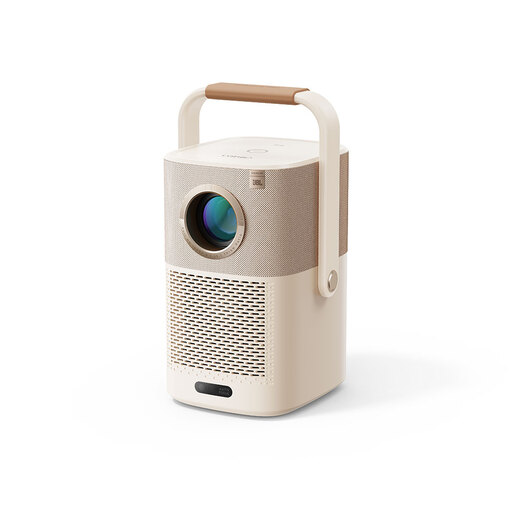
Why It Stands Out: The Yaber T2 Plus is designed as a versatile portable projector. Its standout feature is the combination of a built-in battery, a convenient carrying handle that also doubles as a stand, and an included Google TV dongle. This makes it an out-of-the-box solution for both indoor and outdoor use.
Advantages:
Who Is This Model For? This device is an excellent choice for users looking for a hassle-free, all-in-one solution. It's perfect for movie nights in the garden, presentations on the go, or as a flexible TV alternative at home.
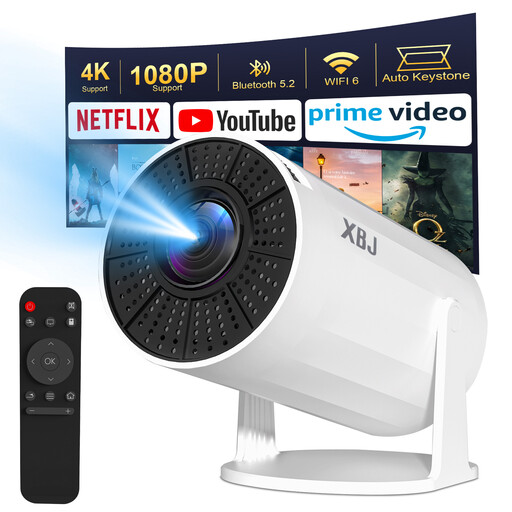
Why It Stands Out: This mini projector is distinguished by its unique 180-degree rotating design. The projector is integrated into a flexible stand, allowing you to effortlessly project the image onto walls, angled surfaces, or even the ceiling without needing an extra tripod.
Advantages:
Who Is This Model For? Ideal for users seeking maximum flexibility in a small space. If you enjoy projecting movies onto the ceiling from your bed or need a discreet projector for a bedroom or kid's room, this is a fitting solution.

Why It Stands Out: The Dangbei Atom stands out because of its light source: it's a laser projector. Its ALPD laser technology delivers a high brightness of 1200 ISO lumens and a long light source lifespan of up to 30,000 hours. Despite its power, the device is remarkably slim and compact.
Advantages:
Who Is This Model For? This model is aimed at discerning users who want high image quality and brightness for their home cinema but also value a portable and stylish design. It is a serious alternative to a large-screen TV.
The models featured here offer a glimpse into the current market. If you want to compare more devices or are looking for specific features not covered here, you can find a wider selection in our category.
? Discover More Models in the Portable Projector Category
1. Can a projector completely replace a TV? A projector can replace a TV in many households, especially if a large screen and flexibility are priorities. However, keep in mind that image quality is highly dependent on ambient light. In bright rooms, a high-performance projector or a specialised screen is necessary. Additionally, for many models (excluding laser or LED projectors), the lamp will need to be replaced after several thousand hours of operation.
2. What does "native resolution" mean for a projector? Native resolution refers to the actual, physical number of pixels that make up the image on the projection surface. A projector with a native resolution of 1920x1080 pixels (Full HD) produces a true Full HD image. Many cheaper models advertise "4K supported" but have a lower native resolution. While they can receive a 4K signal, they downscale it to their lower pixel count, resulting in a loss of quality.
3. How many ANSI lumens are ideal for a home cinema projector? For a dedicated home cinema in a completely dark room, 500 to 800 ANSI lumens can be enough for an impressive picture. For use in a living room with some ambient light or during twilight, 1000 to 2000 ANSI lumens is a good benchmark. For daylight use, specialised daylight projectors with over 3000 ANSI lumens are required.