Limited space
If you want a large image but have few suitable places for furniture and a projector, start by checking where you can set it up, the projection distance and how much clear wall space you have.


First, measure the available distance between the projector and the screen, then decide on your preferred image size. If the projector will sit right in front of the wall, an ultra-short-throw model could be a good fit; with more distance, consider a short-throw model. Compact projectors offer more flexibility over where you set them up and how you store them away. Next, consider the light falling on the screen and check that the specific version of the device supports your preferred streaming service. A portable projector can save space, but its stated brightness and battery life apply only to that particular model and the conditions specified.
If you want a large image but have few suitable places for furniture and a projector, start by checking where you can set it up, the projection distance and how much clear wall space you have.
If you don’t always watch travel documentaries in a completely dark room, check how much light falls on the screen and whether a suitable screen will fit in your room.
If you often set your projector up and put it away, or want to use your favourite apps, check the operating system version, whether the specific app is available, the audio and, if relevant, battery operation.
Start by deciding on the image width and where you can set up the projector. Then consider ambient light, streaming and sound, as well as how much setup effort you’re prepared to take on for a flexible arrangement.
| What to consider | What to check before buying | Who it matters most to |
|---|---|---|
| Image size at a short distance | Check the distance from your planned projector position to the screen, the distance chart for the specific model, the image width and the available wall space together. | If you need to achieve a particular image width in a small room without placing the projector far back, distance is especially important. Around 36% of consumers rank it as their main concern. |
| Picture quality with some light in the room | Check window and lamp light falling on the screen, the unit and measurement basis for the stated brightness, and whether your planned screen is suitable. | If you want to watch travel documentaries under your usual living room lighting, pay attention to the light falling directly on the screen. Around 29% of consumers prioritise the impact of ambient light. |
| Streaming and sound | Check that the services you want are available on the specific device version, and look at the HDMI connection and options for external audio output. | If you want to access your favourite documentary services without extra steps and hear dialogue clearly, check apps and sound together. Around 21% of consumers make streaming and sound their main concern. |
| Flexible setup | Check the dimensions, power supply, battery life and operating mode, orientation, and any costs for a screen or mount. | If you want to put the projector away after watching or use it in different places, ease of setup is key. Around 14% of consumers prioritise flexible positioning and easy storage. |
The percentages shown refer to consumers choosing a projector for this particular use; they do not represent all projector buyers in general.
The image size you can achieve depends on the specific model and projection distance. The maximum screen size alone won’t tell you whether the image will fit in your room.
Measure your preferred image width and available distance, then compare both with the manufacturer’s specifications for the exact model variant.
An unsuitable position could mean you have to move the projector or choose a different screen area.
Manufacturers use different units, including ANSI lumens and ISO lumens. Light falling on the screen can also reduce perceived contrast, so one figure alone won’t tell you how the picture will look in your room.
Note the unit and measurement basis, and make your decision based on the actual lighting in your room rather than relying on a single figure to determine whether it’s suitable for daylight viewing.
Screens can differ in their impact on contrast, viewing angle and installation requirements.
If you’re planning to use a screen, check before buying that it’s suitable for the projection direction and your seating position.
A suitable screen and its installation may involve extra setup work.
The XGIMI AURA 2 is available in versions with Android TV and Google TV. Products with similar names may also differ in what’s included in the box.
Check the operating system version, model number and contents of the specific offer against your requirements.
Depending on the service you want to use, you may need an additional streaming device. Also check whether any accessories you’re counting on are included.
The EH-LS800B is a fixed 3LCD laser projector with ultra-short-throw projection, Android TV and integrated Yamaha sound. Epson Germany says this model can project an 80-inch image with the projector 2.3 cm from the wall.
The TK710STi is a short-throw laser projector that BenQ promotes for gaming and films in small living rooms.
The AURA 2 is an ultra-short-throw model, while the Elfin Flip Laser is a more compact Full HD model with an integrated stand.
The Capsule 3 is a compact, battery-powered model with Google TV and, according to the manufacturer, licensed Netflix.
The PX3-PRO and PX4 Pro are examples of ultra-short-throw laser cinema projectors; an independent ultra-short-throw list features them as separate models.
This selection includes ultra-short-throw models for short distances, as well as compact and portable projectors for flexible positioning. For each device, check the image size, room lighting and streaming features you need.
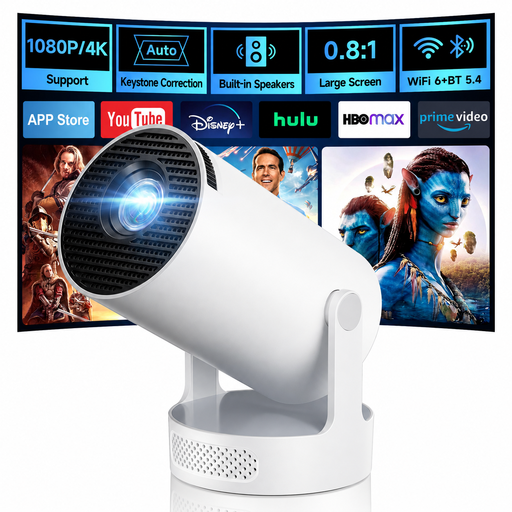 No image available
Its ultra-short-throw design is intended for positions with very little distance between the projector and the screen.
The product name lists Wi-Fi 6, Bluetooth 5.4 and automatic keystone correction.
 No image available
This portable projector is a good option if you want to set it up in different places.
The product name lists 1080p, 1,600 ISO lumens, an RGB triple-laser light source, Harman Kardon audio and a foldable design.
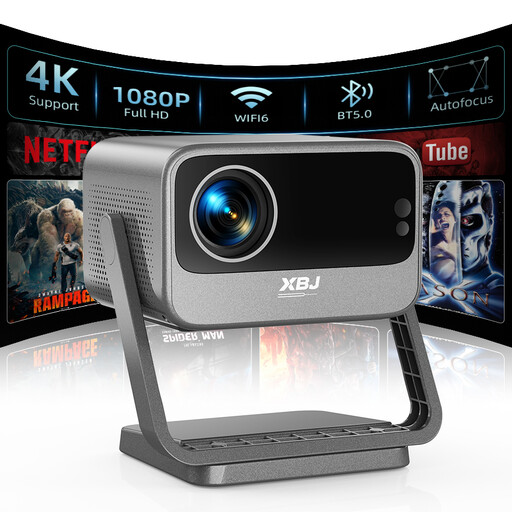 No image available
The rotating stand makes it easy to adjust the projector if you want to change its position in the room.
The product name lists native 1080p, 700 ANSI lumens, a stand that rotates through 280°, autofocus and automatic keystone correction.
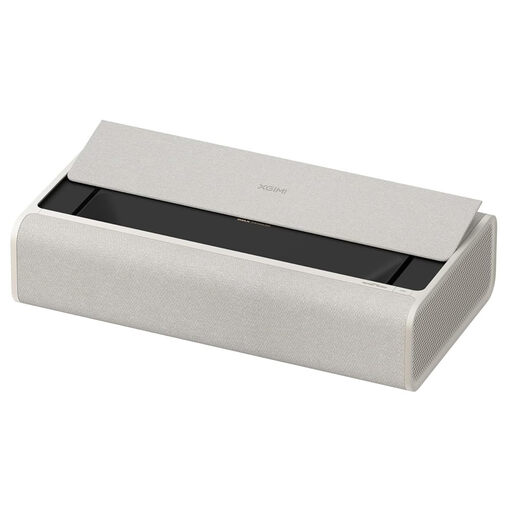 No image available
Its ultra-short-throw design is made for a short distance between the projector and the screen.
The product name lists 4K, 2,300 ISO lumens, Dolby Vision, IMAX Enhanced and integrated 60 W Harman Kardon speakers. Check the exact operating system version before buying.
 No image available
This portable projector is designed for flexible positioning; check that you can angle it to suit your screen.
The product name lists native 1080p, 900 ANSI lumens, Android 14, Wi-Fi 6, Bluetooth 5.4 and 180° rotation.
Measure your preferred image width and the planned projector position, then compare both with the distance chart for the specific model variant. The maximum screen size alone won’t tell you whether you can achieve that size in your room.
Not necessarily. If you want to project with some light in the room, check that the screen is suitable for the projection direction and your seating position, and consider installation and cost when choosing an ultra-short-throw projector. ProjectorCentral explains how screens can differ in contrast, viewing angle and installation; the results of a screen comparison don’t guarantee the same performance in your home.
Check whether the app you want is available on the specific projector and its operating system version. A listing that explicitly mentions Netflix doesn’t automatically mean other streaming services are available. If necessary, check whether a suitable external streaming device will work with the HDMI input.
If a fault develops, your statutory rights are against the seller and are separate from any voluntary guarantee. The Verbraucherzentrale explains that online purchases generally come with a 14-day right to cancel. You must notify the seller that you’re cancelling, and exceptions and the circumstances of the contract should also be taken into account.
No. In Germany, old electrical appliances must not be put in household waste; they should be taken to a designated return or collection point. The Umweltbundesamt notes that gas-discharge lamps may contain mercury, so dispose of them separately in line with local collection arrangements.