For short pronunciation passages you want to practise repeatedly, a compact voice recorder with suitable playback features is a natural choice. If you want to record directly on a computer or connect an external microphone, a handheld recorder may be more suitable. None of the microphone or filter features described guarantees that voices from neighbouring desks will be reliably excluded. So assess a test recording made in your usual conditions, and take care not to make unauthorised recordings of other people’s private conversations.
Who are the different features suited to?
Practising at a busy desk
If you want to assess your voice despite noise from a neighbouring desk, positioning and a test recording made in your usual conditions are key. The microphones and filters described by Sony, OM SYSTEM and Tascam do not guarantee reliable separation of people speaking at the same time.
Learners practising through repetition
If you repeat short passages, check whether you can replay individual sections or listen to them more slowly. Sony lists these playback features for the ICD-PX470.
Practising with a computer-based workflow
If you want to use practice files on your computer or record directly into recording software, distinguish between USB file transfer and USB audio. Sony lists a PC connection for saved files, while Zoom and Tascam describe features for computer audio.
Which buying criteria matter at a shared desk?
Compact voice recorder
A good fit if: you record short practice sessions without a computer and want to replay specific sections or listen to them more slowly.
The trade-off: Playback features are no substitute for suitable positioning or listening to a test recording made at your actual desk.
Handheld recorder
A good fit if: you also want to record directly on a computer or connect an external microphone.
The trade-off: Check that the connections on the model you’re considering support your recording workflow; 32-bit float does not guarantee separation of other voices.
| Buying criterion |
What to look for |
Who it matters to |
| Clarity at your desk |
Check the microphone arrangement, possible connections for an external microphone and how the recorder performs with your usual background noise. |
When someone is speaking at the next desk, I want to assess how my own voice sounds in the recording. Around 42 % of consumers put clarity at their desk first. |
| Targeted playback |
Check A/B repeat, adjustable playback speed and the headphone connection on the specific model. |
For short passages, I want to be able to listen to individual sounds again or more slowly. Around 33 % of consumers prioritise targeted playback. |
| Computer connectivity |
Distinguish between transferring saved files and recording via a USB microphone or audio interface. |
If I want to use recordings on my computer or record directly onto it, I need the right connection for my workflow. Around 25 % of consumers say computer connectivity is their top priority. |
Which assumptions should you avoid?
-
Assuming filters or noise reduction will reliably separate nearby voices
Manufacturers’ claims about speech enhancement and filters don’t show how well a recorder can distinguish between people speaking at the same time in your particular workplace.
Listen to a short test recording made in your usual conditions. If you want to use an external microphone, check that the specific model has the right connection.
-
Confusing USB file transfer with USB audio
A connection for transferring saved recordings doesn’t tell you whether you can record directly into recording software.
If recording directly on a computer matters to you, check specifically for USB microphone or audio interface functionality.
-
Choosing solely by maximum recording time or storage capacity
The stated recording time can vary depending on the format. Storage capacity alone also tells you nothing about playback features or how clearly your voice will come across.
Compare the recording time for the format you plan to use, and check the power supply, what’s included and which playback features you need.
Which brands and model ranges are worth considering?
Sony
The ICD-PX470 is an option for standalone recordings and targeted playback of short speech practice sessions.
- Sony lists A/B repeat, speed control, and headphone and microphone connections.
- USB charging and manual recording level adjustment are not listed for this model. Its playback features do not guarantee separation of nearby voices.
OM SYSTEM
The WS-882 and WS-883 are compact voice recorders with internal storage and documented recording formats.
- OM SYSTEM lists directional microphones, a low-cut filter and PCM and MP3 recording for both models. The WS-882 has 4 GB of internal storage, while the WS-883 has 8 GB.
- These manufacturer specifications do not guarantee that your voice will be separated from people speaking at the same time at a shared desk.
Zoom
The H1essential is a handheld option for standalone recording and use as a USB microphone with a computer.
- Zoom lists 32-bit float, built-in X/Y microphones and simultaneous recording to an SD card while in USB microphone mode.
- The 32-bit float specification does not guarantee separation of people speaking at the same time.
Tascam
The DR-05XP is a handheld option for a workflow involving computer audio or an external microphone.
- Tascam lists USB-C audio, an input for external microphones and 32-bit float.
- The built-in microphones are described as omnidirectional. This does not mean they will prioritise picking up your voice alone.
Philips
The VoiceTracer DVT1170 is a straightforward recorder option for voice files and transferring them to a PC.
- Philips lists one-button operation, WAV recording, PC connectivity and a 360° microphone.
- Capturing sound from multiple directions does not guarantee that your voice will be isolated from people at neighbouring desks.
Joybuy products for pronunciation practice
The products below are compact voice recorders for short practice sessions, listening back and using recordings on a computer. Their product specifications do not guarantee reliable separation of voices at a shared desk.
 No image available
Mobvoi TicNote Lite, 4 GB, black
For recording practice sessions and checking the text afterwards: the product specifications list voice recording and transcription in more than 120 languages.
4 GB storage; Bluetooth connectivity and compatibility with laptops, PCs, smartphones and tablets are listed. According to the product specifications, there is no headphone socket.
View at Joybuy
 No image available
Rexsun L15, 16 GB, grey
For short recording practice sessions followed by playback: one-button recording and headphone playback are listed.
Supplied 16 GB TF card; the product specifications list two omnidirectional microphones, USB-C charging and USB file transfer.
View at Joybuy
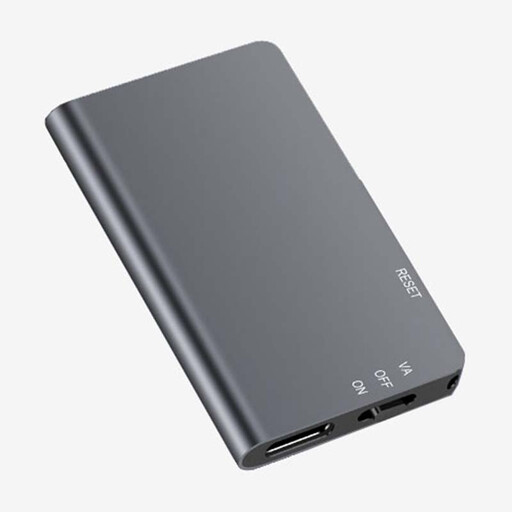 No image available
Rexsun L810, 64 GB, grey
For one-button recording followed by playback: the product specifications list headphone playback.
64 GB; WAV recording and voice activation are listed.
View at Joybuy
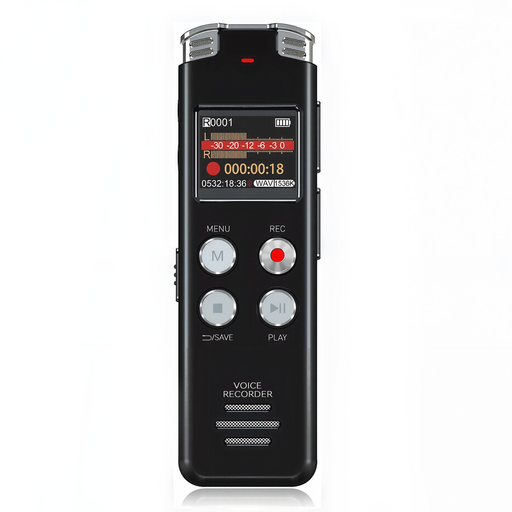 No image available
Rexsun L357, 128 GB, grey
For listening to a practice passage repeatedly: A/B playback, fast-forward and rewind are listed.
128 GB; the product specifications list MP3 and WAV formats and USB-C file transfer.
View at Joybuy
 No image available
AI voice recorder with case, 32 GB
For recording and viewing the text afterwards: the product specifications list real-time transcription.
32 GB storage, four microphones including a bone conduction microphone, app file management and cloud synchronisation are listed.
View at Joybuy
Frequently asked questions
Which feature helps you listen to a difficult sound repeatedly?
Check A/B repeat and playback speed on the specific model. Sony lists both for the ICD-PX470; these features don’t change how clearly your voice can be distinguished from background speech in the original recording.
How do I test a recorder at a shared desk?
Make a short test recording from your usual speaking position, with the typical sounds of your workplace in the background, then listen back to it. Filter specifications alone don’t guarantee separation of people speaking at the same time.
What should I look for in storage and power options?
Check the storage and power supply on the specific model, as well as what’s included for your recording workflow. Sony lists 4 GB of internal storage and two AAA batteries for the ICD-PX470; Zoom describes recording to an SD card on the H1essential.
Am I allowed to record other people talking at a shared desk?
Section 201(1) of the German Criminal Code makes it a criminal offence to record another person’s private conversation without their permission. The text of the law is published on Gesetze im Internet, the portal of the Federal Ministry of Justice and the Federal Office of Justice. Practising your own pronunciation does not give you blanket permission to record other people’s private conversations; check that you have permission before recording in their presence.


