
Lieferung heute & morgen

Qualitätsgarantie

Willkommens-Angebote freischalten: KOSTENLOSE Lieferung | Bis zu 80 % RABATT | Kostenlose 30-Tage-JoyPlus-Testphase
App herunterladen
Watching wild birds in your own garden or on your balcony is an enriching experience. However, the desire to help these feathered visitors often leads to well-intentioned but unsuitable purchases. Many products on the market are not only unhelpful but can even harm the birds. Before you invest, you should be aware of the common pitfalls.
As a Joybuy Product Recommendation Officer, I see it as my duty to provide you with objective information so you can make an informed decision. Here are three common problems to watch out for:
To avoid these mistakes and set up a feeding station that truly benefits birds, you should consider three core aspects. These will help you separate the wheat from the chaff and find products that are both functional and durable.
The ideal feeding spot depends on your available space.
To specifically attract birds to your garden, you should tailor the feed to the species you want to see.
A good feeding station must meet two main criteria: it must be weather-resistant and easy to clean.
Based on the criteria above, we have identified some products that are well-suited for specific use cases.
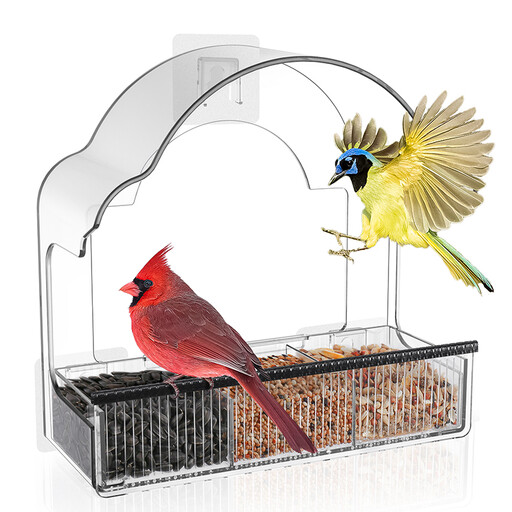
Why it's a good fit: Perfect for flats or houses without a garden. It allows for close-up bird observation without disturbing them—an enriching experience for families and urban nature lovers.
The transparent acrylic and open design make checking feed levels and cleaning straightforward. This prevents the build-up of old, mouldy feed, a common problem with closed systems.
Securely mounts with 6 suction cups; the overhanging roof provides some rain protection for the feed.
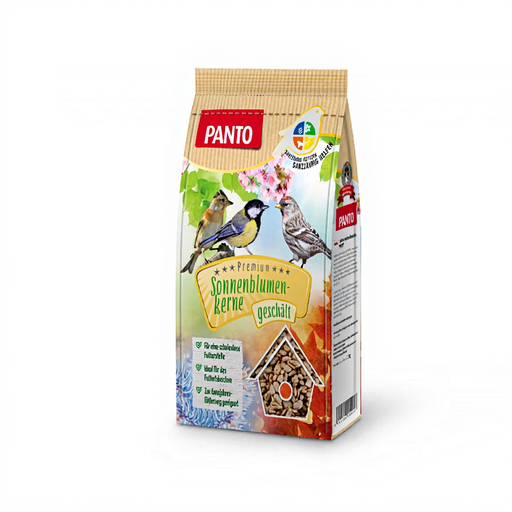
Why it's a good fit: Perfect for users who want to feed birds but wish to avoid the mess of seed husks on their balcony or patio. Keeps the feeding area clean and tidy.
By being husk-free, this feed solves the problem of mess and sprouting seeds beneath the feeder. It's a pure, high-energy food source without unnecessary fillers.
100% shelled sunflower seeds; a high-energy source accepted by many bird species like finches, tits, and sparrows.
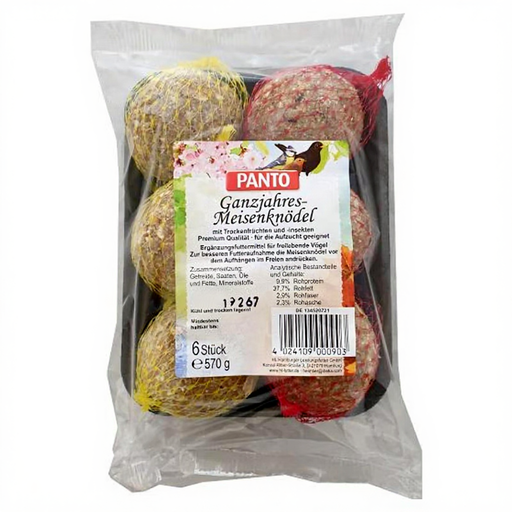
Why it's a good fit: A convenient solution for anyone wanting to support birds year-round with minimal effort. The nets allow for easy hanging on branches or hooks.
These feed balls offer a balanced mix of fats, grains, and seeds. Unlike homemade mixes that can quickly go rancid, this ensures consistent quality.
Ready-to-use in the net; provides essential energy, especially during the cold months, but also during the breeding season.
In addition to feeding, you can also help birds by offering nesting opportunities. A nesting box made of natural wood, like the NOBLEZA Wooden Bird's Nest, provides a safe place for raising young. When mounting it, ensure it is at a cat-safe height and oriented to protect it from direct sunlight and heavy rain.
We've compiled an up-to-date list of products that meet our selection criteria for species-appropriate and clean bird feeding.
Opinions on year-round bird feeding are divided. However, ornithologists point out that moderate, year-round feeding in human-dominated landscapes can help cushion population declines. It is crucial to maintain impeccable hygiene at the feeding station and to offer only high-quality feed so as not to distract the birds from their natural foraging.
A bird feeder should be cleaned at least once a week. Remove all leftover feed and clean the dispenser thoroughly with hot water and a brush. Do not use chemical cleaning agents. Let the feeder dry completely before refilling it.
These three common garden birds are relatively easy to please. A mix of shelled sunflower seeds, hemp seeds, and crushed peanuts is very popular. Fat balls are also an excellent, high-energy option that is particularly well-received by tits. For greater variety, you can also offer dried mealworms, which are a welcome source of protein.