
Lieferung heute & morgen

Qualitätsgarantie

Willkommens-Angebote freischalten: KOSTENLOSE Lieferung | Bis zu 80 % RABATT | Kostenlose 30-Tage-JoyPlus-Testphase
App herunterladen
In professional environments like butcher shops and commercial kitchens, as well as for demanding household tasks, hand protection is paramount. Choosing the right glove can significantly enhance safety and improve work efficiency. Whether you're cutting meat, handling hot grill grates, or performing cleaning tasks, each job has specific requirements for material and functionality.
This guide is designed to help you understand the features of protective gloves and make an informed decision tailored to your individual needs. We will present objective criteria and showcase a selection of products for various applications.
The choice of the right glove depends on three key factors: the material, the fit, and the specific protective properties.
The material determines the glove's primary protective function. It is crucial to select the material based on the intended activity.
A well-fitting glove is crucial for both safety and comfort. A glove that is too loose can impair grip and pose a safety risk, while one that is too tight can restrict blood circulation and become uncomfortable during prolonged wear. A non-slip coating or a textured surface on the palms and fingers significantly improves grip on smooth or wet objects.
In commercial settings, certifications according to European standards (EN) are an important indicator of tested safety. The EN 388 standard assesses the performance of work gloves against mechanical risks such as abrasion, cuts, tears, and punctures. The EN 407 standard classifies protection against thermal risks like contact heat or open flames. These certifications can also be a useful guide for demanding private use.
Here is a selection of gloves designed for different, demanding tasks.
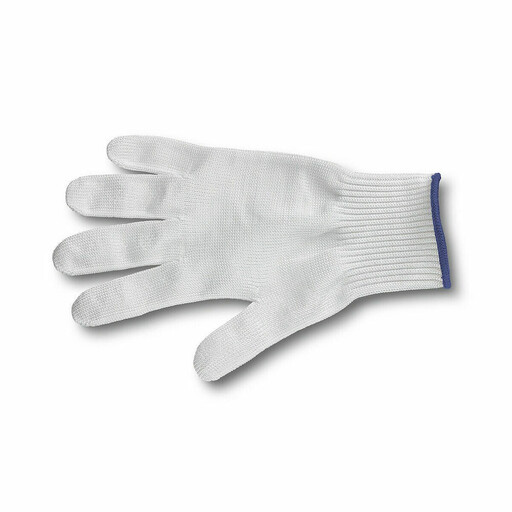
Why it stands out: This glove was specifically developed for professional use in food processing. Its material construction of stainless steel wire, encased in polyethylene and polyester, strikes a balance between high cut protection and wearing comfort.
Benefits:
Who it's for: Ideal for butchers, chefs, and meat processing staff who need a reliable cut-resistant glove for daily use.
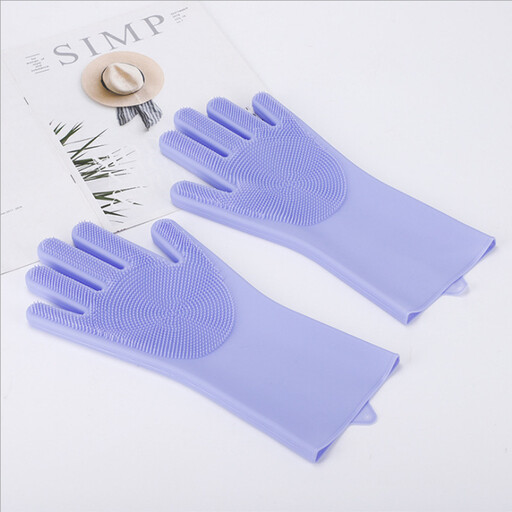
Why it stands out: These kitchen gloves combine durability with functionality. The high-quality silicone is completely waterproof and resistant to wear, tears, and stains.
Benefits:
Who it's for: Suitable for anyone who regularly washes dishes and cleans, whether at home or in a commercial kitchen, and is looking for a robust, hygienic alternative to traditional rubber gloves.
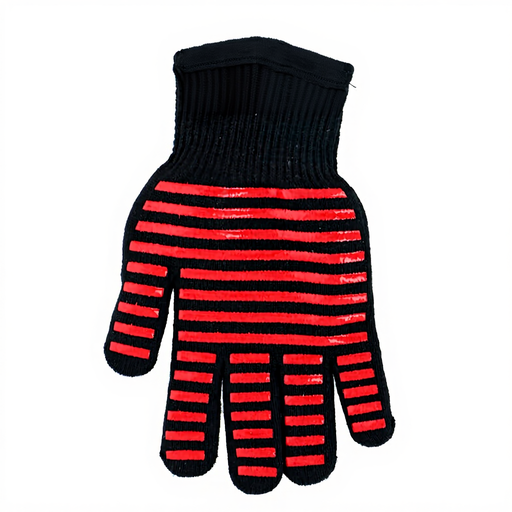
Why it stands out: According to the manufacturer, this grill glove is designed to handle extreme temperatures of up to 500°C. The combination of heat-resistant textile and a silicone coating makes it a practical accessory for the grill and oven.
Benefits:
Who it's for: Perfect for grill masters and home cooks who need a reliable heat-resistant glove for use with the grill, oven, or fireplace.
For tasks requiring high tactile sensitivity and protection from liquids, a latex glove can be a suitable alternative. Explore more models and materials in our comprehensive category to find the right solution for your needs.
The European standard EN 388 classifies the cut protection of gloves from levels A to F, with F being the highest level of protection. This classification is determined by a standardised test (TDM test according to ISO 13997) and indicates how resistant a material is to being cut by a sharp blade. A higher letter signifies better protection.
No, heat-resistant gloves are not necessarily fireproof. They are designed to protect hands from contact heat for short periods (e.g., when touching a hot grate). They should not be exposed to direct flames for extended periods, as the material could be damaged and lose its protective function.
Proper care depends on the material. Silicone dishwashing gloves can be easily cleaned with soap and water and left to air dry. Textile cut-resistant gloves or grill gloves can often be machine-washed according to the manufacturer's instructions. It is important to let the gloves dry completely after cleaning to prevent material damage and odours.