Picnickers focused on fat content
If fat content is your main concern, compare the nutrition information per 100 g and also check the amount per bar. ‘High protein’ doesn’t tell you how much fat a bar contains.


If keeping fat content lower is your priority for a picnic in the park, compare protein bars by their fat content per 100 g first, then per bar. Next, check the protein, ingredients and portion size. A high protein content or a ‘no added sugar’ claim won’t tell you how much fat a bar contains.
If fat content is your main concern, compare the nutrition information per 100 g and also check the amount per bar. ‘High protein’ doesn’t tell you how much fat a bar contains.
If you mainly want to compare the protein in each bar, check the portion size. Compare the protein figure with the fat content rather than assuming that more protein means less fat.
If particular ingredients or allergens matter to your choice, read the labelling for the specific variety. The product ranges covered here include ingredients such as milk, soya and sweeteners.
Choosing a protein bar for a picnic in the park is straightforward: first compare fat on the same basis, then check the nutritional values for the portion you’ll actually eat, followed by the ingredients and storage instructions.
| What to check | What to look for | Who it matters most to |
|---|---|---|
| Fat content | Compare fat per 100 g on a like-for-like basis; also check the amount of fat per bar and the saturated fat. | I want to find a bar with a lower fat content for my picnic first, without relying on the front of the pack alone. Around 46% of consumers would put fat content at the top of their list when buying. |
| Protein per portion | Check protein per bar for the portion and per 100 g to compare products; consider the fat figure alongside it. | For my day out, what matters most is how much protein is in each bar; I’m more willing to weigh up differences in fat content. Protein per portion would come first for around 27% of consumers. |
| Ingredients | Read the ingredients list, highlighted allergens, may-contain information and sweetener details on the specific pack. | Before I take a bar with me, I need to know whether its ingredients meet my requirements. Ingredients and allergen information would be the top priority for around 18% of consumers. |
| Transport | Follow the packaging and storage instructions, and take the bar with you somewhere dry and out of direct sunlight. | For my picnic, I want to carry the bar easily and avoid leaving it in the sun. Ease of carrying it on the go would come first for around 9% of consumers. |
Protein and fat are listed separately in the nutritional information. A high protein figure doesn’t tell you how much fat a bar contains.
Start by comparing fat per 100 g and per bar. Then check the amount of protein and the ingredients.
Bars of different sizes can contain different amounts per portion, even when their figures per 100 g are similar.
Read the nutritional information per 100 g and, if provided, per bar. Make sure you’re comparing fat and protein for the same portion size.
Verbraucherzentrale notes that consuming large amounts of sugar substitutes can have a laxative effect. The bars covered here also include ingredients such as milk and soya.
For the specific variety, check the ingredients list, highlighted allergens, may-contain information and sweetener details.
In warm weather, a chocolate coating may soften. For other perishable picnic foods, the Federal Office of Consumer Protection and Food Safety recommends keeping them cool.
Follow the bar’s storage instructions and keep it somewhere dry and shaded. Foods that need to be kept chilled should be stored separately in a suitable cool bag.
The Lean-Layered range is worth considering when comparing bars with different fat contents.
The individually portioned brownie protein bar can be compared using its nutritional information.
The Stracciatella variety gives you another point of comparison if you want to consider protein and fat separately.
The Filled Protein Riegel Strawberry Yogurt shows why protein content alone isn’t enough to compare fat.
This Joybuy selection includes a savoury beef protein bar and sweet bars to compare by portion size and ingredients for a picnic. Check the pack details for each variety before choosing based on fat or protein content.
 No image available
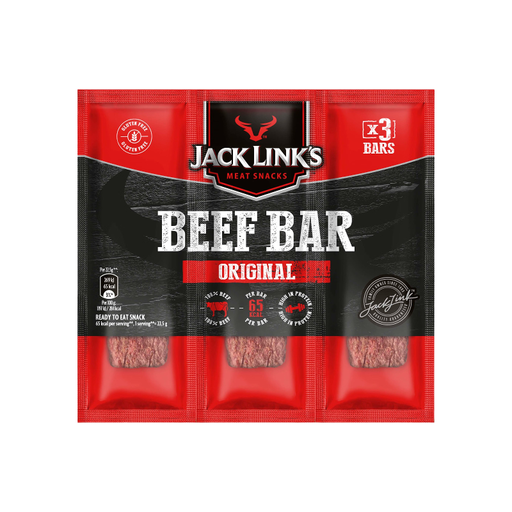
For a picnic where you’d rather take a savoury beef bar than a sweet protein bar. The pack states 3 × 22,5 g; check the fat, protein and ingredients for an individual portion on the current packaging.
 No image available
A sweet bar to compare by fat and protein content. The product title states 16 × 40 g; check the actual pack contents and nutritional values per bar on the current packaging before comparing portion sizes.
 No image available
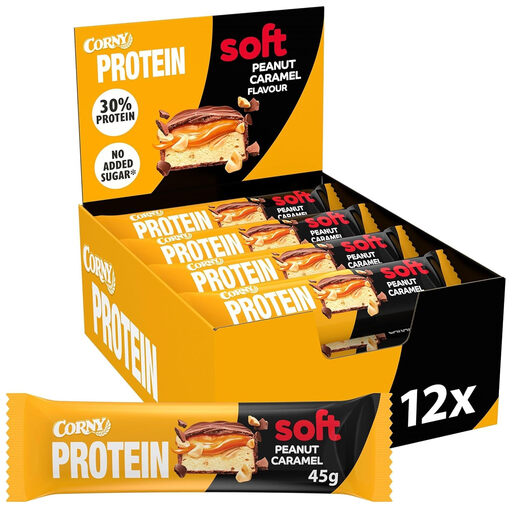
The pack size of 12 × 45 g is useful if you’re taking individual portions with you. ‘No Added Sugar’ doesn’t tell you anything about fat content; check the nutritional information and ingredients for the specific variety to compare.
 No image available
The 50 g bar is handy for comparing nutritional values per portion. Don’t assume ‘Sugar Free’ means a particular fat content: check the fat and protein per bar, along with the ingredients on the packaging.
No. Protein and fat need to be compared separately. REWE lists 30 g of protein and 8.3 g of fat per 100 g for its PWR Brownie; EDEKA lists 50 g of protein and 9.7 g of fat per 100 g for MAX BALANCE Stracciatella. The size of the bar also matters when you’re looking at your portion.
Read the ingredients list and allergen information for the specific variety before choosing a bar. The Federal Office of Consumer Protection and Food Safety explains that the 14 most important allergenic substances or products must be listed in the ingredients; also check the pack for any may-contain information.
Check the ingredients list if a bar contains maltitol, sorbitol or sorbitol syrup. Verbraucherzentrale notes that consuming large amounts of sugar substitutes can have a laxative effect, so ‘no added sugar’ is no substitute for checking the ingredients and the rest of the nutritional information.
Follow the storage instructions on the specific pack and don’t leave the bar in direct sunlight unnecessarily. For other perishable picnic foods, the Federal Office of Consumer Protection and Food Safety recommends keeping them cool; this guidance doesn’t automatically apply to every protein bar.