What should you look for when buying?
First, identify the requirement you can’t compromise on. Then compare the protein and other nutritional values per actual serving for the bars that meet it.
| Criteria |
What to check |
Who it matters to |
| Protein per serving |
Compare the protein in g per bar and per 100 g, along with the bar size and other nutritional information. |
If I want my snack to fit into a high-protein diet, I want to know how much protein is in the portion I’ll actually eat. For around 31% of consumers, this comparison would come first. |
| Avoiding specific allergens |
Read the ingredients, highlighted allergens and may-contain information for the specific variant. |
If I need to avoid a particular allergen, a general ‘free from’ claim isn’t enough. For around 25% of consumers, avoiding a specific allergen would be the main criterion. |
| Vegan or lactose-free |
Check the required label for each variant, and also read the ingredients and may-contain information. |
I’m looking for a plant-based or lactose-free option without assuming that it meets other requirements too. Around 25% of consumers would consider this characteristic first. |
| Gluten-free |
Check for a gluten-free label; check any other ingredients relevant to you separately. |
For me, the bar needs to be gluten-free above all else, while I check other ingredients individually afterwards. For around 19% of consumers, being gluten-free would take priority. |
Suitable product options on Joybuy
Here, we compare a protein bar labelled vegan with peanut and caramel against chocolate in bar form. Check the specific labelling and ingredients of both against your dietary requirements; they’re not interchangeable product categories.
 No image available
Barebells Vegan Protein Bar Peanut Caramel, 12 × 55 g
An option if you’re looking for a protein bar labelled vegan and the Peanut Caramel variant meets your ingredient requirements.
According to the product name, the pack contains 12 bars of 55 g each. Before buying, check the current protein content per bar, as well as the ingredients and may-contain information, especially if you need to avoid wheat, soya or peanuts.
View on Joybuy
 No image available
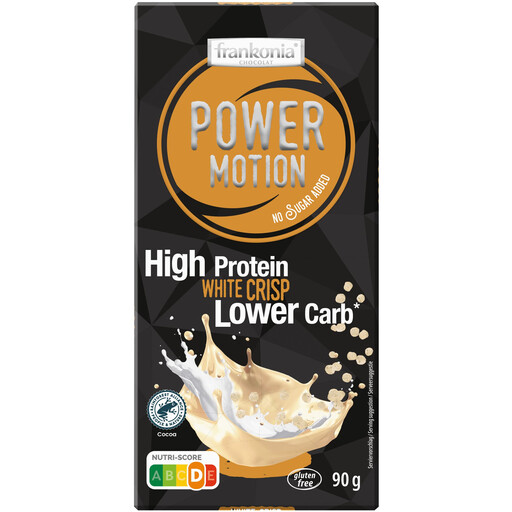
Frankonia Chocolat Power Motion No Sugar Added White Crisp Chocolate, 90 g
This chocolate in bar form may be worth considering if you’d like to look at a portionable alternative to a traditional protein bar.
The pack is marked as 90 g. Compare the protein and other nutritional values for your planned portion; check the current gluten labelling, ingredients and may-contain information, especially if you need to avoid milk or soya.
View on Joybuy
Frequently asked questions
Is a vegan protein bar automatically allergen-free?
No. For example, the vegan Barebells Caramel Choco Chip bar described by REWE contains wheat and soya protein and carries a warning about possible traces of other allergens. Check the ingredients and may-contain information for the exact variant you’re planning to buy.
How can I check allergens when ordering online?
Before buying, read the ingredients, highlighted allergens and any may-contain information for the specific variant. The European Commission explains that the required food information must also be available before purchase when buying online; check it against the packaging when your order arrives.
What does ‘high in protein’ mean on a bar?
Under EU Regulation (EC) No 1924/2006, this claim requires at least 20% of the energy value to come from protein. It doesn’t specify a standard number of grams per bar, so also compare the protein content and serving weight.
Do I need a protein bar for a high-protein diet?
No, a protein bar isn’t essential. The Verbraucherzentrale points out that you can also get protein from everyday foods. Whether a bar is a suitable snack also depends on the portion, ingredients and your requirements for avoiding certain foods.
How should I store protein bars?
Follow the storage instructions on the individual pack. The Naturally PAM bar described by dm should be stored in a cool, dry place; check the instructions separately for other variants.


