Campers spending several days on the trail
If you’re planning several snack portions, the number of bars and their weight can help you divide the pack across your days on the trail. Also consider whether you’ll use all the bars.


A multipack of protein bars can be a good choice for a camping trip lasting several days, provided the number of bars and portion size suit your needs and you can store them as required. Check the specific variety for allergens, sugar and sweeteners too: the protein content alone won’t answer these questions.
If you’re planning several snack portions, the number of bars and their weight can help you divide the pack across your days on the trail. Also consider whether you’ll use all the bars.
If you need to avoid certain ingredients or are looking for a gluten-free option, check the labelling for the specific flavour. A gluten-free label doesn’t tell you whether it contains peanuts, milk or soya.
If you want to compare sugar and sweeteners as well as protein, read the nutritional information per portion and the ingredients list. A protein claim on the front of the pack isn’t a substitute for checking these details.
First, work out how many bars you’ll need for your trip and which ingredients are suitable for you. Then compare the nutritional information and storage instructions for the specific varieties.
| Criterion | What to check before buying | Who it matters to |
|---|---|---|
| Pack size | Compare the number of bars and the weight of each one with the number of days you plan to snack. | I want to pack enough portions for several days on the trail without having lots of bars left over. For around 31% of consumers, choosing the right pack size comes first. |
| Ingredients and allergens | Read the ingredients list, highlighted allergens and, where applicable, precautionary allergen statements for your chosen variety. | I need to avoid certain ingredients and don’t want to rely on the term ‘protein bar’ alone. For around 25% of consumers, checking ingredients and allergens takes priority. |
| Protein, sugar and sweeteners | Compare the nutritional information per bar and the ingredients list for sweeteners. | On the go, I want to know how much protein and sugar a portion contains and which sweeteners are used. For around 25% of consumers, this is the most important purchase criterion. |
| Portioning and storage | Compare the weight of each bar and the storage instructions with the conditions you’ll encounter on your trip. | I divide my snacks by day and need to be able to store them appropriately while I’m away. For around 19% of consumers, practical planning is the main consideration. |
A multipack only makes it easier to plan your supplies if you’ll use all the bars it contains. Otherwise, you may have portions left over after your trip.
Compare the number of bars and their weight with the days you plan to snack. If you haven’t tried a variety before, it may be worth buying a single bar before opting for a larger pack.
Bars marketed as high in protein can differ in their sugar, other nutritional values and ingredients. The claim alone won’t tell you whether a variety meets your requirements.
Read the nutritional information per portion and the ingredients list for the specific flavour.
The varieties described by EDEKA and REWE differ in ingredients such as milk, soya, egg, peanuts and tree nuts. A gluten-free label doesn’t answer every question about allergens either.
Before buying and eating a bar, check the labelling on the pack you’ve chosen, including precautionary allergen information if it’s relevant to you.
Verbraucherzentrale points out that consuming large amounts of sugar substitutes can have a laxative effect. ALDI SÜD also gives a warning about excessive consumption for the Nougat variety described.
Read the ingredients and product-specific consumption guidance, especially if you’re planning to take a new variety on a driving or walking trip.
ALDI SÜD describes its High Protein Bar Nougat as a pack of 3 × 45 g. The details below refer to this variety.
A protein bar range described by EDEKA, with different flavours and nutritional values. Check the details for each specific variety.
REWE describes the Salted Caramel protein bar as a pack of 4 × 40 g and labels this variety gluten-free.
REWE describes the Power Pack Classic Milk as a single 35 g protein bar. The details apply to this flavour.
These multipacks of 12 or 18 bars could suit your plans for several days of camping. Compare the portion sizes and check the ingredients and storage instructions for each variety.
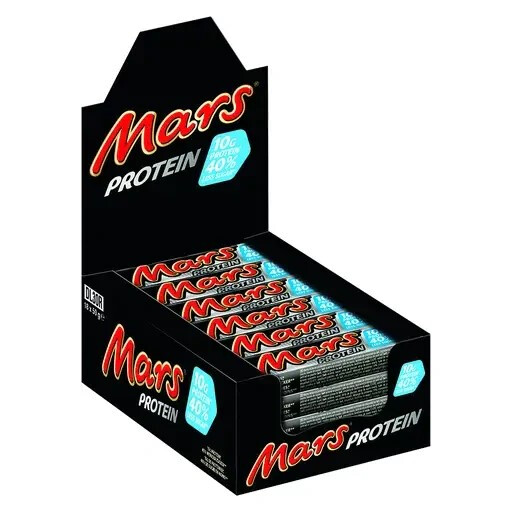 Image unavailable
This pack makes it easy to spread the bars across several days on the trail. It contains 18 bars, each weighing 50 g; check the ingredients and storage instructions against your needs before packing.
 Image unavailable
You can spread these 12 bars across several snack breaks. Each bar weighs 55 g; for this variety, pay particular attention to the information about milk, soya and sweeteners, as well as the consumption guidance.
 Image unavailable
With 12 bars, it’s easy to plan how many you’ll need for several days on the trail. Each bar weighs 50 g; check the protein content per bar on the pack and note the information about peanuts, milk, soya and possible traces of nuts.
Choose the number of bars based on the snack portions you’re planning and the number of days you’ll be away. Check the weight of each bar too: ALDI SÜD, for example, describes a pack of 3 × 45 g, while REWE lists a Nature Valley variety in a pack of 4 × 40 g.
No. A protein claim alone doesn’t tell you about the other nutritional values or all the ingredients. If sugar or sweeteners are important to your choice, compare the nutritional information per portion and the ingredients list.
No. For example, the Nature Valley Salted Caramel described by REWE as gluten-free contains peanuts, almonds, soya and milk, so check the allergen information on the specific pack.
Read the ingredients list and consumption guidance for the variety you’ve chosen. Verbraucherzentrale points out that consuming large amounts of sugar substitutes can have a laxative effect; for its Nougat bar, ALDI SÜD gives a corresponding warning about excessive consumption.
Follow the storage instructions on the pack and check that they’re suitable for the conditions on your trip. For example, REWE says to ‘store in a cool, dry place’ for Multipower Power Pack Classic Milk.