People with a regular training routine
If you’d like to keep a portioned snack in your gym bag, at the office or in your lunchbox for after regular training sessions, the protein per bar and pack size are useful points of comparison.


A protein bar multipack can be a good choice if you regularly have a snack after training and already know the flavour and ingredients. If you’re unsure about the taste or sensitive to sweeteners, it makes sense to start with a smaller quantity. Compare the protein in grams per bar, the ingredients and the pack size rather than relying on a percentage displayed on the front of the pack.
If you’d like to keep a portioned snack in your gym bag, at the office or in your lunchbox for after regular training sessions, the protein per bar and pack size are useful points of comparison.
If you need to avoid certain allergens or sweeteners, check the label for the specific flavour. A prominent protein claim on the front of the pack is no substitute for reading the ingredients list and allergen information.
If you’re mainly after a chocolatey snack, it’s worth checking the sugar, energy and ingredients as well as the protein per portion. The Verbraucherzentrale advises consumers not to confuse protein claims with a balanced nutritional profile.
First, check the ingredients for the flavour you want and the protein per bar. Then consider whether you’ll actually use all the bars for training days, lunchboxes or sharing.
| Criteria | What to check | Who it matters to |
|---|---|---|
| Protein per bar | Compare the protein in grams with the bar’s weight; don’t confuse the figure per 100 g with the amount per serving. | After training, I want to know how much protein is in an individual bar, rather than just seeing a percentage. For around 37% of consumers, the protein content per bar is the top priority. |
| Ingredients and suitability | Check the ingredients, highlighted allergens, may-contain statements and sweeteners for each flavour. | If I need to avoid certain ingredients, the recipe determines whether I can use a multipack at all. Ingredients and suitability are the main consideration for around 27% of consumers. |
| Pack size | Check the number and weight of the bars against how you plan to use them; also check the best-before date and storage instructions. | For several training days, lunchboxes or sharing, I need a pack with portions I’ll actually use. The right pack size is the priority for around 18% of consumers. |
| Flavour and texture | If you haven’t tried a flavour before, consider starting with a smaller quantity; also check the sugar, energy and sweeteners. | For a sweet snack, I don’t want to commit to a whole pack of a flavour I might not enjoy. Flavour and texture are the main considerations for around 18% of consumers. |
The Verbraucherzentrale Nordrhein-Westfalen points out that 20 g of protein and 20% protein represent very different amounts in a 50 g snack.
Check the protein per bar in the nutritional information and take the bar’s weight into account.
With a whole pack, an unsuitable flavour or ingredients you need to avoid are a bigger issue than with a single bar. The Verbraucherzentrale also points out that consuming large amounts of sugar substitutes can have a laxative effect.
Check the ingredients, allergens and consumption advice for the flavour, and consider starting with a smaller quantity.
The claim alone doesn’t tell you how much sugar or energy is in each bar. Sweeteners may also be included in the recipe.
Compare the nutritional values per serving and read the ingredients list before choosing a multipack.
Barebells offers several ranges of protein bars, including vegan options and packs of 12. According to the brand, protein content varies by flavour from 15 to 20 g per bar.
ESN describes its Designer Protein Bar as a chocolatey bar weighing 45 g per serving and containing up to 15 g of protein. The brand also mentions bundles.
dm lists PowerBar ranges such as 30% Natural Protein, 40% Protein+ Crisp and Protein Soft Core, with bar weights from 40 to 48 g.
dm stocks KoRo protein bars in a range of recipes, including a brownie flavour labelled vegan; the bars listed there weigh between 55 and 60 g.
These multipacks contain individually portioned protein bars for regular post-training snacks, lunchboxes or sharing. The ingredients for each flavour and the information per bar are still what matter most.
 Image unavailable
For a regular snacking routine, if you already enjoy this flavour. When checking the ingredients, look out for milk, soya and sweeteners, and follow the consumption advice on the pack.
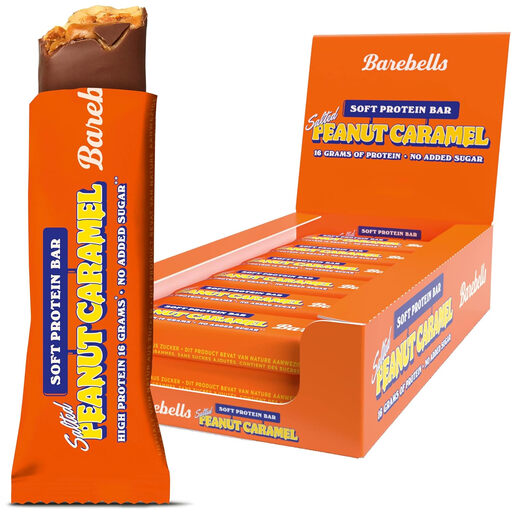 Image unavailable
For several snack occasions if you’re looking for a soft bar with peanut and caramel. As it contains milk, peanuts, soya and sweeteners, check the label and follow the consumption advice.
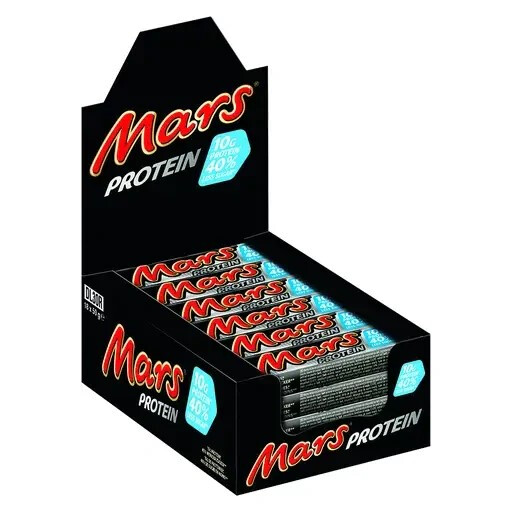 Image unavailable
This box could suit a larger planned stock-up or sharing. Compare the protein per bar with your criteria and check the allergen information, particularly for milk, soya, egg and cereals containing gluten.
 Image unavailable
A plant-based recipe for stocking up, if wheat, soya and peanuts are suitable for you. The protein content per bar is shown as both 15 g and 14.3 g; check the information on the specific pack before comparing.
 Image unavailable
For stocking up on bars with a crunchy cookie recipe, if you already know you like the flavour. Check the pack for the protein in grams per 45 g bar before comparing; if you have allergies, ingredients of note include milk, soya, cereals containing gluten, peanuts and nuts.
No, a protein bar isn’t essential after training. The Verbraucherzentrale points out that you can also meet your protein needs with everyday protein-rich foods; a bar can be a convenient, portioned snack to take with you.
No. In a 50 g bar, 20% protein doesn’t equal 20 g; the Verbraucherzentrale Nordrhein-Westfalen highlights this difference. To compare portions, check the grams per bar and the bar’s weight.
For each flavour, read the ingredients list, highlighted allergens, any may-contain statements and the consumption advice on the pack. The Verbraucherzentrale points out that consuming large amounts of sugar substitutes can have a laxative effect; the recipe for another flavour from the same brand is no reliable substitute for checking.