When stocking up on bars for the start of the school year, the number and size of portions, familiar flavours, and ingredient and allergen information matter more than a protein claim on the front of the pack. A large pack containing just one flavour is a better choice if it’s already a favourite; a mixed box offers several flavours, but you’ll need to check the ingredients for each one.
Who benefits from stocking up?
Households that plan several days ahead
If you’re planning bars for school or work days, consider the number of bars alongside their weight. If you’re buying a large pack of the same flavour, it’s also worth checking whether you already know and enjoy the taste.
People with specific ingredient requirements
If allergens, dietary preferences or sweeteners affect your choice, check the labelling for each flavour. A mixed box may contain different ingredients and allergen warnings for each bar.
People with a particular interest in protein content
If you want to compare protein claims, check the portion size, other nutritional information and ingredients too. A protein bar is one possible snack, but its protein content alone doesn’t make it essential.
What should you look for when buying?
First, work out how many bars you actually need and whether one flavour would suit the whole supply. Then compare the information on the specific packs you’re considering.
| Criterion |
What to check when buying |
Who it matters most to |
| Amount in the pack |
Compare the number of bars and the weight of each bar with how much you expect to use. |
If you’re planning ahead for several school or work days, you’ll want a supply you can finish. This is the main consideration for around 40% of consumers. |
| Ingredients and allergens |
Read the ingredients list, highlighted allergens and precautionary allergen warnings for each flavour. |
If several people will be sharing a box or certain ingredients need to be avoided, the individual recipe is what matters. Around 30% of consumers prioritise this. |
| Portion and flavour |
Check the weight of each bar, the number of flavours and whether the bars are individually wrapped. |
A bar for eating on the go should fit easily into your day. If you haven’t tried the flavour before, buying a whole pack of it is a bigger commitment. This is the priority for around 20% of consumers. |
| Protein content |
Consider the protein per portion alongside the portion size and the other nutritional information. |
If you want to compare the protein content of snacks, make sure the information relates to the actual bar portion. Around 10% of consumers focus on this. |
Common comparison pitfalls
-
Comparing only the number of bars
A 12-pack and a 24-pack may contain bars of different weights. The number of bars alone therefore tells you neither the total amount nor the size of each snack portion.
Check the number of bars and the weight of each one together, and consider how many portions you actually need.
-
Confusing ‘no added sugar’ with ‘no sweeteners’
A claim about added sugar doesn’t tell you about every ingredient. The Verbraucherzentrale (German consumer advice centre) notes that consuming large amounts of sugar substitutes can have a laxative effect.
Check the ingredients list for the specific flavour rather than relying on the front of the pack alone.
-
Checking just one flavour in a mixed box
The Barebells Favourite Bar Box contains bars with different recipes. Depending on the flavour, the product information lists ingredients including milk, soya or nuts; allergen warnings may also vary.
Check the labelling for every flavour in the box if ingredients or allergens matter to your household.
-
Assuming a protein claim means you personally need more protein
A bar’s protein content alone doesn’t tell you whether you need extra protein. The Verbraucherzentrale describes overall protein intake in Germany as good.
Assess the bar as a snack by looking at the portion, ingredients and full nutritional information.
Brands to consider
Barebells
The Favourite Bar Box is a 12-bar selection for households looking for several flavours rather than one consistent option. Barebells lists 15–20 g of protein per bar in the box.
- Several flavours in one box.
- Check the ingredients and allergen warnings for each flavour separately; according to the product information, ingredients include milk, soya and, depending on the flavour, nuts.
IronMaxx
IronMaxx offers bars in a range of multipacks, including Protein 30 in a 24 × 35-g pack and a separate vegan version.
- Different pack sizes and recipes let you choose according to portion size and ingredients.
- Bear the 35-g portion in mind when comparing protein content per bar. The vegan version should not be assumed to have the same recipe as every other Protein 30 bar.
Bodylab
The Deluxe Protein Bar is available in multipacks containing 50-g bars. The product information lists 11 g of protein per bar.
- A pack of one flavour can make planning ahead easier if you already know and enjoy it.
- The Chocolate Peanut Caramel flavour contains peanuts; the ingredients and labelling for the flavour you choose are what matter.
ESN
The Designer Protein Bar weighs 45 g. ESN lists up to 15 g of protein per bar, depending on the variant.
- The portion information lets you consider the stated protein content alongside the weight of the bar.
- ESN lists milk protein and, depending on the recipe, maltitol or sucralose; always check the ingredients list for the variant you choose.
12-pack protein bars at Joybuy
These 12-packs offer different flavours and bar sizes for planning a snack supply for the start of the school year. Before choosing, pay particular attention to the ingredients in your preferred flavour and whether the portion size suits your day-to-day routine.
 No image available
BE-KIND Protein Caramel Nut, 12 × 50 g
A pack of one flavour for households that already enjoy Caramel Nut.
The ingredients list includes peanuts, milk and soya; other nuts may also be present. Check the labelling on the specific pack.
View at Joybuy
 No image available
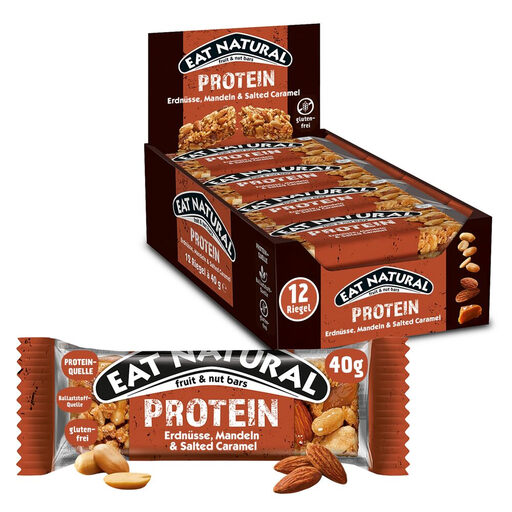
Eat Natural Protein Bars Peanuts, Almonds & Salted Caramel, 12 × 40 g
The 40-g bars are an option if this portion size suits the snack you have in mind.
The ingredients list includes peanuts, almonds, soya and milk. Other nuts may be present as traces.
View at Joybuy
 No image available
Barebells Protein Bar Cookies & Cream, 12 × 55 g
This 12-pack contains only Cookies & Cream bars, so it’s a better fit if you already know you like the flavour.
The product information lists milk, soya, maltitol and sucralose. Check the ingredients and allergen warnings on the pack.
View at Joybuy
 No image available
Corny Protein Crunchy Vanilla & White Choc Flavour, 12 × 45 g
The 45-g bars come in a 12-pack of one flavour.
The product information lists milk, soya, hazelnuts, wheat, maltitol and sucralose. The information about wheat conflicts with a gluten-free claim; if gluten is important to your choice, check the labelling on the specific pack before buying.
View at Joybuy
 No image available
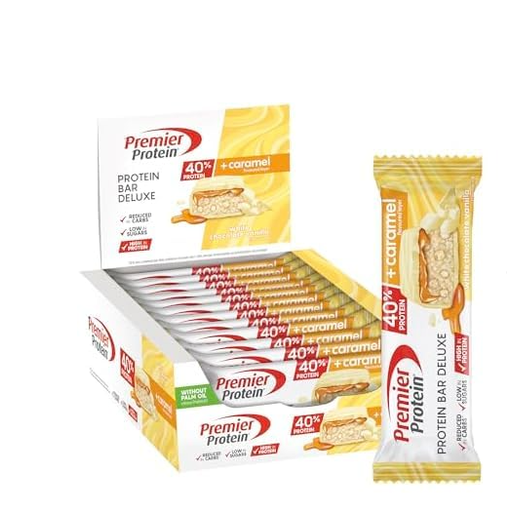
Premier Protein Bar Deluxe 40% White Chocolate Vanilla, 12 × 50 g
This 12-pack of one flavour could suit your stock-up plans if a 50-g bar is the right portion size for you.
The ingredients list includes milk and soya protein, as well as maltitol and sorbitol. Check the allergen warnings on the pack too.
View at Joybuy
Frequently asked questions
How can I identify allergens in a protein bar?
The German Federal Office of Consumer Protection and Food Safety explains that, for packaged foods, substances that can cause allergies or intolerances must be listed in the ingredients and highlighted. If you’re buying a mixed box, check each flavour individually and read its allergen warnings too.
Are bars with no added sugar also free from sweeteners?
No. ‘No added sugar’ doesn’t mean that a product contains no sweeteners. Read the ingredients list for the flavour you choose; the Verbraucherzentrale also notes that consuming large amounts of sugar substitutes can have a laxative effect.
Do pupils need protein bars for the start of the school year?
No. The start of the school year alone doesn’t mean that children need extra protein. The Verbraucherzentrale describes overall protein intake in Germany as good, so assess a bar as a snack based on its portion, ingredients and nutritional information rather than treating it as a necessary supplement.


