When choosing a protein bar for a post-workout train journey, start by comparing the protein content per bar, rather than relying on the advertised percentage alone. Then check the ingredients and allergen information for the specific variety. On a longer journey, treat a bar as a back-up snack rather than a complete meal, as the Federal Centre for Nutrition also advises.
Who should take care when choosing
Travelling after a workout
If you want to plan for a specific amount of protein while you’re out and about, compare the grams per bar. Without knowing the pack weight, a percentage on the front of the pack doesn’t tell you how much protein you’ll get in one bar.
Travellers with dietary requirements
If you avoid certain allergens or eat a vegan diet, check the ingredients and information for each variety separately. Sweeteners and serving advice can also be important when choosing a snack for the train.
Travellers with tight connections
An individually wrapped bar is handy as a back-up when there’s little time to stop during your journey. For a longer trip, plan to take a meal and drinks as well; the Federal Centre for Nutrition does not consider protein bars a complete meal replacement.
What to look for when buying
When comparing protein bars for a train journey, start with the portion size, then look at the specific recipe and how the snack fits into your travel food plans.
| What to consider |
What to check before buying |
Who it matters to |
| Protein per bar |
Compare the protein per 100 g with the bar’s weight; if needed, calculate the amount in a whole bar. |
After a workout, I want to know how much protein is in the portion I’m actually taking with me. For around 42% of consumers, the amount per portion is the main priority. |
| Ingredients and suitability |
Read the ingredients list, allergen information, may-contain warnings and details of sweeteners for the specific variety. |
If I need to avoid certain ingredients, a high protein content alone isn’t enough. For around 33% of consumers, finding suitable ingredients comes first. |
| A back-up for the journey |
Check the portion size, best-before date and storage instructions against your travel plans. |
If I have a tight connection, I want something portioned that I can take with me, without relying on it as a whole meal. Around 25% of consumers mainly value a bar as a back-up for travel. |
Common mistakes when choosing
-
Confusing the highest protein percentage with the largest portion
Bars vary in weight. Based on the figures from dm-drogerie markt, Layenberger Schoko-Banane works out at around 16.1 g of protein per bar, with 46 g of protein per 100 g and a bar weight of 35 g. Sportness Crispy Stracciatella is listed as containing 23 g per 45-g bar.
Compare the grams of protein per whole bar. If the pack only gives the figure per 100 g, multiply it by the bar’s weight and divide the result by 100.
-
Overlooking sweeteners and serving advice
The consumer advice centre points out that large amounts of sugar substitutes can have a laxative effect. Some of the protein bars mentioned also carry warnings about excessive consumption.
Read the ingredients and serving advice for the variety you choose. If you don’t tolerate an ingredient well, don’t rely on an unfamiliar bar as your only option on a longer journey.
-
Assuming you know the allergens or vegan ingredients from the category
Protein bars can vary considerably in their ingredients. Depending on the recipe, the varieties described may contain milk, soya, nuts or collagen; even a bar labelled vegan can contain nuts.
Check the ingredients list, highlighted allergens and any may-contain warnings on the packaging of the specific product you’re buying.
-
Relying on a bar as your complete travel meal
The Federal Centre for Nutrition recommends protein bars as an occasional snack when you’re short on time, rather than as a complete meal.
Use a bar as a back-up when you need one. For a longer journey, plan to take drinks and a meal as well.
Brands to help you choose
The details below apply to the specific protein bar variety named, not to every product from that brand.
Sportness
Crispy Stracciatella is an example of a protein bar with the protein content stated per bar.
- dm-drogerie markt lists 23 g of protein per 45-g bar.
- Check the information about milk, soya and sweeteners for this variety before buying.
PowerBar
The 40% Protein+ Crisp Choco Coco shows why it’s important to consider the percentage alongside the portion weight.
- Based on the figures from dm-drogerie markt, 40 g of protein per 100 g and a bar weight of 40 g work out at 16 g per bar.
- This variety lists milk, soya, wheat and almonds among its ingredients, and also carries a warning about excessive consumption.
Layenberger
The Schoko-Banane bar is another example of a product that states protein per 100 g and comes in a smaller portion size.
- According to dm-drogerie markt, this variety contains 46 g of protein per 100 g. With a bar weight of 35 g, that works out at around 16.1 g per bar.
- The recipe described contains bovine collagen hydrolysate, milk and soya, so it isn’t suitable for a vegan diet.
Barebells
The Hazelnut-Spread bar lists the protein content for an individual portion.
- dm-drogerie markt lists 15 g of protein per 45-g bar.
- This variety lists milk, hazelnuts and soya, and may contain traces of other allergens.
KoRo
The organic hazelnut bar is a vegan-labelled option made with pea and rice protein.
- This variety is listed as containing 25 g of protein per 100 g.
- It contains hazelnuts. The vegan label doesn’t remove the need to check the other ingredients and allergens.
Protein bars on Joybuy
These protein bars could work as portioned snacks for a train journey. Compare the details for the specific variety and check the packaging for information about ingredients, allergens and storage before buying.
 No image available
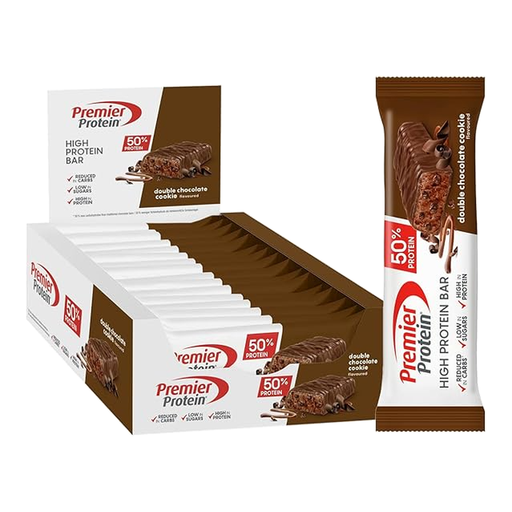
Premier Protein High Protein Bar 50 % Double Chocolate Cookie, 16 × 40 g
An option if you want to take bars for several journeys and compare the protein content per 40-g portion.
The product name states 50 % protein and a pack of 16 bars, each weighing 40 g. Check the ingredients, allergens and serving advice on the specific pack.
View on Joybuy
 No image available
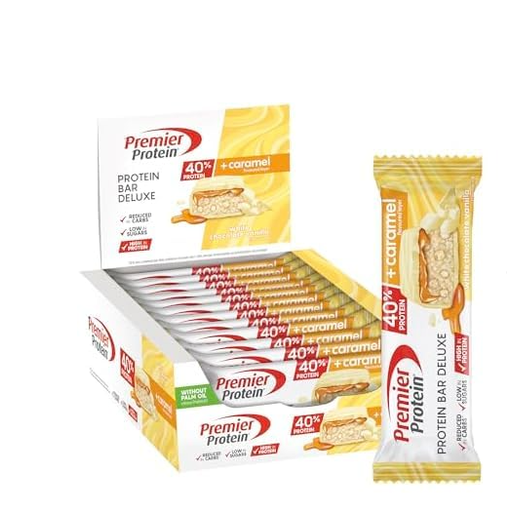
Premier Protein Protein Bar Deluxe 40 % White Chocolate Vanilla, 12 × 50 g
Worth considering if you’re looking for a 50-g portion to take with you and want to compare the details per whole bar.
The product name states 40 % protein and a pack of 12 bars, each weighing 50 g. Check the ingredients, allergens and serving advice on the pack you choose.
View on Joybuy
 No image available
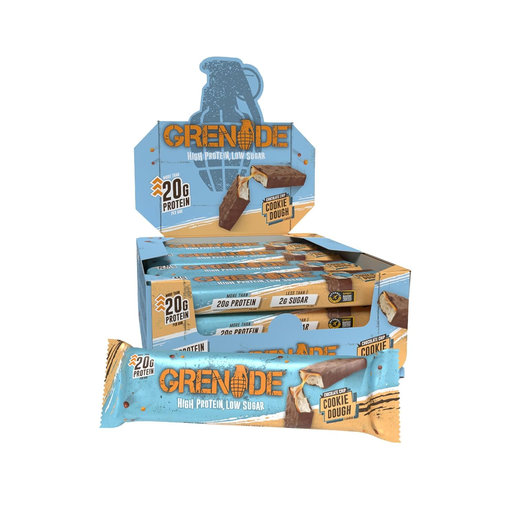
Grenade Carb Killa Choc Chip Cookie Dough, 12 × 60 g
An option for travellers who want to take a 60-g portion as a snack and compare its nutritional information with that of smaller bars.
The product name states that the pack contains 12 bars, each weighing 60 g. Check the packaging for ingredients, allergens, and storage and serving advice.
View on Joybuy
 No image available
Power System Low Carb Cookies & Cream Protein Bar, 40 g
The 40-g portion could be a handy snack to take with you on its own. For a protein comparison, check the nutritional information for the whole bar.
Check the ingredients, allergens and sweetener information on the specific pack.
View on Joybuy
 No image available
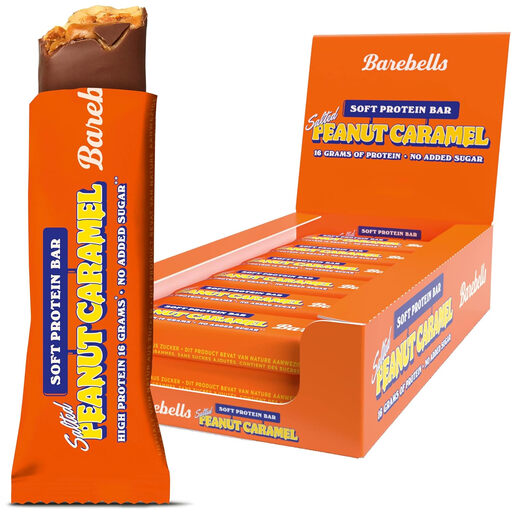
Barebells Soft Protein Bar Salted Peanut Caramel, 12 × 55 g
An option for taking several individually portioned snacks on your journeys. If you have a peanut allergy, it’s especially important to check the ingredients on the specific pack.
The product name states that the pack contains 12 bars, each weighing 55 g. Check the other allergen and serving information before buying, too.
View on Joybuy
Frequently asked questions
Should I compare the protein percentage or the grams of protein per bar?
For a snack, focus on the grams of protein per whole bar and take its weight into account. Based on the figures from dm-drogerie markt, a 40-g PowerBar with 40 g of protein per 100 g works out at 16 g per bar; a 35-g Layenberger bar with 46 g per 100 g works out at around 16.1 g.
Can a protein bar replace a meal on a train journey?
A protein bar is better as a back-up when you’re short on time than as a complete meal. That’s how the Federal Centre for Nutrition describes it; for a longer journey, plan to take drinks and a meal as well.
What should I look out for with sweeteners?
Read the ingredients list and serving advice for the specific variety. According to the consumer advice centre, large amounts of sugar substitutes can have a laxative effect; some protein bars also carry similar warnings.
How do I check for allergens in a protein bar?
Check the ingredients, highlighted allergens and may-contain warnings on the packaging for the variety you’ve bought. Don’t rely on the brand name or the words “protein bar” alone: the recipes described here vary.
What should I check before storing a bar for my journey?
Check the best-before date and storage instructions on the pack. If you’ll be carrying the bar in your luggage for a while, pay particular attention to any advice about heat and keeping it dry.


