For people who need a snack on the go
If there’s a gap between your workout and your next meal, an individually portioned bar can be handy. When comparing options, look at the protein per bar, not just the figure per 100 g.


A protein bar can be a convenient choice after a workout, especially if you need a portioned snack on the go. Compare the protein per bar with the other nutritional information, ingredients and allergens; for savoury snacks, fat and salt matter too. You don’t necessarily need a bar if you get enough protein from everyday foods.
If there’s a gap between your workout and your next meal, an individually portioned bar can be handy. When comparing options, look at the protein per bar, not just the figure per 100 g.
If you want to consider sugar, polyols and ingredients as well as protein, check the nutritional information and ingredients list on the specific pack. The “High Protein” label doesn’t tell you everything about the recipe.
If a sweet bar isn’t for you, a meat snack offers a different flavour. It isn’t a protein bar, though, so check details such as fat, salt and storage instructions when choosing one.
First decide whether you’re looking for an easy-to-portion snack, a particular recipe or a pack size that works for regular use. Then compare the information per serving and per 100 g on the relevant pack.
| What matters to you | What to check | Who it matters to |
|---|---|---|
| Protein per serving | Protein in g per bar and the weight of each bar. | If I’m on the go until my next meal, I want to know how much protein is in an individual snack. Around 42% of shoppers are likely to prioritise a convenient portion of protein. |
| Ingredients and suitability | Sugar and polyols per serving, as well as ingredients, allergens and consumption guidance. | When choosing a bar, I want to be able to avoid ingredients that don’t suit me and follow the consumption guidance. For around 33% of shoppers, the ingredients are likely to be the main consideration. |
| Pack size and availability | Number and weight of the bars, as well as availability at your chosen retailer. | If I want to plan to have the same snack regularly, I need a suitable pack size and to be able to buy it from my chosen retailer. This is likely to be the priority for around 25% of shoppers. |
The claim refers to protein, not to sugar, fat or salt. Lebensmittelklarheit points this out when explaining how to interpret claims like these.
So, as well as protein, compare energy, sugars, saturated fat and salt using the nutritional information.
A figure per 100 g doesn’t tell you directly how much protein is in the bar you’ll actually eat. For example, REWE lists 20 g of protein per 40 g bar for its Premier Protein Bar Chocolate Caramel.
Start by checking the figures per bar, then use the values per 100 g to compare different pack sizes.
The bars described by ALDI SÜD and REWE contain polyols; for the products mentioned, shoppers are warned that excessive consumption may have a laxative effect.
Check the amount per serving and follow the consumption guidance on the specific pack.
A savoury meat snack is a different type of product. For BiFi Chicken High Protein, REWE lists 36 g of fat and 4 g of salt per 100 g, as well as 25 g of protein.
If you choose this kind of snack, compare the nutritional values per serving and check the storage instructions rather than focusing on protein alone.
ALDI SÜD offers protein bars under the ALDI SPORTS brand, including a nougat bar sold in a pack of three 45 g bars.
REWE offers the Premier Protein Bar Chocolate Caramel in a 40 g size, with 20 g of protein per bar.
EDEKA describes the MAX BALANCE White Chocolate-Vanilla Protein Bar as a 50 g version labelled “40% protein”.
According to REWE, BiFi Chicken High Protein is a savoury chicken salami snack, not a protein bar.
This selection includes individually portioned protein bars and a protein bite for when you’re out and about. For each option, compare the serving weight with the nutritional information and check that the ingredients and consumption guidance suit your needs.
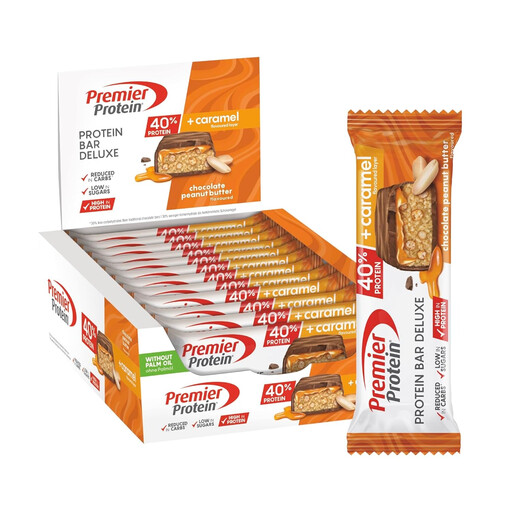 No image available
An option if you’re looking for several individually portioned bars to enjoy as snacks after a workout.
Compare the nutritional information per 50 g bar and check the ingredients, allergens and consumption guidance on the pack.
 No image available
An individual snack bar for shoppers who want to compare a 50 g serving with other bars.
The name “Sugar Free” doesn’t replace checking the nutritional information, ingredients and consumption guidance on the specific pack.
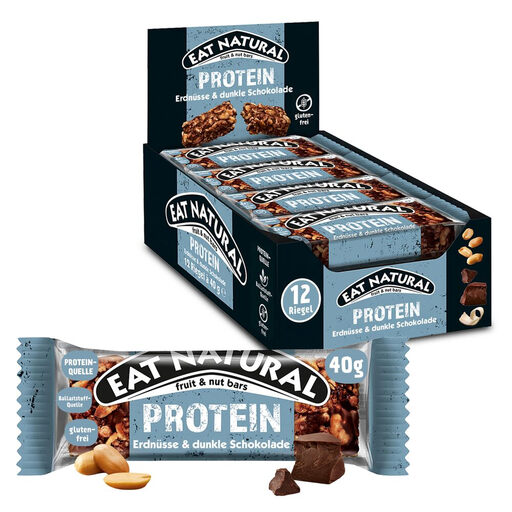 No image available
A multipack for shoppers who want to plan individual servings of peanut and chocolate-flavoured bars.
According to the product name, the pack contains twelve 40 g bars. To compare servings, check the protein and other nutritional values per bar.
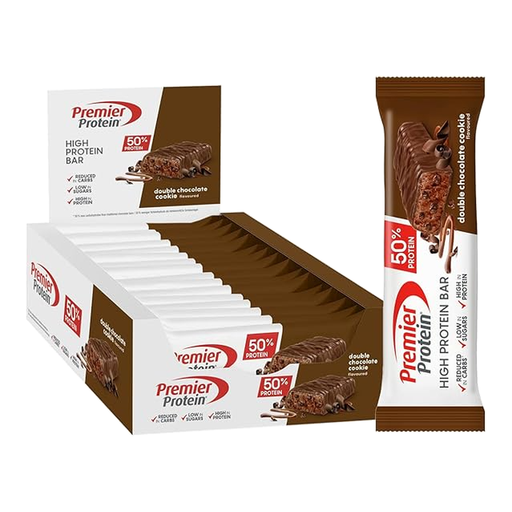 No image available
A multipack if you’re looking for chocolate bars in individual 40 g portions.
The percentage in the product name doesn’t tell you how many grams of protein are in each bar; check the other nutritional information and ingredients too.
 No image available
A 35 g protein bite for shoppers looking for a smaller, portioned snack; it isn’t described as a protein bar.
Compare the protein in g per piece and check the other nutritional information and ingredients on the pack.
The claim refers to the protein content, not an overall assessment of the bar. Lebensmittelklarheit points out that a product carrying this claim may also contain sugar, fat or salt, so compare the full nutritional information.
No, a protein bar isn’t essential for getting enough protein after a workout. The consumer advice centre notes that you can also get protein from everyday foods; a bar can simply be a convenient snack when you’re on the go.
They’re included in the recipe of some bars and may come with consumption guidance. For the products described by ALDI SÜD and REWE, shoppers are warned that excessive consumption may have a laxative effect. So check the details for the specific version.
Check the ingredients list on the specific pack. The Federal Office of Consumer Protection and Food Safety explains that the 14 substances or products most likely to cause allergies or intolerances must be listed there.