Anyone keeping an eye on fat content
If you’re looking for a bar to take on the go, compare the fat per 100 g and per portion eaten. The word ‘protein’ alone tells you nothing about its fat content.


When choosing a protein bar as a back-to-school snack, start by comparing fat content per 100 g, then check the actual portion size, ingredients and allergens – not just the words ‘protein’ or ‘no added sugar’. The PWR varieties White Chocolate Crisp and Brownie, as declared by REWE, contain 7.0 and 8.3 g of fat per 100 g respectively. This shows that even bars of the same size can differ; it does not mean either is automatically suitable for schoolchildren or that it can be labelled ‘reduced fat’.
If you’re looking for a bar to take on the go, compare the fat per 100 g and per portion eaten. The word ‘protein’ alone tells you nothing about its fat content.
A portioned snack can be handy on a long day. But an advert for a bar can’t tell you whether you need extra protein at all; the Verbraucherzentrale describes overall protein intake in Germany as good.
Check the ingredients, allergen information and ‘may contain’ warnings for each variety. A vegan label tells you neither how much fat it contains nor which allergens may be present.
Start by comparing the nutritional information per 100 g, so differences in bar size don’t skew the comparison. Then check the amount per bar and the ingredients in the specific variety.
| What matters to you | What to check when buying | Who it matters most to |
|---|---|---|
| Fat content | Compare fat and saturated fat per 100 g, as well as fat per actual bar. | If a lower fat content matters to me, I want to compare bars of different sizes on a like-for-like basis. Around 40% of consumers put this fat comparison first. |
| Portion and protein | Check the bar’s weight and the amount of protein per portion eaten. | For a short break, I want to know what’s in a single bar rather than relying on a prominent protein claim. Around 30% of consumers give this priority. |
| Ingredients and suitability | Read the ingredients, highlighted allergens, ‘may contain’ warnings and information about sweeteners. | If I need a vegan variety or have to avoid certain ingredients, the labelling on the individual product matters most. For around 30% of consumers, checking the ingredients is their top priority. |
The protein information doesn’t tell you about fat, salt, ingredients or portion size. A bar isn’t automatically a suitable meal replacement.
Compare the nutritional values per 100 g and per portion, then decide whether you want a bar at all instead of another snack.
A product with no added sugar may still contain sweeteners. The Verbraucherzentrale notes that sugar alcohols can have a laxative effect in larger amounts.
Read the ingredients and warnings for the variety you choose, especially if you’re packing it for a long school day.
A bar labelled vegan may contain wheat or soya. Its fat content isn’t determined by whether it’s vegan, either.
First check the ingredients and allergen information you need, then compare the nutritional values.
For bars of different weights, comparing the value per bar can give a different impression from comparing per 100 g.
Use the per-100 g information to compare products, then check the values per bar as well to see how they fit your snack portion.
REWE launched PWR in September 2026 as its own brand, initially with six protein bars. When comparing fat content, it’s the declared values for each variety that matter, not the brand name.
Barebells offers a range of protein bars, including vegan varieties. Whether a bar is vegan doesn’t remove the need to check its nutritional information.
EVO SPORTS FUEL offers its EVOBAR range in several varieties. For a back-to-school choice, it’s the information for the specific variety that matters.
KoRo stocks protein bars in a range of sizes and styles, including vegan varieties.
These products are protein bars or beef protein bars for comparing snack portions for back to school. Check the current labelling for each product; this selection does not mean that the bars are legally classed as ‘reduced fat’ or that they’re specifically suitable for schoolchildren.
 No image available
If you’re looking for individually portioned bars to last several days, compare the information per 100 g with the information per 55 g bar in this pack of 12.
Before choosing, check the ingredients and allergen information for the Cookies & Cream variety.
 No image available
If you’re planning to have this bar as a snack, check the actual bar and pack sizes before comparing: the weight information is inconsistent.
The product name states that the pack contains 16 bars weighing 40 g each. Don’t work out the nutritional values per bar until the weight has been confirmed; the product description is aimed at adults.
 No image available
If you’re choosing a single bar as a snack for your break, you can factor in its 40 g portion size.
Compare fat and protein using the nutritional information for the specific variety; ‘Low Carb’ in the product name doesn’t mean it has a reduced fat content.
 No image available
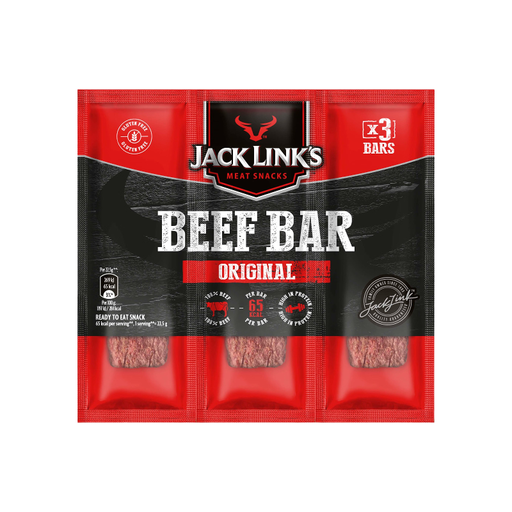
If you’re considering a savoury beef protein bar instead of a sweet protein bar, compare the nutritional information per 100 g and per portion here too.
The product name states that the pack contains three bars weighing 22,5 g each. As well as fat, check the salt, sugar and ingredients for the specific variety.
‘Reduced’ is a comparative nutrition claim. Under EU Regulation (EC) No 1924/2006, the nutrient in question must be at least 30% lower than in a comparable product. A low-looking fat value per 100 g doesn’t, on its own, prove that the product meets this requirement.
No. A protein bar with no added sugar may still contain sweeteners. Read the ingredients and warnings: the Verbraucherzentrale notes that sugar alcohols can have a laxative effect in larger amounts.
Check the ingredients, highlighted allergens and ‘may contain’ warnings for the specific variety. The REWE PWR varieties described here contain milk and soya; the vegan Barebells bar listed by REWE contains wheat and soya.
Not as a general rule. A protein bar can be a snack, but its protein content doesn’t automatically make it a meal replacement. The Verbraucherzentrale describes overall protein intake in Germany as good, so judge a bar by its portion size, ingredients and your actual needs, rather than by its protein claims alone.