What should you look for when buying?
If you’re having a snack alongside your BackWerk lunch, start by thinking about when you plan to eat the bar. Then check the portion size, nutrition information and ingredients on the specific pack.
| What to check |
What to look for when buying |
Who it matters to |
| Protein per bar |
Check the grams of protein for the portion you’ll eat and its weight; don’t confuse percentages with grams. |
I want to know how much protein is in an individual bar, rather than relying on the figure on the front. Around 29% of consumers prioritise clear information about protein content when making this choice. |
| A portion to take with you |
Check the pack size and number of bars; if you’re taking one with you, find out whether each bar is individually wrapped. |
If I’m short on time during a break, I want to be able to pop a bar in my bag for later without repacking it. A suitable snack portion comes first for around 29% of consumers. |
| Ingredients and allergens |
Read the ingredients list, highlighted allergens and any precautionary ‘may contain’ statements; check the consumption advice for sweeteners. |
I need to check that the specific variety meets my ingredient requirements before eating it. For around 21% of consumers, this is their main consideration when buying. |
| Its place in your lunch |
Decide whether the bar is an extra or a back-up snack, rather than planning to have it as a complete lunch. |
I don’t want a handy snack to quietly take the place of my lunch. Around 21% of consumers prioritise treating it as an addition to their meal. |
When checking nutrition information, look at what the figures refer to: values per 100 g make it easier to compare different products, while values per bar show what you’ll get in the portion you actually eat. For example, REWE lists 13,5 g of protein per 45-g bar for the REWE PWR Brownie. When choosing a snack, it’s also worth checking the other nutrition information and the ingredients list.
Which brands can help you choose?
The product lines below show some of the different details that may be useful when comparing individual bars. Always check the label for the specific variety you’re considering.
REWE PWR
In 2026, REWE introduced its own-brand range in Germany, including six protein bars. The Brownie bar is a useful example for comparing portion sizes.
- REWE lists 13,5 g of protein per 45-g bar for the REWE PWR Brownie.
- This variety also contains milk and soya protein, as well as sugar alcohols, so check the allergen information.
ESN
ESN offers protein bars in a range of flavours. When comparing varieties, make sure you’re comparing nutrition information and ingredients for the same portion weight.
- For its Dark Chocolate Salted Almond bar, REWE lists the protein content per bar.
- This variety contains, among other ingredients, milk protein, bovine collagen peptides, almonds and sweeteners, so it isn’t suitable for vegans.
Barebells
The product information for the Hazelnut Spread bar lets you assess a 45-g portion.
- REWE lists 15 g of protein per Hazelnut Spread bar.
- Ingredients include milk protein, hazelnuts, soya protein and sweeteners. Check the consumption advice on the packaging.
Seitenbacher
The 70-g protein bar stocked by REWE is explicitly labelled gluten-free. This claim applies to that specific variety.
- The gluten-free label gives you a specific point to consider when choosing this variety.
- Gluten-free doesn’t mean free from milk or nuts: the bar lists milk ingredients and almonds. Check the ‘may contain’ information on the pack too.
Protein bars and snacks at Joybuy
This selection includes protein bars and a beef protein snack in a range of portion and pack sizes. If you want to take an individual bar with you for your BackWerk lunch, check before buying whether the bars in a multipack are individually wrapped.
 Image unavailable
BE-KIND Protein Caramel Nut, 12 × 50 g
The 50-g bars could work as a snack to take with you, if the pack format suits your plans.
Check whether the bars are individually wrapped. If you’re allergic to peanuts, milk, soya or other nuts, the information on the specific pack is what matters.
View at Joybuy
 Image unavailable
Premier Protein 50% Bar Chocolate Caramel, 16 × 40 g
The 40-g portion could suit you if you’re planning a bar for a later snack break. Compare the nutrition information for the whole bar rather than reading the percentage in the product name as a portion figure.
Check whether the bars are individually wrapped before buying. For this variety, pay particular attention to the labelling for milk, soya, other potential allergens and sweeteners, as well as the consumption advice.
View at Joybuy
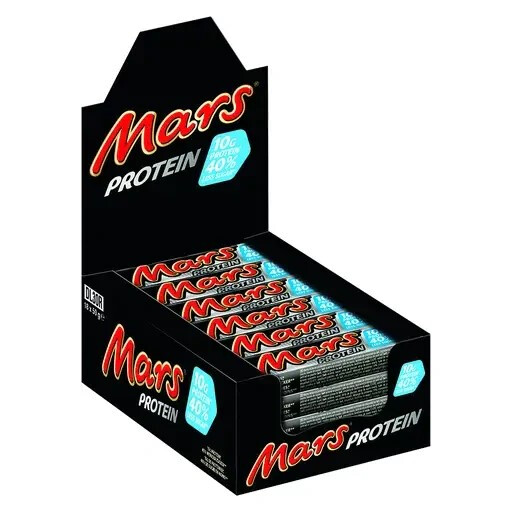 Image unavailable
Mars Protein Bars, 18 × 50 g
The 50-g bars are one option if you want to plan snack portions from a carton. As well as the protein content, check the sugar value in the nutrition information when making your choice.
Check the packaging of the individual bars and, if needed, the information on milk, soya, egg and barley, as well as possible traces of peanuts and tree nuts.
View at Joybuy
 Image unavailable
ESN Protein Designer Bar Hazelnut Nougat, 12 × 45 g
The 45-g bars are a useful option to compare if you want to assess the nutrition information and ingredients together for a snack portion.
Check whether the bars are individually wrapped. For this variety, pay particular attention to the information on milk, soya, hazelnuts and sweeteners; also check the advice on consuming sugar alcohols.
View at Joybuy
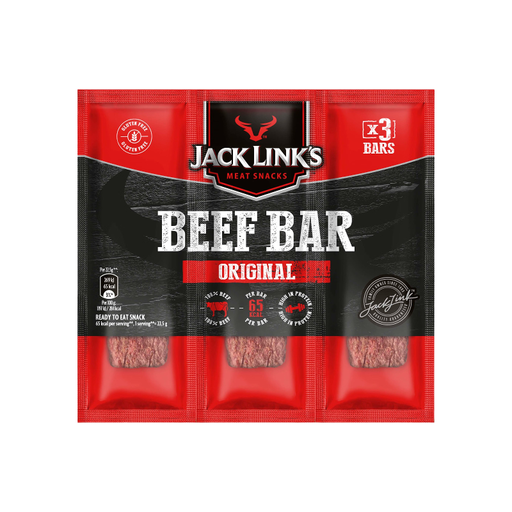 Image unavailable
Jack Link's Original Beef Protein Bars, 3 × 22,5 g
This beef protein snack is a different kind of product from the sweet bars in this selection. The 22,5-g portion could work as a small snack if you prefer the ingredients and nutrition information for this variety.
Compare the protein and salt information for the portion you’ll eat, and check whether the bars are individually wrapped.
View at Joybuy
Frequently asked questions
Can a protein bar replace my BackWerk lunch?
A protein bar isn’t intended as a regular replacement for a complete meal. The Federal Centre for Nutrition recommends it as an occasional snack when you’re short on time; you can have it alongside your lunch or keep it as a back-up snack.
Can I compare the protein figure on the front directly?
Not without checking its unit and what it refers to. The North Rhine-Westphalia Consumer Advice Centre points out that protein information can be presented in different ways: on a 50-g bar, 20% protein means something different from 20 g of protein. For your snack portion, the number of grams per whole bar gives you a clearer picture.
How do I check allergens in a protein bar?
Read the ingredients list and highlighted allergens for the specific variety, along with any ‘may contain’ information. A claim such as ‘gluten-free’ doesn’t also answer questions about milk, soya or nuts.
What should I look out for with maltitol or sorbitol?
Check the ingredients and consumption advice on the pack. The Consumer Advice Centre explains that sugar substitutes such as maltitol or sorbitol can have a laxative effect in large amounts, so take the portion size and your individual tolerance into account.


