What to look for when buying
First, work out which ingredients you need to avoid. Then compare the labelling and nutritional information per bar for the varieties that remain.
| What to consider |
What to check when buying |
Who it matters to |
| Specific allergens |
Compare each variety’s ingredients list, highlighted allergens and any may-contain warnings with the ingredients you need to avoid. |
When I pack a bar to take with me, the first thing I need to know is whether it contains an allergen that matters to me. This specific exclusion is the main consideration for around 36% of consumers. |
| Gluten-free |
Look for an explicit “gluten-free” claim and check for other allergens separately. |
I want to avoid gluten without jumping to the conclusion that something is gluten-free just because it’s labelled vegan. Around 29% of consumers put this clear claim first. |
| Nutritional values and tolerability |
Compare the carbohydrates, protein and other nutritional values per bar; consider any ingredients and warnings that may affect how well you tolerate it. |
Before a longer workout, I ask myself whether the ingredients and portion suit my plans, and whether I’ll tolerate the variety. This is the main consideration for around 21% of consumers. |
| Plant-based recipe |
For varieties labelled vegan, check the protein sources, ingredients and may-contain warnings. |
I prefer a bar without animal ingredients, but that doesn’t mean I assume it’s allergen-free. A plant-based recipe is the priority for around 14% of consumers. |
Protein bars at Joybuy
This selection includes one bar for anyone looking for a variety explicitly labelled gluten-free, and one vegan bar. Your choice should still be based on the current ingredients, allergen information and nutritional values for the specific product.
 No image available
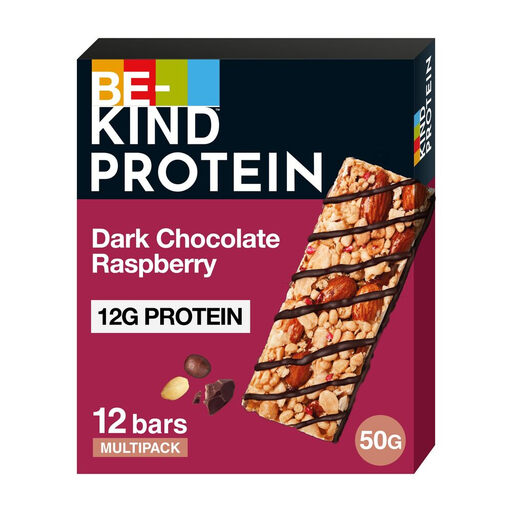
BE-KIND Protein Dark Chocolate Raspberry, 12 × 50 g
This variety may suit you if you’re looking for a protein bar and want to check its gluten-free claim against your requirements.
Before buying, pay particular attention to the information about peanuts, almonds, soya and milk; the “gluten-free” claim doesn’t tell you whether these allergens are present.
View at Joybuy
 No image available
Barebells Vegan Protein Bar Peanut Caramel, 12 × 55 g
This vegan option is one to consider if you’re looking for a plant-based bar to take with you.
If you need to avoid peanuts, wheat or soya, check the ingredients for this variety particularly carefully. Check the current pack for possible traces too, and use clear nutritional information when comparing protein content.
View at Joybuy
Frequently asked questions
Is a vegan protein bar automatically allergen-free?
No. “Vegan” doesn’t tell you whether a bar contains wheat or soya, for example. Barebells lists both protein sources and possible traces of other allergens for its Vegan Caramel Choco Chip variety; check each variety individually.
How can I tell if a protein bar is gluten-free?
Look for an explicit “gluten-free” claim for the specific variety, rather than assuming it from “vegan” or a single ingredient. You’ll need to check for other allergens separately.
What does a may-contain warning mean if I have an allergy?
It warns that the named allergen may be present unintentionally, but doesn’t quantify your personal risk. Lebensmittelklarheit explains that wording such as “May contain nuts” doesn’t tell you anything about the quantity or risk.
Is the protein content enough to help me choose a bar before a workout?
No. Also consider carbohydrates, portion size, ingredients and how well you tolerate the bar. Findings from a study published in Frontiers in Sports and Active Living about meals before endurance exercise shouldn’t be read as a performance claim for a specific bar.
How should I store a protein bar for a training day?
Follow the storage instructions on the pack for the specific variety, and check its condition before eating it. For PURYA! Salted Peanut Caramel, dm recommends storing it in a dry place and protecting it from light and heat.


