What should you look for when buying?
First, decide whether you’re after a small snack for the journey or something to include as part of your breakfast. Then compare the information for the portion you’ll actually eat.
| Criteria |
What to check |
Who it matters to |
| Protein per bar |
Compare the protein in g per bar with the bar’s weight; don’t treat percentage figures as equivalent to grams. |
If I’m taking a protein portion with me for a specific reason, I want to know how much is in each bar. For around 33% of consumers, this portion-by-portion comparison is the main consideration. |
| Whether it works as part of breakfast |
Consider the energy, carbohydrates, fat and fibre per bar alongside its protein content. |
If I want the bar to keep me going until my next meal, the protein figure alone isn’t enough to help me decide. This is the main reason for buying for around 25% of consumers. |
| Ingredients and allergens |
Read the protein source, ingredients list, allergen information and ‘may contain’ warnings for the specific variety. |
If I need to avoid animal ingredients or certain allergens, the exact recipe determines whether a bar is suitable. This is the main consideration for around 25% of consumers. |
| Ingredients when buying in bulk |
Check the sweeteners and consumption guidance; for multipacks, check the number of bars and the net weight. |
Before I pack several bars for hectic mornings, I want to know which sweeteners they contain and how large a portion is. This is the top priority for around 17% of consumers. |
Protein bars for on the go at Joybuy
These multipacks contain individually portioned protein bars for on the go. Check the nutritional information and ingredients for each variety to decide whether one bar is enough for your morning.
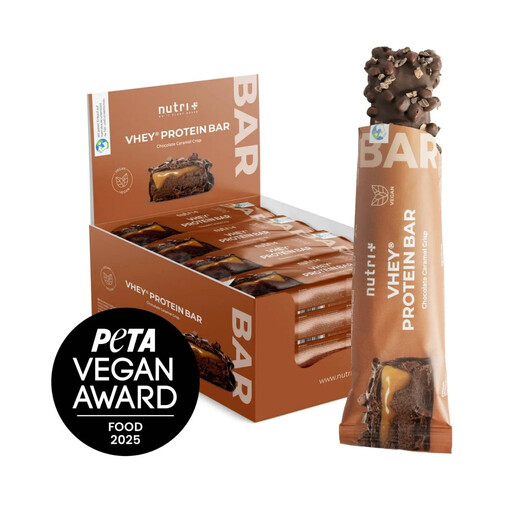 Image unavailable
Nutri+ Whey Protein Bar Chocolate Caramel Crisp, 12 × 50 g
The individually portioned 50-g bars are easy to pack as a snack for the journey.
If you want to avoid animal ingredients, check the recipe on the pack: the name ‘Whey’ and the information about its protein sources should be consistent for this variety. Also check the nutritional information, allergens and consumption guidance.
View at Joybuy
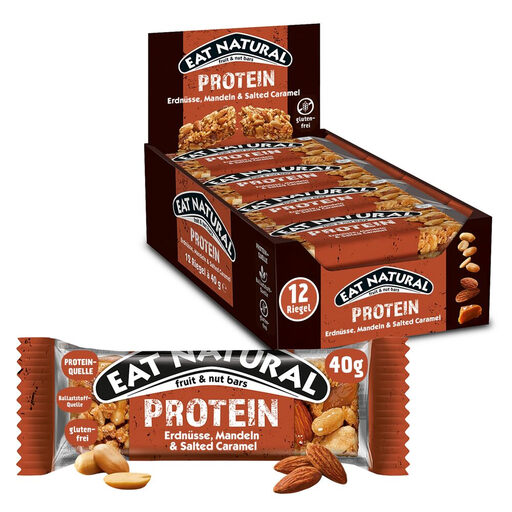 Image unavailable
Eat Natural Protein Bars Peanuts Almonds & Salted Caramel, 12 × 40 g
The 40-g bars are a portioned option if you want to take a snack with you in the morning.
The variety name mentions peanuts and almonds. If you have allergies, check the ingredients and ‘may contain’ warnings on the pack. To compare portions, check whether the nutritional values are given per 100 g or per bar.
View at Joybuy
 Image unavailable
Barebells Vegan Protein Bar Peanut Caramel, 12 × 55 g
This variety, labelled vegan, is an option for a portioned snack without animal ingredients.
Each bar weighs 55 g. Compare the protein content using the current pack and, if you have allergies, check the ingredients, allergen information and ‘may contain’ warnings carefully.
View at Joybuy
 Image unavailable
BE-KIND Protein Caramel Nut, 12 × 50 g
The pack of 50-g bars is handy for taking individual portions with you in the morning.
Before choosing, check the nutritional information, ingredients and allergens for the specific pack. The variety name alone does not tell you whether it’s suitable for a vegan diet.
View at Joybuy
Frequently asked questions
Is a protein bar enough for breakfast?
You can’t decide based on protein content alone. A bar can keep hunger at bay while you’re on the go; if it’s meant to make up a larger part of your breakfast, consider its energy, other nutritional values and ingredients alongside what else you eat. The reference values from the German Nutrition Society relate to daily protein intake, not to a single meal.
What do 20 g and 20% protein mean on a bar?
20 g is an absolute amount, while 20% is a proportion of the bar’s weight: in a 50-g bar, 20% is exactly 10 g of protein. The North Rhine-Westphalia Consumer Advice Centre highlights this difference when comparing portions.
Is a protein bar with no added sugar automatically low in calories?
No. The claim ‘no added sugar’ doesn’t tell you the energy content or rule out sweeteners. Barebells itself points out that its bars are not low-calorie or reduced-calorie; the nutritional information for the variety you choose is what matters.
Can a vegan protein bar contain traces of allergens?
Yes. For the ESN Designer Vegan Protein Bar, ESN lists possible traces of milk, cereals containing gluten and peanuts, among other things. If you have allergies, check the current label for the specific variety: ‘vegan’ does not mean ‘allergen-free’.
Why do some bars carry a warning about a laxative effect?
This warning may relate to sugar substitutes in the product. According to the Consumer Advice Centre, larger quantities can have a laxative effect. So check the ingredients and consumption guidance, especially if you’re planning to take several bars with you.


