People who plan snacks around their training
If you plan to have a bar on training days or when you’re out and about, the amount of protein in each bar is a more useful guide to portion size than a percentage alone.


When stocking up on protein bars, don’t focus solely on what the packaging says. Compare the protein per bar and per 100 g, the other nutritional information and the ingredients of the specific variety. A larger pack makes sense if you already know you like the variety, its best-before date fits your planned consumption and you can store it as directed.
If you plan to have a bar on training days or when you’re out and about, the amount of protein in each bar is a more useful guide to portion size than a percentage alone.
If you eat bars often, it’s worth matching the pack size, varieties and best-before date to how many you actually get through.
If you’re looking for a vegan variety or need to avoid certain allergens or sweeteners, check the labelling for each specific variety before placing a larger order.
Start with the portion you need and the ingredients list. Then check that the pack size and shelf life suit how much you’ll use.
| What to consider | What to check | Who it matters most to |
|---|---|---|
| Protein per portion | Protein per bar and per 100 g, as well as energy, sugar, fat and salt in the nutritional information. | If I’m planning to have a single bar as a snack, I want to know how much protein it provides rather than relying on a claim on the front of the pack. Around 33% of consumers prioritise this question of portion size. |
| Pack size | The number and weight of the bars, and whether you’ll get through the whole pack. | If I eat bars regularly, I want to have enough in stock without committing to too many of a variety I haven’t tried. For around 27% of consumers, planning the quantity is the top priority. |
| Ingredients and allergens | The current ingredients and allergen labelling for the variety; check for vegan labelling and information about sweeteners if needed. | If I need to avoid certain ingredients, finding the right recipe matters more to me than the size of the box. Around 27% of consumers prioritise checking ingredients. |
| Shelf life and varieties | The best-before date, storage instructions and flavours included. | If I’m keeping bars in the cupboard for a while, I want to use them in time and avoid ending up with varieties I don’t like. Around 13% of consumers pay closest attention to this. |
A protein claim doesn’t tell you how much energy, sugar, fat or salt a product contains. That’s why the Verbraucherzentrale recommends checking marketing claims against the nutritional information.
Compare the values per 100 g and, where provided, per bar. Then decide which portion suits the snack you have in mind.
Even if the protein content is right for you, the taste and texture can determine whether you’ll finish a whole box.
Try the specific variety individually or in a smaller pack first. Before placing a larger order, check the best-before date too.
This claim doesn’t tell you which sweeteners or allergens a variety contains. For example, the manufacturer lists maltitol, sucralose, milk protein and peanuts in Barebells Salty Peanut.
Read the ingredients list and allergen labelling for the specific variety, especially if you’re planning to buy it more than once.
Barebells sells its Original protein bars in packs of 12. The manufacturer states that each bar in this range contains 20 g of protein.
FULFIL sells protein bars in boxes of 5 and 15, and states that each 40 g bar contains at least 13 g of protein.
dm-drogerie markt sells Sportness protein bars in different weights, with their protein content stated on the packaging.
Among other products, dm-drogerie markt lists a 55 g KoRo protein bar in Chocolate Brownie, labelled as vegan.
Each of these packs contains several protein bars. Before choosing, compare the portion sizes and check the ingredients, best-before date and storage instructions for the specific variety.
 Image unavailable
If you want to stock up on one variety, this pack contains 12 bars of 55 g each. Check the ingredients for Cookies & Cream and the pack’s best-before date.
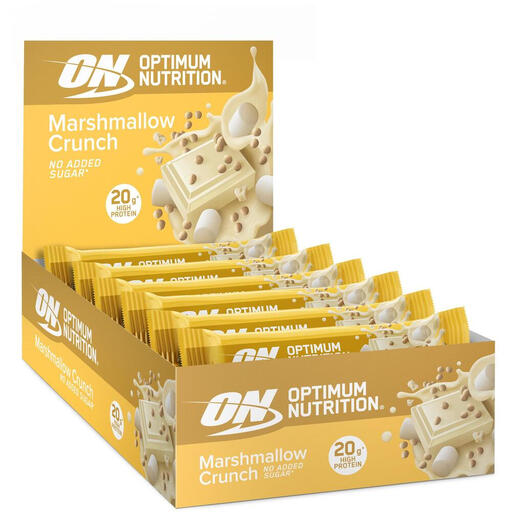 Image unavailable
A handy pack of ten equal portions, with each bar weighing 65 g. Compare the nutritional information on the pack and check the allergen labelling for this variety.
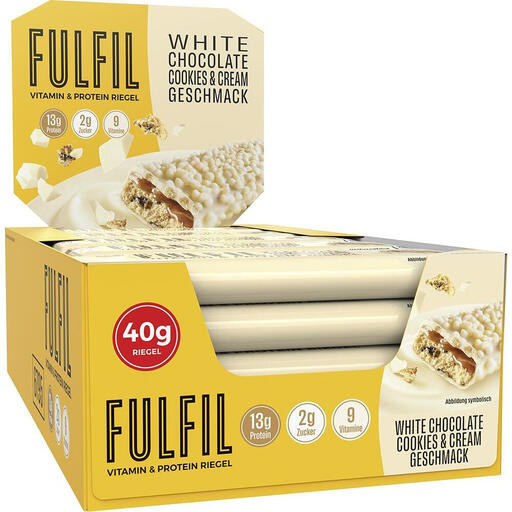 Image unavailable
For regular snacking in smaller individual portions, this box contains 15 bars of 40 g each. Check the current ingredients and allergen labelling before stocking up.
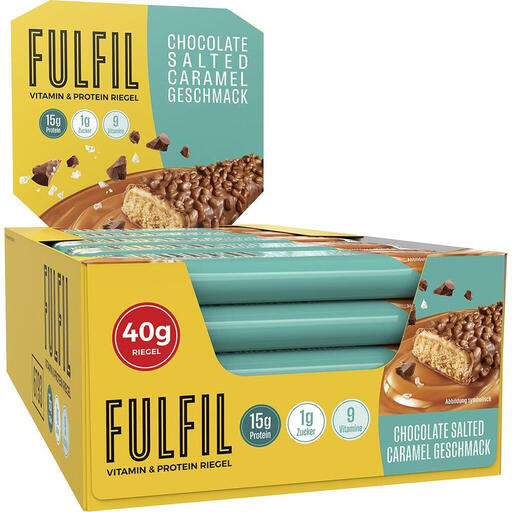 Image unavailable
If you eat this variety regularly, the box gives you 15 bars of 40 g each. Check the ingredients, allergens and best-before date on the specific pack.
 Image unavailable
For comparing pack size and protein content, this pack contains 12 bars of 45 g each and is labelled as containing 30% protein. Pay particular attention to the allergen labelling on the specific pack before buying.
No. The claim alone doesn’t tell you the full nutritional composition. Compare protein and the other nutritional information per 100 g and, where provided, per bar. Also check the ingredients and portion weight.
Protein bars aren’t essential for this. The Verbraucherzentrale considers protein intake in Germany to be generally good. A bar is one possible snack, not automatically a necessary part of your diet.
Always check the current labelling for the specific variety and pack. FULFIL notes that recipes may change, so don’t rely on an ingredients list you read previously when buying again.
Follow the best-before date and storage instructions on the pack. According to the Verbraucherzentrale, the best-before date refers to the quality of food that is unopened and stored correctly.