Households choosing snacks with fat content in mind
If several people eat protein bars, you can compare varieties of different sizes using their nutritional values per 100 g. The figures per bar then show what’s in an individual portion.


For a larger household, it pays to choose protein bars based on their nutritional information rather than the word ‘protein’. Compare fat, saturates, energy and protein per 100 g first, then check the figures per bar. A pack size is only useful if the ingredients, allergen information and expected usage suit everyone who’ll be sharing them; a lower fat content alone shouldn’t determine your choice.
If several people eat protein bars, you can compare varieties of different sizes using their nutritional values per 100 g. The figures per bar then show what’s in an individual portion.
If you’re buying several bars to keep in stock, match the number of bars and pack weight to how quickly they’ll actually be eaten. It’s also worth checking the specific pack when buying special offers or products from different suppliers.
If milk, soya, peanuts or ‘may contain’ warnings matter to anyone sharing the bars, check each variety individually. Information about sweeteners and sugar alcohols may also be important before you buy several packs.
First, decide whether protein bars work as a portioned snack for your household. Then compare nutritional values on the same basis and check the ingredients and pack size before buying in larger quantities.
| What matters | What to check when buying | Who it matters most to |
|---|---|---|
| Fat content and portion size | Compare fat, saturates, energy and protein per 100 g, then check the figures per bar. | If you’re looking for a lower-fat option within the protein bar category, you need figures you can compare rather than values for different-sized portions. This could be the main concern for around 40% of consumers. |
| Pack size | Match the number of bars and pack weight to how quickly they’ll be eaten; check the specific variety when buying a special offer. | If several people are going to take a bar regularly, the priority is choosing a pack size that will actually be used up. Around 30% of consumers could put planning how much to keep in stock first. |
| Ingredients and warnings | Read the allergen labelling and ‘may contain’ warnings, as well as information about sweeteners and sugar alcohols, for each variety. | If anyone sharing the bars needs to avoid certain ingredients, choosing a suitable variety matters more than its fat content. This check could be the main concern for around 20% of consumers. |
| Snack format | Consider whether you need an individually portioned bar or whether ordinary foods would suit the occasion. | If you’re simply looking for a regular snack to have at home, you’ll want to know first whether the bar format offers a practical advantage at all. This could be the most important question for around 10% of consumers. |
The protein content doesn’t tell you how much fat a variety contains. REWE lists 7.3 g of fat per 100 g for Premier Protein Chocolate Caramel, 8.9 g for REWE PWR Peanut and 15 g for More Protein Bar White Chocolate Caramel Crunch. These figures are for individual varieties, not a ranking of the brands.
Compare nutritional values for the same quantity, then check the figures for the portion you’ll actually eat.
A larger number of bars tells you nothing about whether the ingredients are suitable or how quickly your household will get through them. ALDI SÜD notes that a Lower-Carb bar may come from different suppliers; special-offer items may also have limited availability.
Check the pack weight, nutritional information and ingredients for the specific variety before planning to buy several packs.
The Premier Protein Chocolate Caramel and REWE PWR Peanut varieties listed by REWE contain milk and soya; the Peanut variety also contains peanuts. Warnings about a possible laxative effect if consumed excessively apply to specific products, not to all protein bars.
For every variety, read the ingredients list, allergen labelling, ‘may contain’ warnings and product-specific consumption advice.
An individually portioned bar can be handy on the go. But protein-focused marketing alone doesn’t mean your household needs one regularly: the Verbraucherzentrale says that protein intake in Germany is generally sufficient.
Think about when you’ll eat it and decide whether an individually wrapped bar is useful or whether an everyday food would work just as well as part of your snack routine.
The information below relates to specific varieties or product lines. The figures for one variety don’t necessarily apply to every bar from the same brand.
The individually portioned Chocolate Caramel bar gives households a point of comparison for fat and protein per portion.
The Peanut variety offers another variety-specific nutritional comparison within the protein bar category.
The range at ALDI SÜD includes protein bars in packs of 3 × 45 g, among other products, which may make it worth considering if you’re planning several portions.
The White Chocolate Caramel Crunch and Soft Milky Candy Cream varieties listed by REWE show why choosing a flavour should go hand in hand with checking its nutritional information.
This selection includes sweet and savoury protein bars in a range of pack sizes. Whether a variety suits a lower-fat choice depends on its specific nutritional information; the pack size, meanwhile, helps you work out how much to keep in stock.
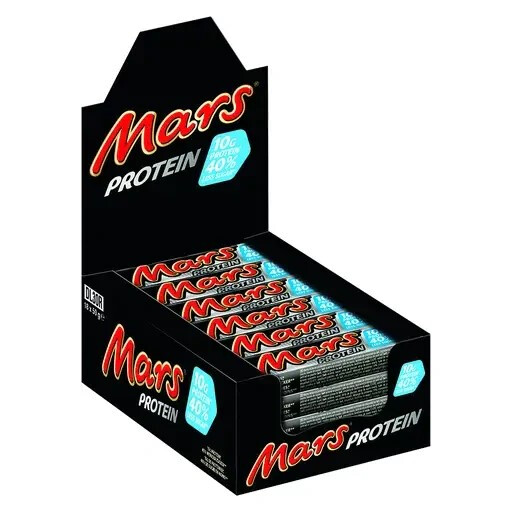 Image unavailable
This carton may suit you if several people are planning to keep bars in stock. Before buying, check the nutritional information and allergen labelling on the specific pack for everyone who’ll be sharing them.
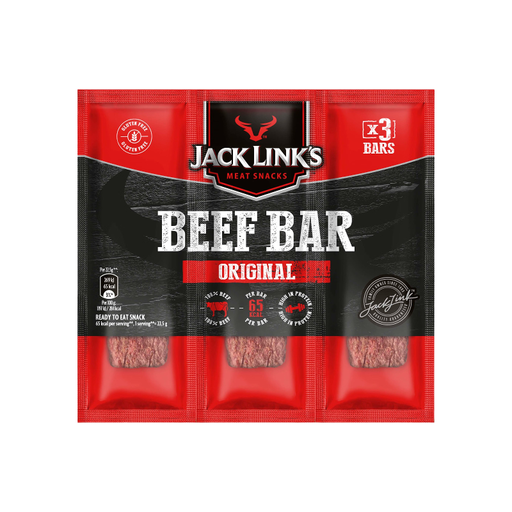 Image unavailable
These beef bars offer a savoury alternative if this type of snack suits your household. Three portions make for a smaller stock-up; compare the salt content and ingredients on the pack as well as fat and protein.
 Image unavailable
The single 40-g bar is a useful pack format if you want to try one portion before buying a larger quantity. The words ‘Low Carb’ don’t replace a comparison of fat, energy and protein in the nutritional table.
No. Protein and fat are listed separately in the nutritional information. REWE gives Premier Protein Chocolate Caramel as containing 7.3 g of fat per 100 g, REWE PWR Peanut 8.9 g and More Protein Bar White Chocolate Caramel Crunch 15 g. So compare the specific variety per 100 g and per bar.
Compare the figures for fat, saturates, energy and protein on the same basis. Values per 100 g make it easier to compare different varieties; the figures per bar then show what each portion contains.
Read the ingredients list and consumption advice on the specific pack. Some Premier Protein and ALDI SPORTS bars carry a warning that excessive consumption may have a laxative effect; this doesn’t apply equally to all protein bars.
The number of bars and pack weight should suit how quickly you plan to use them. ALDI SÜD notes that a Lower-Carb bar may come from different suppliers and marks some items as special offers. So, before buying in larger quantities, check the information on the specific pack and whether the variety you want is available.