What should you look for when buying?
Start by checking the protein content for the portion you’ll actually eat. Then use the nutritional information, ingredients list and pack size to help you choose a bar you’ll want to buy again.
| What to check |
What to look for when buying |
Who it matters to |
| Protein per serving |
Compare the grams of protein per bar with the bar’s weight, rather than relying on the percentage shown on the front of the pack. |
After exercise, I want to know how much protein is in the bar I actually eat and how it fits into my diet. Around 50% of shoppers prioritise the protein content per serving. |
| Sugar and ingredients |
Check the sugar per bar, sweeteners and polyols in the ingredients, as well as allergen and packaging information. |
If I want to avoid specific ingredients or keep an eye on sugar and sweeteners, the claim on the front of the pack isn’t enough. This check is a priority for around 30% of shoppers. |
| Pack size and repeat purchases |
Check the number and weight of the bars, along with the information on the pack you’re buying. |
When buying regularly, I want to find the right variety and portion size before stocking up on several bars. Pack size comes first for around 20% of shoppers. |
Brands and ranges to help you choose
The examples below are specific protein bar ranges and varieties available from German food retailers. Information about one variety doesn’t automatically apply to other bars from the same brand.
REWE PWR
REWE’s PWR range includes several 45 g protein bar varieties, including White Chocolate Crisp.
- The different varieties let you choose based on the ingredients and nutritional information for each specific pack.
- REWE notes that White Chocolate Crisp may contain traces of peanuts, tree nuts, sesame and gluten.
MAX BALANCE
EDEKA describes MAX BALANCE as a range of protein bars and other sports nutrition products.
- For the white chocolate and vanilla flavour variety, EDEKA lists a bar weight of 50 g and 40% protein.
- When choosing a variety, you should also check the sugar, other nutritional values, ingredients and allergens.
ALDI SPORTS
ALDI SÜD’s ALDI SPORTS range includes High-Protein bars in packs of 3 × 45 g.
- The multipack is a handy option if you want to buy several individually portioned bars.
- ALDI SÜD says that some products may come from different suppliers. Always check the ingredients and nutritional information on the pack you buy.
Premier Protein
One example available from REWE is the Chocolate Caramel protein bar, weighing 40 g per bar.
- For this specific variety, REWE lists 50% protein and 0.7 g of sugar per bar.
- Information about the Chocolate Caramel variety doesn’t apply to other Premier Protein bars.
ESN
REWE’s range includes the ESN Protein Bar Dark Chocolate Salted Almond, weighing 45 g.
- For this variety, REWE lists a protein content of 31%, making it easy to work out the amount per bar.
- REWE describes this specific variety as containing sweeteners and milk chocolate. Check the ingredients and allergens for the variety you want.
Protein bars at Joybuy
This selection includes individually portioned protein bars in multipacks, as well as other bars for a quick snack. To help you choose, compare the specific variety, pack size and nutritional information on the relevant product page and packaging.
 No image available
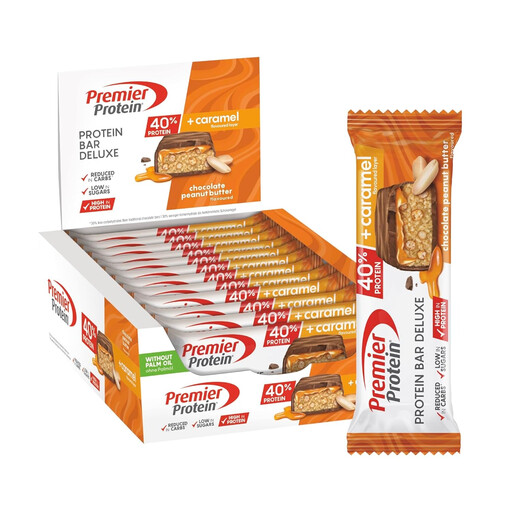
Premier Protein Protein Bar Deluxe 40% Chocolate Peanut Butter, 12 × 50 g
This pack of 12 is ideal if you regularly buy individually portioned bars.
Check the protein per 50 g bar, as well as the sugar, sweeteners and allergens, using the latest product and packaging information.
View at Joybuy
 No image available
Barebells Soft Protein Bar Salted Peanut Caramel, 12 × 55 g
This pack of 12 is a handy option if you regularly buy this variety as an individually portioned snack.
Compare the information per 55 g bar. For the Salted Peanut Caramel variety, be sure to check the ingredients and allergen information before buying.
View at Joybuy
 No image available
ESN Protein Designer Bar Hazelnut Nougat, 12 × 45 g
This pack of twelve 45 g bars is a good choice for regular purchases if you like this particular variety.
Check the protein and sugar per bar, along with the ingredients and allergen information. Information about the Dark Chocolate Salted Almond variety available from retailers doesn’t automatically apply to Hazelnut Nougat.
View at Joybuy
 No image available
Power System Low Carb Cookies & Cream Protein Bar, 40 g
This 40 g bar could be a handy snack on the go if the portion size and variety suit you.
Compare the nutritional information per bar and check which sweeteners and allergens are listed for this variety.
View at Joybuy
 No image available
Frankonia Sugar Free Nutrition Bar Chocolate Brownie, 50 g
If you want to compare sugar and other ingredients as well as protein, check the information for the whole 50 g bar.
‘Sugar Free’ is part of the product name, but it doesn’t replace checking the nutritional information, sweeteners and allergens on the specific pack.
View at Joybuy
Frequently asked questions
What does ‘high protein’ mean on a bar?
For a product to make this nutrition claim, at least 20% of its energy value must come from protein, according to the annex to EU Regulation (EC) No 1924/2006. To find out how many grams of protein you’ll get from a bar, you also need to check its weight and nutritional information.
Does a bar with no added sugar also contain no sweeteners?
No, the two claims don’t mean the same thing. Check the ingredients list: the German Federal Institute for Risk Assessment explains that any sweeteners used must be listed there.
What should I look out for with sugar alcohols?
For bars containing sugar alcohols, check the ingredients and consumption advice on the specific pack. The German Federal Institute for Risk Assessment warns that excessive consumption of sugar alcohols can have a laxative effect; for example, a bar sold by ALDI SÜD carries a corresponding warning.
Which details on the pack help me compare protein bars?
Compare the ingredients, allergenic ingredients, net quantity and nutritional information, especially the protein and sugar per 100 g and in the portion you plan to eat. The European Commission includes this information among the mandatory details for prepacked foods; precautionary allergen statements may also be important when choosing a product.
Do I need a protein bar after exercise?
No, a specialist protein bar isn’t automatically necessary after exercise. The German Nutrition Society explains the importance of protein for the body, while the Verbraucherzentrale points out that specialist protein products aren’t generally needed, even for people who exercise. Make your decision based on your overall diet and whether a portioned snack is a convenient option for you when you’re out and about.


