
Lieferung heute & morgen

Qualitätsgarantie

Willkommens-Angebote freischalten: KOSTENLOSE Lieferung | Bis zu 80 % RABATT | Kostenlose 30-Tage-JoyPlus-Testphase
App herunterladen
A protein bar can be a practical alternative to a larger meal when you’re out and about, at work or looking for a snack after training. However, terms such as “high protein”, “no added sugar” or “low carb” do not automatically indicate a well-balanced nutritional profile. The information on the packaging is what matters: protein content, serving size, sugar, carbohydrates, sweeteners and allergens.
As a Joybuy Product Recommendation Officer, I filter market information using clear, verifiable criteria. This helps prevent a bar from ending up in your basket simply because of its packaging or a striking marketing claim.
“No added sugar” does not necessarily mean that a product is completely sugar-free. Some bars contain naturally occurring sugars, for example from oats, dates, honey or milk ingredients. That’s why you should check the nutritional table as well as the statement on the front of the pack.
It is also worth looking at the sweeteners in low-sugar protein bars. Maltitol, sorbitol and other polyols can reduce the sugar content, but excessive consumption may have a laxative effect. Several products in this selection carry this warning.
A bar containing 30% protein does not automatically provide 30 grams of protein per bar. The percentage usually refers to 100 grams. A 45-gram bar containing 30 grams of protein per 100 grams therefore provides around 13.5 grams of protein.
For a meaningful comparison, always consider these three values side by side:
This prevents a small bar from appearing equivalent to a larger protein bar multipack.
“Vegan” and “gluten-free” are specific selection criteria that should be checked against the ingredients list and allergen labelling. For example, a bar containing oats may include gluten-containing ingredients or carry a precautionary allergen statement. If you have an intolerance, the current packaging information is decisive.
For physically active adults, protein content is often the key criterion. The selection ranges from traditional cereal bars with a lower protein content to products containing 50 grams of protein per 100 grams.
The protein source is also relevant: milk, whey, casein, soya, pea and collagen proteins differ in their ingredient profiles and suitability for particular diets. If you follow a vegan diet, look specifically for plant-based ingredients. Products containing milk, whey, casein or collagen are not suitable.
A low sugar value says little about the total carbohydrate content. For example, a product may contain only a few grams of sugar but considerably more carbohydrates from cereals or sweeteners. For low-carb bars, sugar, carbohydrates and polyols should therefore be considered together.
The serving size is also important for bars containing maltitol or sorbitol. Follow the manufacturer’s guidance on moderate consumption.
Milk, soya, peanuts, nuts and gluten-containing cereals are found in many high-protein bars. Check the allergen list before buying, particularly in households with mixed dietary requirements or where there are known intolerances.
A multipack containing 12 or 16 bars can make it easier to keep a supply at home. At the same time, the quantity should match your actual consumption. Protein bars with a chocolate coating generally need to be stored in a cool, dry place and protected from heat.
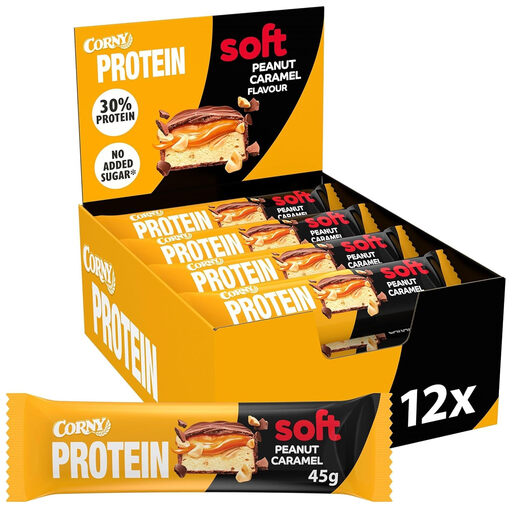
Why this product suits the profile: The 12-bar multipack offers a manageable individual portion of 45 grams and a stated protein content of 30%.
The nutritional information lists protein, sugar, carbohydrates and polyols separately. This makes it easier to put the “no added sugar” claim into context.
12 bars at 45 grams each, 30% protein per 100 grams and no added sugar according to the product information.
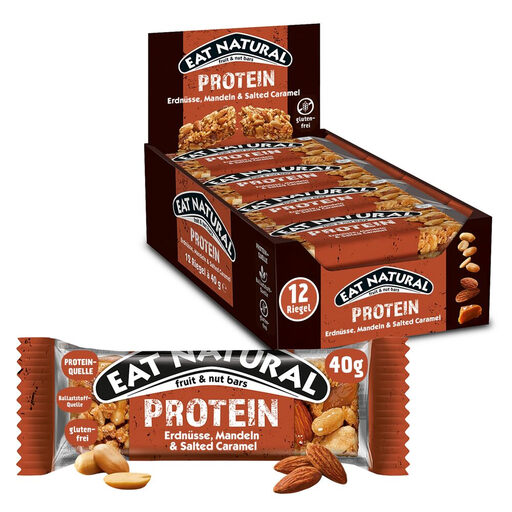
Why this product suits the profile: The bar combines nuts and salted caramel with a gluten-free product claim in a practical 12-bar pack for enjoying on the go.
The information makes it clear that “protein” should not be equated with low sugar: the sugar content is 16.8 grams per 100 grams.
21.6 grams of protein per 100 grams, 55% peanuts and gluten-free labelling according to the product description.
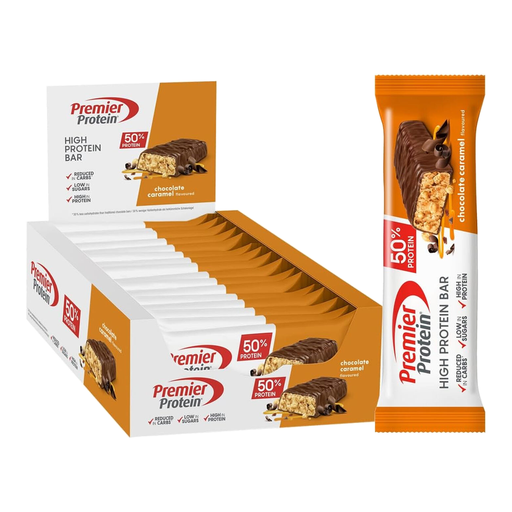
Why this product suits the profile: The multipack with 16 individual bars is aimed at people who regularly look for a high protein content and low sugar value.
The product information states 50 grams of protein and a maximum of 1.7 grams of sugar per 100 grams. Milk and soya are also listed as allergens.
50 grams of protein per 100 grams, a maximum of 0.8 grams of sugar per 40-gram bar according to the product description, and a palm oil-free recipe.
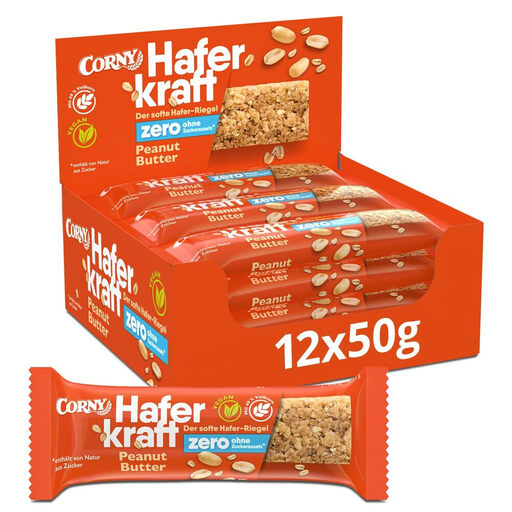
Why this product suits the profile: The product description identifies the bar as vegan and combines oat flakes with peanut ingredients.
The bar is described as having no added sugar, but contains 25 grams of carbohydrates and 1.2 grams of sugar per 100 grams.
Vegan according to the product information, 12 x 50 grams and 49% wholegrain oat flakes.
If you prefer a classic flavour, you’ll find chocolate protein bars and peanut butter protein bars in a range of recipes. For smaller portions, muesli bars with no added sugar may also be worth considering. Products such as Corny Haferkraft Zero Cocoa, however, are more like cereal bars than high-protein bars and should not be judged solely by their product name.
If you are following a consistently gluten-free diet, allergen statements are particularly important. “May contain traces” is not the same as an ingredients list with no gluten-containing ingredients. The same applies to a vegan diet: milk, whey, honey, collagen and gelatine generally make a product unsuitable.
We have put together a complete, regularly updated list of products that fully meet these strict selection criteria and the safety regulations applicable in the EU.
That depends on the ingredients, serving size and your personal eating plan. You should follow the manufacturer’s guidance. Protein bars are not a substitute for a varied diet. Products containing sweeteners such as maltitol may have a laxative effect if consumed excessively.
A protein bar can be eaten between meals, while you’re out and about, or before or after training. The right time depends on your total daily requirements and the rest of your diet. For choosing a bar, the amount of protein, calories, sugar and digestibility are more important than marketing claims about when to eat it.
A multipack contains several individual portions and can make it easier to keep a supply. To determine whether it offers good value, compare the price per bar or per 100 grams. Pack size, protein content and best-before date should all be considered together.