People keeping to a set energy budget
You want to include a sweet snack and know how many kcal the whole bar will add. Compare the portion size alongside the energy and protein per bar, rather than looking at just one claim on the front of the pack.


For a calorie-conscious, protein-focused diet, the biggest protein claim isn’t what matters most. Compare the calories and grams of protein in the bar you’ll actually eat. If keeping within your energy budget is your priority, a lower-calorie bar may suit you; if you’re mainly looking for a particular amount of protein in a snack, a higher-energy bar could be an option. Ingredients, allergens and consumption advice matter in either case.
You want to include a sweet snack and know how many kcal the whole bar will add. Compare the portion size alongside the energy and protein per bar, rather than looking at just one claim on the front of the pack.
You’re looking for a bar to eat on the go or around physical activity, with a particular amount of protein. Grams of protein per bar are more useful when choosing than a percentage on its own, especially if the bars differ in weight.
You need to take certain ingredients or allergens into account, or you pay attention to sweeteners and consumption advice. Check the specific variety: ingredients and product guidance can vary even within the same brand.
When choosing protein bars for calorie-conscious snacking, first decide whether energy per bar or the amount of protein matters more to you. Then check the ingredients and pack information for the specific variety you’re planning to buy.
| Criterion | What to check | Who it matters most to |
|---|---|---|
| Energy per bar | Compare kcal and bar weight per portion. Figures per 100 g alone don’t necessarily tell you how much energy you’ll get from the amount you eat. | If I want a whole bar to fit within my set energy budget, the energy in that portion is my top priority. Around 29% of consumers put this need first. |
| Protein portion | Check the grams of protein per bar and compare them with its kcal; a percentage isn’t the same as grams per portion. | For a snack on the go, I mainly want to know how much protein is in each bar. Around 29% of consumers put this need first. |
| Ingredients and suitability | Check the ingredients list, any highlighted allergens, and advice about sweeteners and consumption for the specific variety. | If I need to avoid certain ingredients or follow consumption advice, the ingredients determine my choice. This is the main consideration for around 24% of consumers. |
| Choice for everyday shopping | Compare portion sizes, nutrition information and ingredients for the varieties available to you, rather than assuming all bars from one brand are the same. | I want to find a variety during my regular shop whose information I can compare before deciding. Around 18% of consumers give this need priority. |
20% protein in a 50-g bar is 10 g of protein, not 20 g. The NRW Consumer Advice Centre highlights the difference between grams and percentages on protein bars.
Compare grams of protein, bar weight and kcal for the portion you plan to eat.
This claim doesn’t tell you how much energy a bar contains. According to Barebells, the Salty Fudge Spread contains 164 kcal and 15 g of protein per 45-g bar.
As well as sugar, check the energy and protein per bar in the nutrition information.
Some protein bars contain sugar alcohols such as maltitol. The warning on the Barebells Salty Fudge Spread says that excessive consumption may have a laxative effect.
Check the ingredients and consumption advice for your chosen variety, especially if you plan to eat several products containing polyols.
A protein or sugar claim on the front doesn’t replace the nutrition information or the ingredients and allergen labelling.
Check this information for the specific variety before deciding based on kcal or protein content.
Barebells makes protein bars in a range of flavours and portion sizes.
FULFIL offers, among other products, a chocolate and hazelnut vitamin and protein bar.
Layenberger offers low-carb protein bars in a range of varieties.
ESN offers products including Designer protein bars.
REWE PWR is REWE’s own brand, with protein bars in its range.
These protein bars could work as portioned snacks. For a calorie-conscious choice, compare the nutrition information per bar. If the kcal figure isn’t given here for a variety, it’s particularly important to check the pack before deciding.
 No image available
A snack to consider if you want to compare the nutrition information for a 45-g bar with your energy budget. The pack contains twelve bars. Before eating, check the ingredients, allergens and product guidance for the Hazelnut Nougat variety.
 No image available
For comparing a 45-g bar with other snack portions. The pack contains twelve bars. The 30% protein claim in the product name doesn’t mean there are 30 g of protein per bar. For a portion-by-portion comparison, also check the kcal figure, ingredients and consumption advice.
 No image available
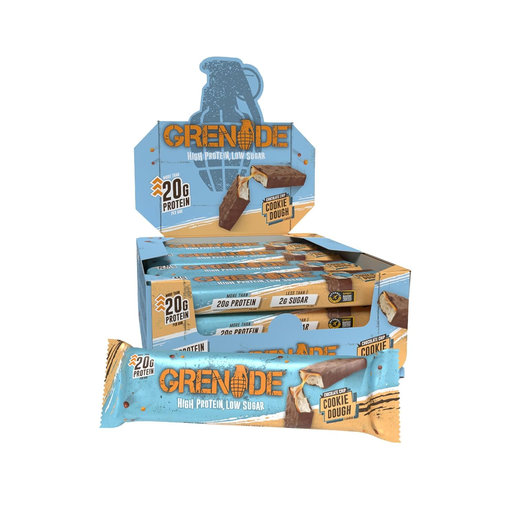
A snack to consider if you want to assess the protein content of a 60-g bar. The pack contains twelve bars. To decide whether this variety fits a tight energy budget, check the kcal per bar on the specific pack. Check the ingredients and consumption advice there too.
No. “No added sugar” doesn’t tell you how much energy is in a bar. Compare the kcal in the portion you’ll actually eat, and don’t treat this claim as a substitute for the rest of the nutrition information.
Check the ingredients and allergen labelling for the specific variety. In the EU, allergens must be highlighted in the ingredients list on pre-packed foods. Recipes and precautionary allergen statements may vary between varieties.
No. The number of bars alone doesn’t tell you whether they’re suitable for you. Consider the nutrition information for the portions you eat as part of your overall diet, and pay particular attention to consumption advice for varieties containing polyols.
Some protein bars contain polyols such as maltitol and carry a warning that excessive consumption may have a laxative effect. Check the ingredients and warning for the specific variety, especially if you also eat other foods containing polyols.