Calorie-conscious coffee-break snackers
You’d like to choose a sweet, individually portioned snack to enjoy with your afternoon coffee. The key figure to compare is the energy per bar, not just the amount per 100 g.


If you’re looking for a protein bar with as few calories as possible for your coffee break, compare the kcal per whole bar rather than just the figures per 100 g or the protein claims. A smaller bar may be a better fit for the snack portion you want, but you should still check the protein content, ingredients and allergens for the specific variety.
You’d like to choose a sweet, individually portioned snack to enjoy with your afternoon coffee. The key figure to compare is the energy per bar, not just the amount per 100 g.
You’re looking for a sweet alternative with a stated protein content. Compare the protein and kcal per bar so you can see the energy in each portion alongside its protein content.
You’re looking for a vegan option or need to avoid certain allergens. Check the label for the specific variety: a vegan recipe doesn’t, by itself, tell you whether it may contain allergens.
Start by comparing the portion you actually want to eat. Then weigh up the protein content and ingredients against your other requirements.
| Criterion | What to check | Who is it important for? |
|---|---|---|
| Calories per bar | Compare the kcal per whole bar and the bar’s weight; if the figures are given per 100 g, calculate the energy per portion. | If I want to keep my coffee-break snack small, I want to know how much energy the whole bar contains. For around 43% of consumers, calories per portion come first when making this choice. |
| Protein and sweet flavour | Check the protein and kcal per bar, and take the ingredients and sweeteners used into account. | I’m looking for a sweet treat with a stated protein content, without losing sight of the snack’s calories. Around 29% of consumers would prioritise protein and flavour. |
| Diet and allergens | Read the ingredients list, allergen information and, where applicable, precautionary ‘may contain’ statements for the specific variety. | If I need to avoid animal-derived ingredients or certain allergens, a low kcal figure alone won’t help me choose. For around 28% of consumers, a suitable recipe or good tolerance takes priority. |
A stated protein content doesn’t tell you how many kcal the whole bar contains. ‘No added sugar’ doesn’t mean you can skip checking the energy per portion, either.
Start by comparing kcal and weight per bar. Then check whether the protein content and ingredients meet your other requirements.
Bars of different weights can’t be compared directly as coffee-break portions using figures per 100 g alone. KoRo states that its Vegan Bio Protein Bar Salty Peanut contains 380 kcal per 100 g and weighs 45 g; that works out at around 171 kcal per bar.
If only a figure per 100 g is given, multiply it by the bar’s weight in grams and divide by 100. Then compare the kcal per whole bar.
A plant-based recipe doesn’t rule out allergens. Depending on the variety, allergens such as soya, wheat, peanuts or cashews may be relevant in the vegan options described by Barebells and KoRo.
Before buying, read the current ingredients list and allergen and ‘may contain’ information for the variety you want, rather than making assumptions based on another product from the same brand.
These examples show how specific protein bars and product ranges differ. Nutritional values and ingredients apply to the variety named, not to the brand as a whole.
The brand offers dessert-inspired protein bars as well as vegan options.
Designer Bars are aimed at people looking for a sweet protein snack between meals.
KoRo stocks vegan protein bars, including the Vegan Bio Protein Bar Salty Peanut.
REWE launched PWR as its own brand in September 2026, with an initial range of six protein bars.
These protein bars could be handy as individually portioned sweet snacks for your coffee break. The pack states the bar weight; for a calorie comparison, you should also check the current kcal per bar and ingredients for the variety in question.
 No image available
A hazelnut nougat option for a sweet, individually portioned snack with your coffee.
The pack contains 12 bars, each weighing 45 g. If you’re allergic to milk, soya or hazelnuts, check the current label, including any ‘may contain’ information.
The product description lists maltitol and notes that excessive consumption may have a laxative effect.
 No image available
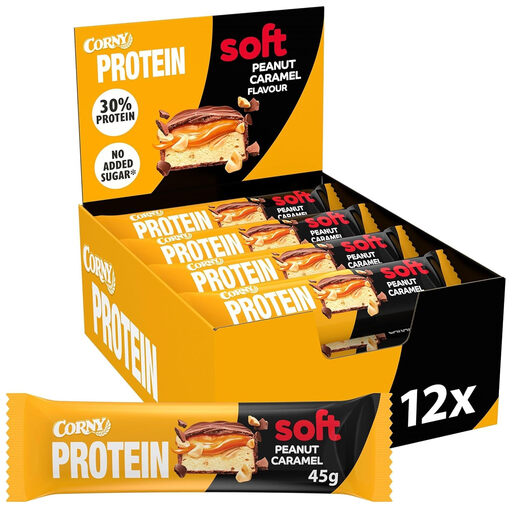
This peanut caramel option could suit you if you’re looking for a sweet, individually portioned bar.
The pack contains 12 bars, each weighing 45 g. If you’re allergic to milk, soya, peanuts or barley, check the current ingredients and allergen information.
The product description lists maltitol and other polyols, and says that excessive consumption may have a laxative effect.
 No image available
This vanilla variety with a white chocolate flavour offers a different taste for a sweet coffee break.
The pack contains 12 bars, each weighing 45 g. If you’re allergic to milk, soya, hazelnuts, eggs or cereals containing gluten, check the current label.
The product description lists maltitol and sucralose.
 No image available
This Cookies & Cream variety could be a good choice if you’re looking for a sweet bar in a 55-g portion.
The pack contains 12 bars, each weighing 55 g. The product description lists milk, soya and collagen; check the current label for possible traces of other allergens.
According to the product description, excessive consumption may have a laxative effect.
 No image available
This plant-based peanut caramel option could suit you if you’re looking for a vegan bar for your coffee break.
The pack contains 12 bars, each weighing 55 g. The product description lists peanuts, wheat protein and soya protein; if you have allergies, check the current ‘may contain’ information too.
The product information gives different figures for the protein content per bar. Check the figure on the current pack before buying.
Compare the kcal per whole bar, based on the portion size you actually want to eat. For example, Barebells states that its Hazelnut Spread bar contains 167 kcal per 45 g and its Vegan Caramel Choco Chip bar contains 201 kcal per 55 g; these figures apply to those specific varieties and aren’t a general rating of all protein bars.
No, that claim alone doesn’t tell you how much energy a bar contains. Also check the kcal per portion, as well as the nutritional information and ingredients for the specific variety.
Always check the ingredients and allergen information for the variety you want. The varieties described here differ: depending on the bar, allergens such as milk, soya, wheat, peanuts or tree nuts may be relevant. Check the current label for possible traces, too.
No, you don’t need a protein bar to enjoy a coffee break. The Verbraucherzentrale notes that most people don’t need additional protein, so you can choose a snack based on its flavour, portion size and ingredients instead.
Barebells warns that excessive consumption of the varieties described may have a laxative effect. Read the information for the specific variety and pay attention to portion size, particularly for products containing sweeteners.