If you’re thinking of picking up a protein bar to enjoy with a coffee on your way to the train and are keeping an eye on calories, first compare the kcal per bar you’ll actually eat and its size. Then check how much protein you want per bar, and whether the ingredients, allergens and sugar alcohols suit you. Low sugar alone doesn’t tell you how much energy the bar contains overall.
Who might find a protein bar useful on the go?
Calorie-conscious train commuters
If you’d like to take a packaged snack with you to enjoy with your coffee, the bar’s weight and kcal per bar can help you decide on a portion. A high protein content or a prominent sugar claim doesn’t replace checking these details.
Commuters who prioritise protein
If the protein content of your snack matters to you, compare the grams of protein and kcal per bar. This shows what you’ll get from the portion you actually eat.
Shoppers checking ingredients and suitability
If you need to avoid certain ingredients or take sugar alcohols into account, read the information on the specific pack. The recipes considered here include milk, soya and other allergen warnings, for example.
What should you look for when buying?
When choosing a bar to have with your train coffee, start with the portion you want to eat. Then compare the protein content and ingredients. If you plan to buy it regularly, it’s also worth checking whether it’s available near you.
| Criteria | What to check | Who it matters most to |
|---|
| Calories per bar |
Check the kcal per bar and its weight; use values per 100 g for an additional comparison. |
When I’m having a coffee on the way to the train, I want a clearly portioned snack with an energy content I can assess. Around 36% of consumers would put calories per bar first. |
| Protein per portion |
Compare the grams of protein and kcal per bar side by side. |
Between my commute and the rest of the day, what matters most is how much protein there is in an individual snack. Around 29% of consumers would prioritise this. |
| Ingredients and suitability |
Check the current pack for allergens, may contain warnings and polyols. |
On a longer journey, I don’t want to choose a bar with ingredients that don’t suit me. That’s why around 21% of consumers would check suitability first. |
| Availability |
Check whether your preferred variety is available at a local shop. |
For a snack I buy regularly, I need a variety I can actually pick up on my route. For around 14% of consumers, availability would come first. |
Which assumptions should you avoid?
-
Low sugar doesn’t automatically mean low calories
Even a bar with a low sugar figure can contain a significant amount of energy per bar when you’re choosing a snack. Recipes may also contain sugar alcohols.
Start by comparing the kcal per bar, then check the information on sugar, polyols and protein.
-
A high protein content doesn’t tell you about the portion
A percentage or value per 100 g won’t tell you how much protein you’ll get from one bar unless you know its weight.
Compare the grams of protein and kcal per bar. Use the per-100-g values as well when comparing products of different sizes.
-
Don’t overlook allergens and sugar alcohols
Some of the bars considered contain milk or soya; other products list peanuts or possible traces of other allergens. According to the Verbraucherzentrale, sugar alcohols can have a laxative effect in larger quantities.
If you have a relevant allergy, check the information on the current pack. If you haven’t tried a heavily sweetened bar before, consider how it may suit you before a longer journey.
-
Don’t assume you need a protein bar as a meal
A bar’s handy packaging makes it a possible snack, but it isn’t a necessary substitute for a balanced diet. The Verbraucherzentrale points out that extra protein isn’t automatically needed.
Choose a bar to suit your particular snacking needs, and check the ingredients and nutrition information if you eat it regularly.
Protein bar brands to consider
Premier Protein
The Chocolate Caramel variety featured by REWE shows why checking the information per individual bar is useful when comparing products.
- REWE lists 135 kcal and 20 g of protein for the 40 g bar.
- REWE also lists milk and soya as ingredients, along with 9.6 g of polyols per bar.
REWE PWR
REWE’s own-brand range includes protein bars for grocery shopping.
- For the Peanut variety, REWE lists 141 kcal and 13.5 g of protein per 45 g bar.
- According to REWE, the Peanut bar contains milk, soya and peanuts; also check the other allergen warnings on the pack.
MAX BALANCE
EDEKA describes a range of protein bars with different recipes under the MAX BALANCE brand.
- For the Lemon-Yoghurt variety, EDEKA lists 50 g of protein and 383 kcal per 100 g.
- To decide whether it’s right as an individual snack, you’ll also need to take the weight of that particular bar into account.
Barebells
Barebells offers several ranges of protein bars with different textures.
- The brand lists different protein amounts per bar, depending on the range.
- Barebells itself points out that its products are not low-calorie or calorie-reduced foods.
Body Attack
Body Attack sells protein bars in the sports nutrition category.
- For its Carb Control Protein Bar, the manufacturer lists a protein content of 45%.
- The percentage alone doesn’t tell you how much protein or energy there is in an individual portion.
Products for a snack on the go
These Joybuy products include individually portioned bars for when you’re out and about, with sweet options and one savoury variety. When choosing something to have with your train coffee, check the stated size per bar and the nutrition information on the pack you want.
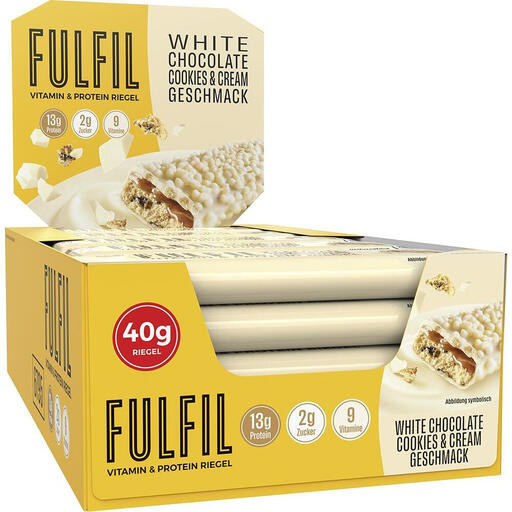 Image unavailable
FULFIL Vitamin & Protein Bar White Chocolate Cookies & Cream, 15 × 40 g
If you’re looking for a bar to take with you for your coffee, the stated 40 g individual size is a useful starting point for comparison. The product name indicates a pack of 15 bars; check the kcal and ingredients on the current pack.
View on Joybuy
 Image unavailable
Frankonia Sugar Free Nutrition Bar Chocolate Brownie, 50 g
If you’re after a 50 g bar as an individual portion, you can compare the energy per bar in this Nutrition Bar with that of smaller bars. The ‘Sugar Free’ description doesn’t replace checking the full nutrition information and ingredients.
View on Joybuy
 Image unavailable
Premier Protein 50% Bar Chocolate Caramel, 16 × 40 g according to the product name
If you’re considering this Chocolate Caramel variety to have with your train coffee, check the individual bar weight and pack contents on the current packaging before buying: the available information about the individual portion weight is inconsistent. You can only assess the kcal per bar you’ll actually eat once you know the correct portion size.
View on Joybuy
 Image unavailable
Corny Protein Crunchy Vanilla & White Choc, 12 × 45 g
If you prefer a crunchy, sweet bar, the product name states that each bar weighs 45 g and the pack contains twelve. The 30% protein figure listed there doesn’t tell you the kcal per bar; check the pack’s nutrition information for that.
View on Joybuy
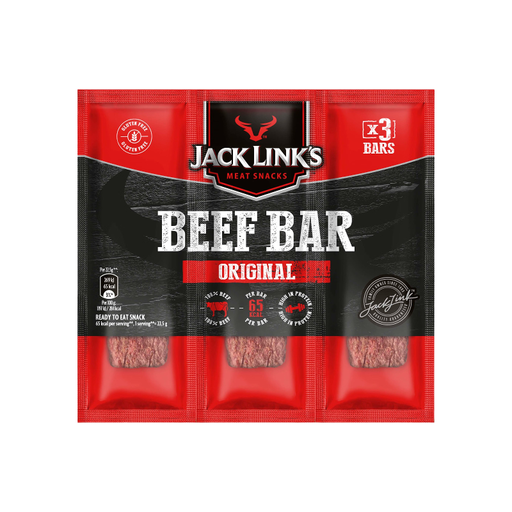 Image unavailable
Jack Link's Original Beef Protein Bars, 3 × 22,5 g
If you’re considering a savoury snack instead of a sweet bar, the product name lists three bars weighing 22.5 g each. Remember to take the small individual portion into account when comparing kcal and protein per bar.
View on Joybuy
Frequently asked questions
Is a protein bar with no added sugar automatically low in calories?
No. This claim doesn’t tell you the bar’s overall energy content. Barebells itself points out, for example, that its products are not low-calorie or calorie-reduced foods, so compare the kcal per bar.
Are values per 100 g or per bar more important when comparing products?
For a snack to have with your train coffee, the values per bar show what’s in the portion you’ll eat. Values per 100 g are also useful for comparing bars of different sizes on the same basis.
What should I know about sugar alcohols before a train journey?
Read the ingredients and information about polyols on the specific pack. According to the Verbraucherzentrale, sugar alcohols can have a laxative effect in larger quantities. Also check allergen warnings and consider how the product suits you.
Do I actually need a protein bar for my commute?
No, a protein bar isn’t essential for your commute. It can be a handy snack, but the Verbraucherzentrale points out that extra protein isn’t automatically needed.


