If you’re watching your fat intake when choosing a cinema snack
If low fat content matters to you, the nutritional information per 100 g makes it easier to compare different bars. The figures per bar then show what’s in the portion you’ve chosen.


If you’re looking for a protein bar with as little fat as possible to take to the cinema, first compare the fat content per 100 g, then check the fat and energy per whole bar. “High protein” or low sugar doesn’t automatically mean low fat. Also check the ingredients, allergens and any guidance on sweeteners. You’ll need to check with your cinema to find out whether you can bring your own snacks.
If low fat content matters to you, the nutritional information per 100 g makes it easier to compare different bars. The figures per bar then show what’s in the portion you’ve chosen.
You want to know how much protein is in each bar without assuming that this tells you anything about its fat or energy content. It’s especially worth checking both measures when bars come in different sizes.
If milk, soya, peanuts or other allergens are relevant to you, check the labelling for the specific flavour. Information about polyols and serving guidance can also help you choose a snack.
When choosing a protein bar for the cinema, start by comparing fat and energy on a like-for-like basis. Then decide which other features matter most for your snack.
| What matters to you | What to check | Who it matters to |
|---|---|---|
| Fat and energy | Compare fat per 100 g, as well as fat and energy per whole bar. According to the Verbraucherzentrale, solid foods can only be labelled “low fat” if they contain no more than 3 g of fat per 100 g. | I want to choose a bar with as little fat as possible to eat during the film, while also judging the actual portion. Around 36% of consumers put fat and energy first when making this choice. |
| Protein content | Check the protein per bar and bear the portion size in mind; a protein claim doesn’t replace a comparison of the other nutritional values. | What matters most to me is how much protein is in my individual snack. This is the main consideration for around 21% of consumers. |
| Sugar and sweeteners | Check the sugar, polyols and ingredients list, and follow any serving guidance on the pack. | For a longer trip to the cinema, I want to know which sweeteners are in the bar and what guidance applies to the amount I can eat. This is the top concern for around 29% of consumers. |
| Ingredients and allergens | Read the ingredients, highlighted allergens and ‘may contain’ information for the specific flavour; a vegan label doesn’t replace these checks. | I need to make sure the ingredients and allergen information meet my requirements. Around 14% of consumers prioritise these checks. |
A protein claim on its own doesn’t tell you how much fat or energy a bar contains.
The Verbraucherzentrale recommends comparing the nutritional information: first per 100 g, then per whole bar. Don’t judge whether a product is “low fat” simply because its figure is lower than that of another product.
A low sugar content can go hand in hand with a high polyol content. For Premier Protein Chocolate Caramel, REWE warns that excessive consumption may have a laxative effect.
Check the ingredients, the information about polyols and the serving guidance for the flavour you’ve chosen.
The figure per bar also depends on its weight. A smaller bar may contain less fat without having a low-fat recipe.
Use the figures per 100 g to compare products, and the figures per whole bar to assess your snack portion.
The Verbraucherzentrale generally considers foods with added protein unnecessary for meeting most people’s protein needs. So a marketing claim alone isn’t a reason to overlook other features of the snack.
Use the ingredients, nutritional values and portion size to decide whether the bar is right for what you want to eat at the cinema.
The information below applies to specific flavours, not every bar from each brand. Check the labelling on the pack you’re buying.
REWE sells its Brownie protein bar in a 45 g size.
REWE sells Chocolate Caramel as a 40 g protein bar.
The vegan Caramel Choco Chip flavour featured by REWE weighs 55 g.
The range includes Lower-Carb protein bars in the ALDI SÜD selection.
These bars offer a range of flavours and pack sizes for a snack on a trip to the cinema. If fat is your main consideration, compare the nutritional information per 100 g and per bar as supplied. This selection isn’t a collection of products labelled “low fat”.
 Image unavailable
An option if you’re looking for a bar with a chocolate brownie flavour to enjoy as a cinema snack.
The product name lists a 50 g bar. Check the current nutritional information and ingredients on the specific pack to compare fat content.
 Image unavailable
For anyone considering a product labelled vegan in the Peanut Caramel flavour and looking to check the ingredients of the specific variety.
The product name lists twelve 55 g bars. To compare fat content, read the nutritional information per 100 g and per bar; don’t assume “vegan” means allergen-free.
 Image unavailable
A Cookies & Cream option for anyone who prefers a clearly labelled individual bar as a cinema snack.
The product name lists a 40 g bar. “Low Carb” doesn’t tell you how much fat it contains, so check the nutritional information on the pack.
 Image unavailable
A Chocolate Caramel option if you want to compare the nutritional values of protein bars of the same type.
The product name lists 16 × 40 g. Before buying, check the size of the bars actually supplied and their nutritional values to make sure you’re comparing like with like.
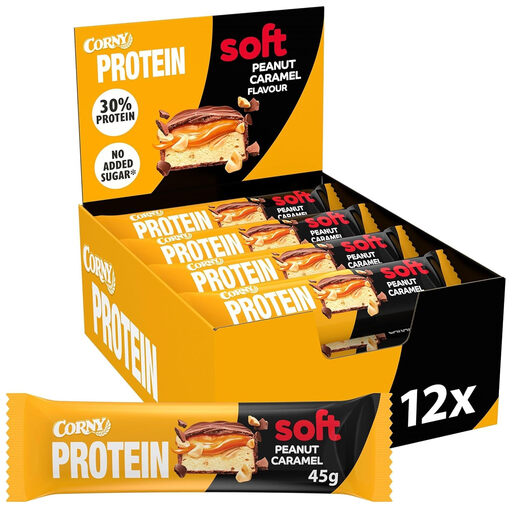 Image unavailable
A Peanut Caramel option for anyone looking to choose a bar from a multipack as a cinema snack.
The product name lists twelve 45 g bars. Check the current pack for fat and energy per bar; “No Added Sugar” isn’t an indication of fat content.
As the Verbraucherzentrale explains, solid foods must contain no more than 3 g of fat per 100 g to be labelled “low fat”. Check this figure in the nutritional information for the specific flavour; “high protein” or a low sugar content doesn’t replace it.
No. A lower fat content than another bar only tells you how the two compare; it doesn’t confirm a corresponding marketing claim. Compare values on the same basis and check any claim such as “reduced fat” separately on the specific pack.
They may affect how much you choose to eat, as well as the sugar content. REWE lists 24 g of polyols per 100 g for Premier Protein Chocolate Caramel and warns that excessive consumption may have a laxative effect. So check the information for the flavour you want to buy.
Yes. The word “vegan” doesn’t replace the ingredients list or allergen and ‘may contain’ information. Check the specific pack if certain ingredients or possible traces are important to your choice.