Shoppers comparing portion sizes
If you’re looking for a protein snack for sport, your commute or everyday life, the amount per bar helps you compare products in different sizes.


When shopping for protein bars, the amount of protein per bar is more useful than a percentage on its own, because bars come in different sizes. Then compare the sugar content and ingredients of the specific variety; a vegan label doesn’t mean you can skip checking for allergens.
If you’re looking for a protein snack for sport, your commute or everyday life, the amount per bar helps you compare products in different sizes.
If the sugar content per portion matters to you, check the ingredients list too, along with any information about polyols and serving guidance.
If you avoid animal-derived ingredients or need to steer clear of certain allergens, check each variety individually. The term ‘protein bar’ doesn’t tell you what’s in it.
Start by comparing the amount of protein per bar, then check the sugar, ingredients and labelling of the specific variety.
| Criteria | What to check | Who it matters to |
|---|---|---|
| Protein per bar | Compare the bar’s weight with the protein per portion. At 50 g of protein per 100 g, a 45 g bar contains 22.5 g. | When I’m out and about, I want to know how much protein is in each portion, rather than relying on a large percentage figure. This is the main consideration for around 42% of shoppers. |
| Sugar and sweeteners | Check the sugar content per bar, as well as the ingredients and any information about polyols. Follow any serving guidance on the pack. | If I’m looking for a low-sugar option, I also want to know which sweeteners the bar contains. Around 33% of shoppers prioritise this. |
| Vegan ingredients and allergens | Check the vegan label for the variety, along with the ingredients and allergen information on the current pack. | Before buying, I need to know whether a specific variety fits my dietary requirements; vegan doesn’t mean free from soya, wheat or peanuts. For around 25% of shoppers, checking suitability is the most important consideration. |
Portion size affects how much protein you get per bar: 50 g of protein per 100 g works out at 22.5 g in a 45 g bar, while 30 g per 100 g gives you 13.5 g in a bar of the same size. EDEKA lists the higher percentage for MAX BALANCE Stracciatella, while REWE lists the lower one for REWE PWR Brownie.
Always check the bar’s weight and protein per portion as well as the percentage.
REWE lists 1.4 g of sugar and 11.7 g of polyols per 45 g bar of its PWR Brownie. The sugar figure doesn’t tell you everything about the ingredients.
Check the sweeteners, information about polyols and any serving guidance alongside the sugar content.
Vegan protein bars may still contain soya, wheat or peanuts. Ingredients and ‘may contain’ information vary by product.
If you have allergies or coeliac disease, check the current labelling on the pack, not just the vegan logo.
EDEKA notes that individual MAX BALANCE bars may not be available in every store. Information on a product page may also differ from what’s shown on the current packaging.
Before making a special trip, check availability at your local store and read the ingredients and nutritional information on the pack.
EDEKA sells MAX BALANCE protein bars in a range of recipes, including a vegan option.
REWE’s own-brand range includes protein bars in 45 g portions.
KoRo offers a vegan-labelled Brownie protein bar, listed by REWE.
The Salty Peanut variety reviewed is a vegan-labelled protein bar.
This selection includes protein bars and a Protein Bite in different portion sizes and with stated protein percentages. If the ingredients or portion size are important to your choice, compare the details on the specific pack.
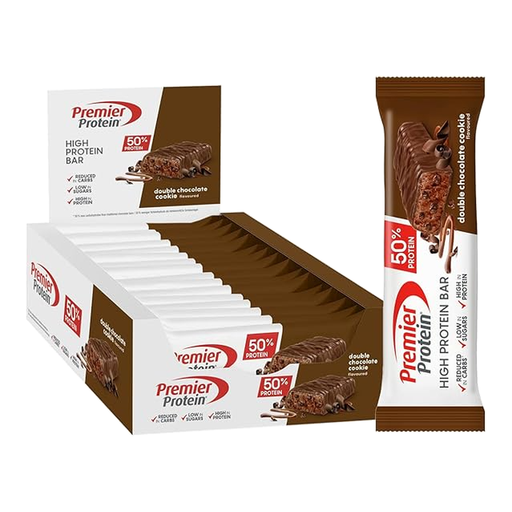 Image unavailable
A good option if you’re looking for a bar with a stated protein percentage. The product title lists 50% protein and 40 g per bar. Before buying, check the pack size and the current ingredients and allergen information.
 Image unavailable
A good option if you want to compare 45 g portions. The product title lists 30% protein and twelve bars per pack. Check the current labelling if sugar, sweeteners or allergens matter to you.
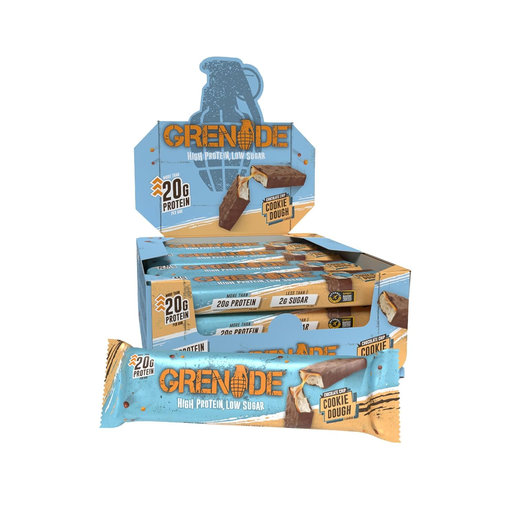 Image unavailable
A good option if you’re looking for a 60 g bar. The product title lists twelve bars per pack. Compare the protein and sugar content using the nutritional information for the specific variety.
 Image unavailable
A good option if you’d like to compare a smaller protein snack with a larger bar. The product title lists 32% protein and a portion size of 35 g. Check the ingredients and allergens on the pack.
 Image unavailable
A good option if you want to compare protein bars in 50 g portions. The product title lists twelve bars per pack. Check the nutritional information per bar and the allergen labelling for the specific variety.
That claim alone doesn’t tell you whether the portion size, sugar content or ingredients suit your needs. Check the nutritional information per bar and the ingredients list for the specific variety.
If no per-portion figure is given, work out the protein content per 100 g for the weight of one bar: 50 g of protein per 100 g works out at 22.5 g in a 45 g bar. This lets you compare the protein in each portion, rather than just the percentages.
No. EDEKA’s vegan MAX BALANCE Brownie contains soya and wheat; the vegan Barebells Salty Peanut listed by REWE contains soya and peanuts. Check the current ingredients list and ‘may contain’ information for each variety.
Some bars carry a warning that excessive consumption may have a laxative effect. REWE includes this warning for the vegan Barebells Salty Peanut; check it alongside the ingredients list and nutritional information.